
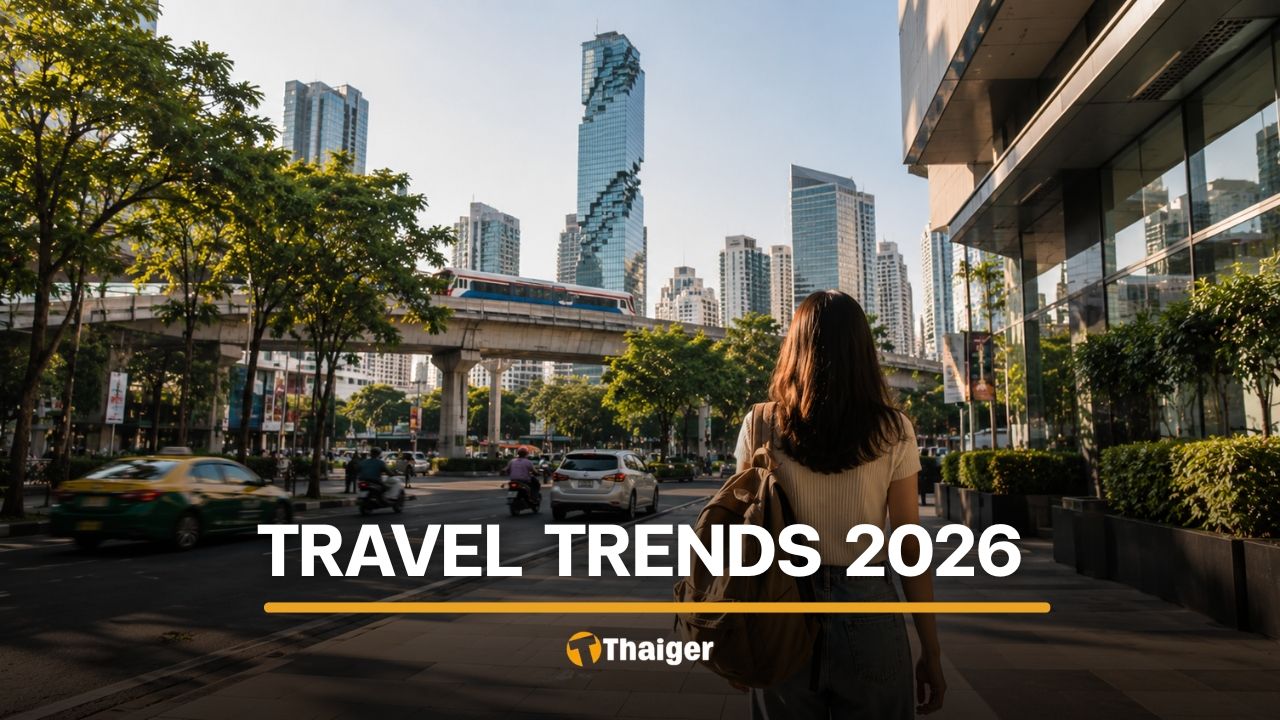
Every year produces a new set of travel trend reports, and most of them say roughly the same thing. The 2026 edition from Hilton, built on a survey of over 14,000 travellers across 14 countries conducted by Ipsos, is different in one important respect: its findings align almost point for point with what Thailand already does well. The five trends the report identifies, intentional travel, the search for silence, the pull of home comforts on the road, multi-generational family holidays, and inherited travel habits, describe a destination Thailand has been building toward for years without necessarily calling it a trend.
On this page
| Section (Click to jump) | summary |
|---|---|
| The ‘whycation’ — travelling with a reason | Travellers are increasingly planning trips around rest, nature, and mental wellbeing, which aligns closely with Thailand’s wellness strengths. |
| Hushpitality — the growing appetite for quiet | Quiet, calm, and solo-friendly travel is growing, and Thailand already offers retreats, temples, parks, and slower spaces that support it. |
| Home comforts as the new carry-on | Travellers want familiar routines, pet-friendly stays, comfort food, and grocery browsing, all of which Thailand supports well. |
| Generation permutations — the expanded family holiday | Thailand is well placed for multi-generational trips thanks to family-friendly resorts, shared activities, and strong hospitality infrastructure. |
| Inheritourism — travel habits passed down through the generations | Thailand benefits from decades of repeat visitors whose travel habits are now being passed on to younger generations. |
1. The ‘whycation’ — travelling with a reason
The headline finding from the report is what Hilton calls the “whycation”: the shift from planning a holiday around a destination to planning it around a motivation. The number one reason people said they would travel in 2026 is to rest and recharge, cited by 56% of respondents. Spending time in nature came second at 37%, followed by improving mental health at 36%.
This is precisely the lane Thailand’s Tourism Authority has moved into for 2026. The TAT’s current campaign, “Healing is the New Luxury,” positions Thailand around rest, restoration, and intentional experience rather than sightseeing volume. The framing is not coincidental. Thailand’s wellness tourism market reached US$14 billion in 2024, up 36.4% year on year, according to the Global Wellness Institute, making it one of the fastest-growing wellness destinations in the world.
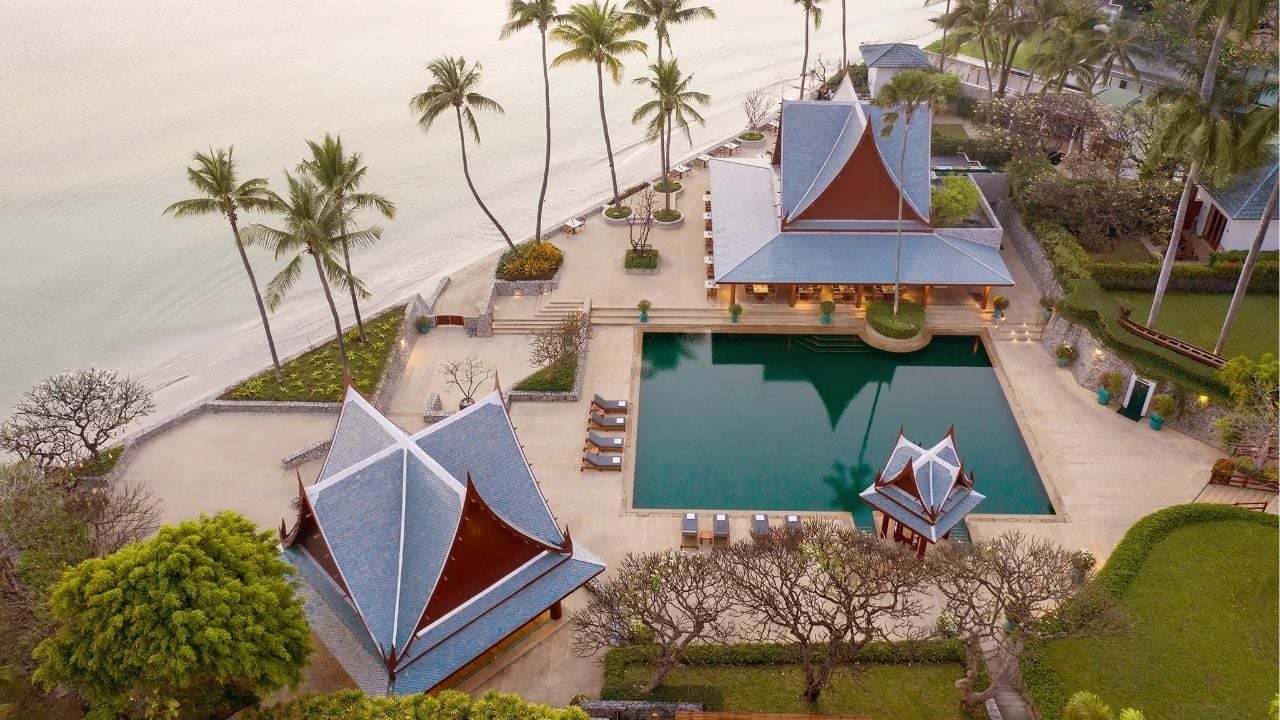
The country has 61 JCI-accredited hospitals, 92,813 wellness-related businesses, and a retreat sector, from Chiva-Som in Hua Hin to Kamalaya on Koh Samui to RAKxa near Bangkok, that has been running dedicated burnout, sleep, and mental health programmes for decades.
For expats already living here, the infrastructure for a domestic whycation is well within reach. For visitors planning a longer trip, Thailand offers the unusual combination of world-class wellness facilities at prices that remain significantly below comparable destinations in Europe or the Maldives.
2. Hushpitality — the growing appetite for quiet
Closely related to the whycation is what the Hilton report calls hushpitality: the active pursuit of silence, calm, and the absence of stimulation. More than a quarter of travellers said they plan to seek out quiet moments even within group trips in 2026. Solo travel is rising sharply, with Bangkok ranking as the second most popular solo city in Asia, according to Agoda’s 2025 solo travel report.
The appeal makes sense. Thailand has a deep infrastructure for solitude that does not require sacrificing comfort. The retreats mentioned above cater specifically to solo travellers; Kamalaya in particular reports around 60% of its guests arriving alone. For urban visitors, Bangkok itself offers pockets of unexpected calm: temple grounds, canal-side coffee shops, and neighbourhood parks that sit at a different pace from the city’s surface energy.

The trend also carries into business travel. The Hilton report found that 27% of business travellers actively seek time alone during work trips, and 54% said they would take a work trip partly to get a break from home obligations. Bangkok, as a MICE destination, benefits directly from this; it is a city where the gap between a conference schedule and a restorative evening is very small.
3. Home comforts as the new carry-on
The third travel trend is perhaps the most personally recognisable for long-term expats: the desire to maintain familiar routines while travelling. The report found that 64% of pet owners prioritise their pet’s needs when booking accommodation, 79% of travellers find comfort in familiar food even away from home, and 77% enjoy exploring local grocery stores as a form of tourism in itself.
Bangkok is unusually well-suited to this. The city has a mature pet-friendly hotel market across multiple price points, a network of international supermarkets, Villa Market, Tops, Gourmet Market, Foodland, that function as both a comfort resource for expats and a curiosity for tourists, and a food culture so embedded in daily life that the line between comfort eating and culinary exploration barely exists.

Cooking classes have become one of Bangkok’s signature tourist activities precisely because Thai food is already comfort food for a significant share of the world’s travellers before they even land.
4. Generation permutations — the expanded family holiday
Multi-generational travel is growing across the Asia Pacific faster than anywhere else in the world. Hilton’s APAC-specific research found that 60% of families in the region have taken or are planning a “skip-generation” holiday, grandparents and grandchildren travelling without the middle generation, rising to 86% in China and 79% in India. Both countries are among Thailand’s most important and fastest-growing source markets.
The resort infrastructure to accommodate this already exists and is extensive. Properties across Phuket, Koh Samui, and Pattaya have been building multi-generational offerings for years, connecting rooms, supervised kids’ programmes, adult spa facilities, and shared cultural activities that work for a five-year-old and a seventy-year-old simultaneously. Bangkok’s family hotel sector has also matured significantly, with several major properties offering dedicated family suites and children’s programming alongside adult amenities.
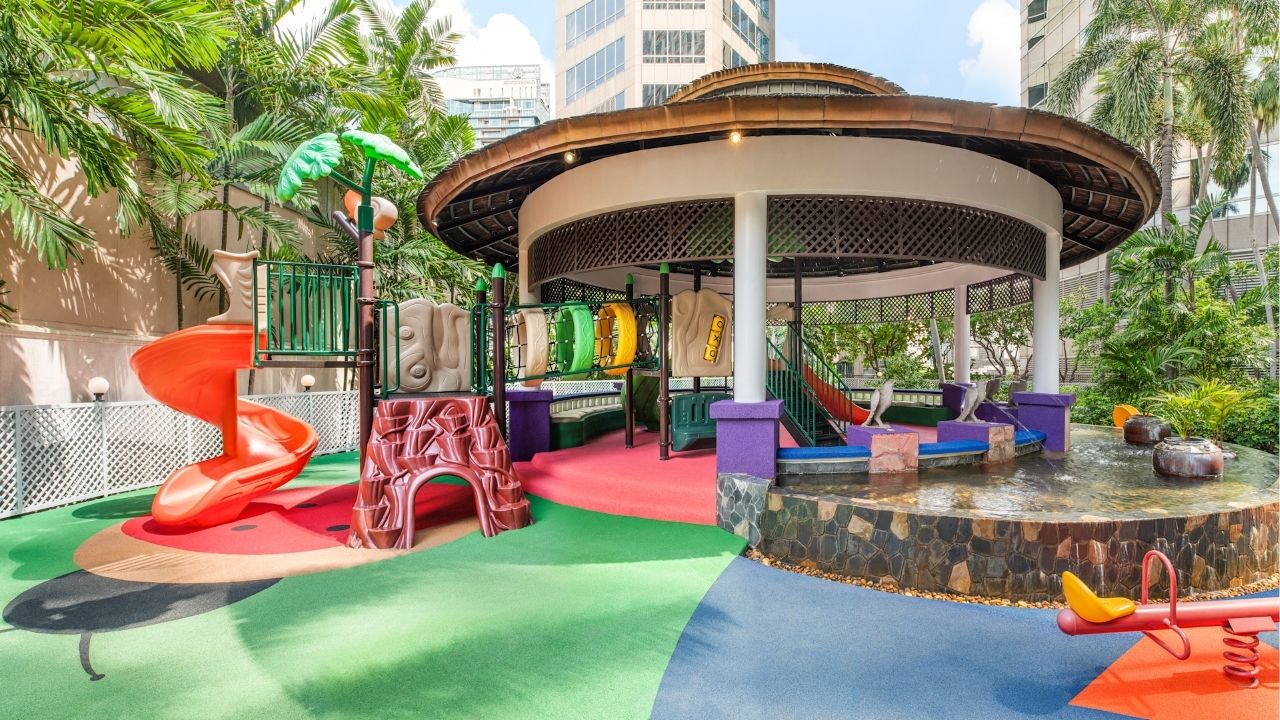
The Hilton report found that 84% of travellers plan to seek out opportunities for the whole family to play together in 2026, and 60% of APAC skip-gen travellers cite strengthening family bonds as their top motivation. Thailand, with its combination of beach resorts, cultural sites, accessible food, and child-friendly infrastructure, is built for exactly this.
5. Inheritourism — travel habits passed down through the generations
The fifth travel trend is one that Thailand has been benefiting from for years without naming it. The Hilton report found that 66% of travellers say their parents shaped their hotel choices, 73% say their travel style was influenced by their upbringing, and 58% say their parents influenced which loyalty programmes they use. More than half of travelling families include at least one adult child, with parents usually covering the cost.
Thailand has a multigenerational visitor base that is now three decades deep. British, German, Scandinavian, and American visitors who first came in the 1990s and early 2000s have been returning regularly since, many of them now retired and living here on long-stay visas.

Their adult children, who grew up on family holidays in Phuket and Koh Samui, are now the booking-age travellers bringing their own children in turn. The pattern is so established that the retreats sector documents it explicitly; Chiva-Som, in particular, notes long-term repeat guests who have been returning annually for over a decade.
This generational handover also extends to the visa landscape. Thailand’s Long-Term Resident visa and retirement extension framework have institutionalised multi-decade expat presence in a way that makes the inheritourism dynamic structurally inevitable. The children of today’s LTR visa holders are tomorrow’s first-time independent visitors to Thailand, arriving with a destination already embedded in their sense of what travel feels like.
What 2026 looks like from here
The five trends the Hilton report identifies are not predictions about what might happen. They describe behaviours that are already underway, measured across a large and diverse respondent pool. What is notable about Thailand’s position is not that it has reacted to these trends but that it was already building toward them, in its wellness infrastructure, its multi-generational resort offering, its deeply embedded food culture, and its three-decade relationship with repeat visitors from across the world.
The TAT is targeting 36.7 million arrivals and 2.8 trillion baht in revenue for 2026. Whether or not those numbers land, the direction of the strategy is correct. The travellers most likely to come to Thailand in 2026 are exactly the ones the data describes: people looking for a reason to travel, not just a place.
Sources:
• Hilton APAC Grandcations release
• Global Wellness Institute — Thailand wellness market data
• TAT Newsroom — Healing Journey Thailand campaign
• Agoda — Solo Travel on the Rise Across Asia in 2025
• TAT Newsroom — Amazing Thailand Health and Wellness Trade Meet 2026