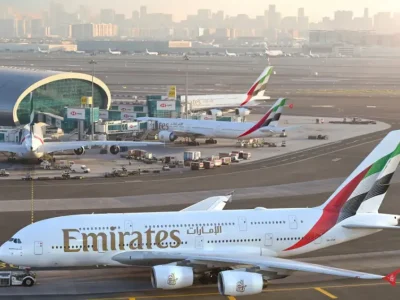
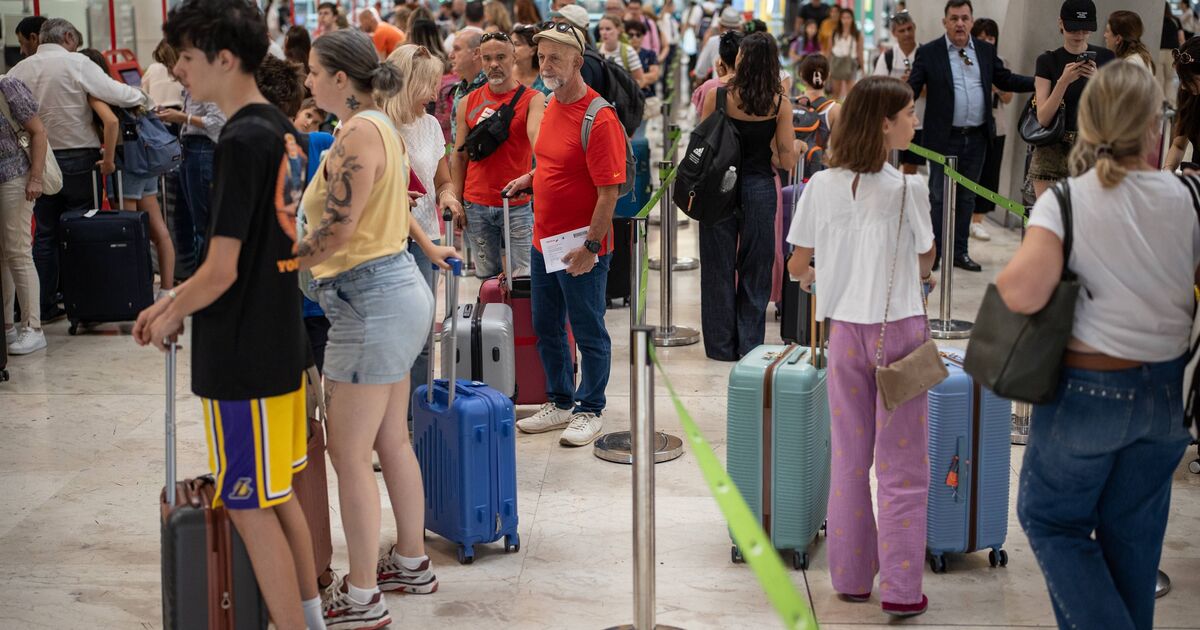

The European Parliament has agreed a set of new rules for air travellers which are likely to be adopted in the UK (Image: Getty Images)
A significant agreement has been reached this week concerning travel to Europe – with the regulations expected to be implemented by the UK shortly thereafter. In a statement, the European Parliament confirmed that modifications will be introduced regarding compensation, child seating and flight pricing.
The new regulations could potentially make a substantial difference for anyone travelling with certain budget carriers such as Ryanair, easyJet, Wizz and Jet2. They include requiring transparent ticket pricing that incorporates hand luggage.
The agreement aims to safeguard passengers against travel disruption, including denied boarding and delayed or cancelled flights. The regulations had not been revised since 2004.
Enhancing passenger rights.
The new regulations now encompass the right to bring on board, without extra charge, one personal item, such as a small bag or rucksack. Following insistence from MEPs, price transparency and the comparability of air tickets was strengthened by requiring airlines, intermediaries and search portals to consistently display the air fare inclusive of carry-on luggage at the beginning of the booking process.
Negotiators agreed that airlines may provide cheaper tickets for passengers who opt voluntarily to travel without hand luggage. Air passengers will no longer face extra charges for correcting spelling mistakes in their names or for obtaining a printed boarding pass after checking in.
MEPs have also guaranteed passengers the right to receive boarding passes digitally upon check-in, without any additional request or requirement to hold a user account or download a specific application. Furthermore, passengers shall not be refused boarding simply because they used their own printed version of a digitally issued boarding pass, according to the agreement.
On this matter, UK TV travel expert Simon Calder said: “The parliamentary proposal is unworkable within the confines of a typical low-cost jet.
“Ryanair, Europe’s biggest low-cost airline, says it can accept only 90 large pieces of cabin baggage in its Boeing 737 planes, which seat up to 197. Conferring the right for everyone to bring a roll-along case would involve much of the luggage ending up in the aircraft hold, causing delays.
“So a fudge has been agreed in the package of proposals to reform passenger rights. Airlines will be required “to always display the air fare inclusive of carry-on luggage at the outset of the book [sic] process”.
“This will make no difference to British Airways, Jet2 and many Continental carriers such as Air France and KLM, which already allow two items. But the move is likely to add £20-£40 to existing one-way fares on easyJet, Ryanair and Wizz Air.
“However, the carriers can immediately offer a discount that reduces the price to passengers taking only minimal baggage.”
Compensation and duty of care.
Parliamentary negotiators pushed back against attempts to dilute air passenger rights. Under the agreement, air travellers retain the right to reimbursement or re-routing in the event of a cancellation, and to claim compensation if a flight is delayed by more than three hours, if it is cancelled fewer than 14 days before departure, or if they are refused boarding.
Compensation for delayed or cancelled flights will be determined by flight distance: €250 for journeys up to 1,500 km, €400 for journeys between 1,500 km and 3,500 km, and €600 for all other longer journeys. Airlines will have the option to reduce compensation by 50% for their longest routes if passengers are offered re-routing to their final destination following travel disruption, or if the arrival delay does not exceed four hours.
Nevertheless, airlines will be permitted to avoid paying compensation if the delay or cancellation was caused by circumstances beyond their control. The new regulations will feature an open list of such extraordinary circumstances, including natural disasters, war, adverse weather conditions, disruptive passengers, or strikes by airport, air navigation or ground-handling service providers.
In every instance, airlines will be obliged to look after stranded passengers by providing refreshments after every two hours of waiting, a meal after three hours, and, where necessary during lengthy delays, overnight accommodation for a maximum of three nights, according to the agreement.
Faster and easier reimbursement.
Airlines will be required to electronically supply passengers facing travel disruption (delay or cancellation) with clear guidance on how to submit a compensation claim within four days of the conclusion of their journey. MEPs ensured that passengers are not obliged to have a user account or to use a specific application to receive this information.
Air passengers will have nine months to lodge a compensation request, while airlines will have 30 days to pay out the compensation or cite extraordinary circumstances, clarify why compensation will not be forthcoming and direct passengers towards the appropriate complaints procedure, the deal states.
Protecting vulnerable passengers MEPs ruled that passengers with disabilities and reduced mobility (PRM) will be entitled to compensation, rerouting and assistance from airlines if they miss a flight owing to the airport’s failure to help them reach the gate on time. They also ensured that families with children are not split up during seating, by compelling air carriers to guarantee that anyone accompanying a child under the age of 14 is seated in an adjacent seat at no additional cost.
The same entitlement will extend to passengers with disabilities and reduced mobility, as well as pregnant women.
Roberta Metsola, President of the European Parliament, said: “The European Parliament has always been the strongest advocate for strong air passenger rights. This agreement will strengthen the rights of air passengers across Europe. It will bring greater transparency and predictability for both consumers and airlines, without creating unnecessary bureaucracy for our industry. Parliament fought hard to make travel fairer and procedures clearer, and this is what we have delivered.”