NEED TO KNOW
- Michelle Cabrera’s eyesight diagnosis inspired her to pursue solo travel, starting with a one-way ticket to Nepal at 19
- She has since traveled the world on a tight budget, documenting her adventures for more than 500,000 social media followers
- Cabrera recently shared her diagnosis publicly, inspiring others to embrace life despite challenges and uncertainty
Michelle Cabrera sat alone in her parents’ basement, crying over a future she could no longer picture.
Just weeks earlier, doctors had warned the 19-year-old that her severe myopia and thinning retina placed her at high risk of blindness. There was no LASIK fix, no clear treatment plan, no guarantee of what her vision would look like a year from now.
For days, fear consumed her.
She stopped thinking about careers, long-term plans or the version of adulthood she had always imagined for herself. Instead, her mind kept circling back to one terrifying possibility: What if her world slowly went dark before she ever truly got the chance to live in it?
“To me, it was more so like, I would rather not be living than have my vision taken away from me,” Cabrera, now 22, recalls to PEOPLE exclusively over Zoom. “And it was a very hard reality that I was thinking about.”
Michelle Cabrera
Then, somewhere in the middle of that spiral, another thought surfaced — one that would completely alter the course of her life.
“I was like, ‘Why do I have to live in fear of what’s gonna come?’ ” she says.
Until then, the Illinois native had spent most of her life following the timeline she believed she was supposed to want: go to school, get a stable job and save adventure for someday later.
Growing up in the Midwest, she says she constantly heard the same message.
“Everyone always told me, ‘Once you’re old and retired, then you can go travel’ ” she says. “And that just wasn’t in the cards for me.”
Michelle Cabrera
The diagnosis forced Cabrera to confront something she had quietly felt for years: she didn’t want to spend her life postponing the things that mattered most to her.
Long before doctors warned she could lose her vision, Cabrera had been fascinated by adventure travel. She spent hours watching documentaries about Mount Everest and imagining herself exploring remote corners of the world one day. But as a teenage girl, she rarely saw women living the kind of adventurous life she envisioned for herself.
“I never saw girls in that kind of industry, and since I didn’t see women do it, I was like, ‘Is it even possible for a girl to do this by herself?’ ” she says.
But after the diagnosis, the fear of never experiencing the world suddenly became greater than the fear of traveling alone. So Cabrera made a decision that stunned nearly everyone around her. At 19 years old, she booked a one-way ticket to Nepal.
“It was definitely a crazy situation to bring up to my parents,” she says with a laugh. “Most parents are gonna be like, ‘You’re gonna die, you’re gonna get kidnapped.’ And those are kind of normal parents’ worries.”
The conversations quickly became emotional, especially because of how close she is with her family.
“It was kind of hard not having them be in full support of it,” she says.
Still, the more she researched Nepal, the more certain she became that she needed to go.
She found herself drawn to the country’s monasteries, mountain villages and unfamiliar culture — things she had previously only seen through documentaries.
“I looked into it a bit more, saw that there were monasteries and just a lot of things that I had never been exposed to before,” she says. “And something about the Himalayas to me was like, ‘This is so cool. I love mountains.’ ”
Eventually, Cabrera stopped asking for permission.
“I just told them, ‘I’m going. I would love to have your support, but even so, I feel like this is the chance that I get to live out my life,’ ” she says.
Michelle Cabrera
Soon after, she boarded a plane to Nepal alone.
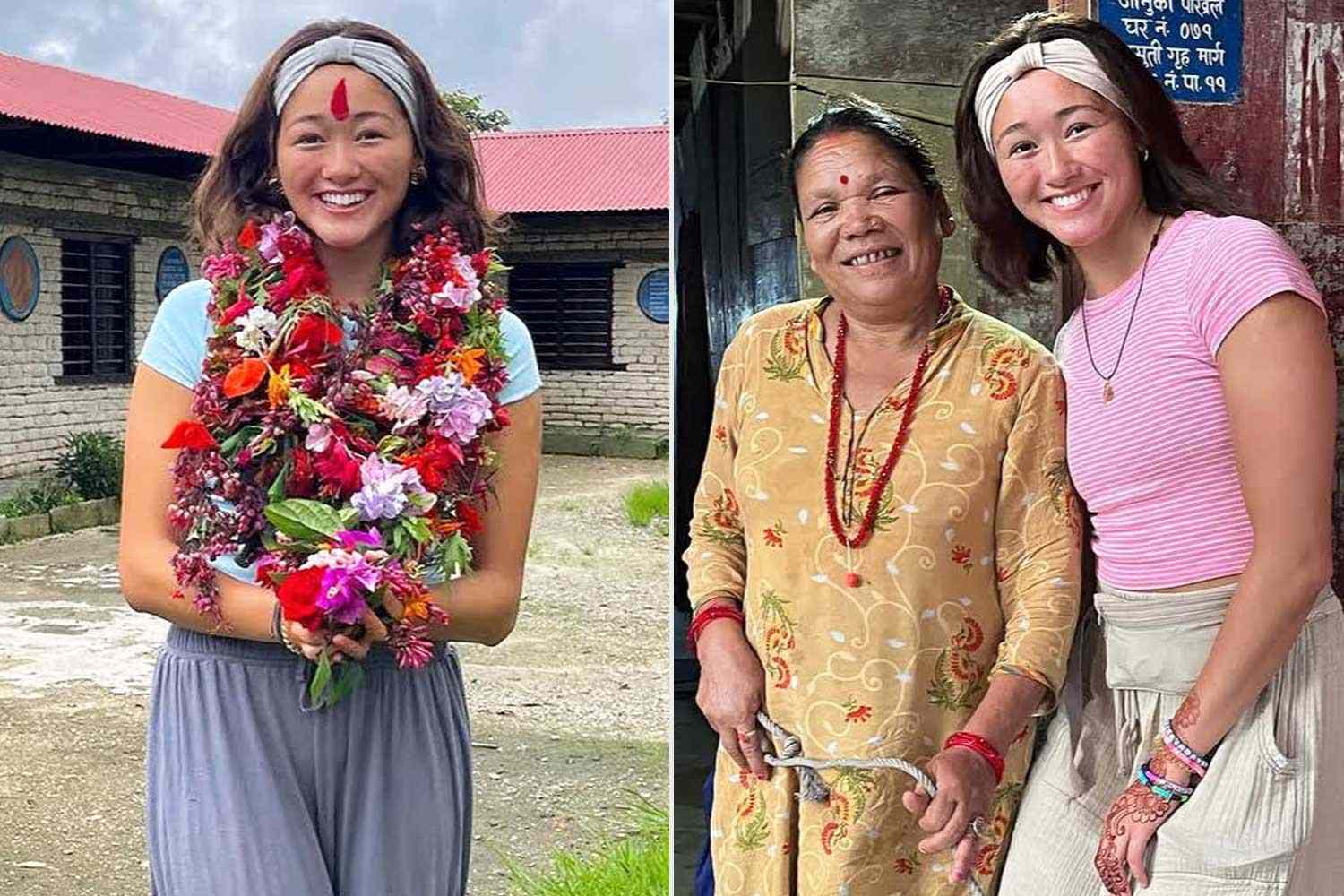
When she arrived, Cabrera found herself living in a remote mountain village for three months as the only English speaker in the community — an experience she says completely reshaped her understanding of herself, fear and what she was capable of enduring.
Far from home and stripped of everything familiar, she was suddenly forced to navigate uncertainty every single day. Yet somewhere inside that discomfort, she says she finally felt fully alive.
“That completely shifted my whole perspective on life,” she says. “That was kind of the start of this whole journey for me of, wow, I can live out my dream life now, and I can do it now.”
For the first time, Cabrera stopped waiting for her life to begin in the future.
That one decision ultimately became the foundation for the life she lives today. Now 22, Cabrera has spent the past three years traveling solo around the world while documenting her adventures online for more than 500,000 followers across TikTok and Instagram.
Her videos — many of which have amassed millions of views — showcase everything from hitchhiking through remote regions and herding yaks with nomadic shepherds in Kyrgyzstan to surviving food poisoning abroad and becoming trapped inside a cave in Vietnam for three days.
“A lot of those stories weren’t planned out,” she says with a laugh.
“I highly value experience over materialistic things,” she says. “Being able to experience it all — the good and the bad — changed my life in such a radical way. It genuinely rewired my brain.”
To make the lifestyle possible, Cabrera initially worked part-time jobs while attending nursing school, saving money throughout the year before traveling during the summer. Later, after rupturing her patellar tendon while in Australia and being forced to step away from school for a year, she embarked on a five-month solo trip through Central Asia that accelerated both her travels and her online growth.
Today, she travels on an extremely tight budget, often staying in hostels for under $10 a night, eating street food and relying on friendships with locals rather than expensive accommodations or tours.
“A lot of people think you have to be a millionaire to travel,” she says. “But coming from someone who only spent maybe 7K for five months, you can definitely do it.”
Many of her most meaningful experiences, she says, came not from carefully planned itineraries, but from saying yes to strangers, opportunities and uncertainty.
“I didn’t pay for a lot of the experiences because I ended up meeting local friends and then becoming friends with them and going on these wild adventures with them,” she says.
That lifestyle, however, has also come with sacrifices.
During recent travels, recurring food poisoning caused Cabrera to lose nearly 20 pounds and occasionally worsened her eyesight symptoms.
“When I go through sickness or illness, my vision starts to blur up a lot more, which does scare me,” she says.
Even now, doctors still consider her high risk for retinal detachments. Just weeks ago, specialists warned her to carefully monitor worsening floaters in her vision.
But despite how deeply her eyesight diagnosis shaped the trajectory of her life, Cabrera says very few people around her actually knew about it for years. Even many of her closest friends had no idea.
For a long time, she intentionally kept that part of her life private because she didn’t want it to define how others viewed her.
“I never really told anyone because I didn’t want it to be a defining factor of who they think of Michelle to be,” she says. “I didn’t want people feeling any pity towards me or anything like that.”
“I wanted people to see me for everything of me and not just a single part of my life that doesn’t define me in the slightest,” she says.
Michelle Cabrera
That finally changed when she recently posted a TikTok reflecting on the reason she first started traveling.
In the video, Cabrera briefly mentioned her eyesight diagnosis — something she says she included almost casually without realizing how much attention it would receive.
“When I put that in my video, I didn’t really think much of it,” she says. “I genuinely thought, ‘Oh, it was just one of the reasons why I started traveling.’ ”
Instead, the video quickly went viral, introducing a deeply personal part of her story to millions of viewers — including many people in her own life who were hearing it for the first time.
“I was in shock,” she says. “I was receiving messages from people who also have the same eye issues as me. I received screenshots of people buying flights.”
The internet attention also brought criticism and hate comments — something she admits initially caught her off guard.
But the supportive messages outweighed everything else.
“What was worth it to me was receiving DMs from girls telling me how inspiring I’ve been for them,” she says.
Now, Cabrera says she hopes her story encourages people — especially young women — to stop waiting for the perfect moment to pursue the life they truly want.
Alongside documenting her adventures, she says she also wants people who may never have the chance to travel themselves to experience parts of the world through her videos.
“I really wanted to share my raw, authentic travel experiences abroad and how it’s changed me with my friends and family,” she says. “I wanted them to be able to experience that and live life to the absolute fullest you can, because I think that’s genuinely what life is about.”
Michelle Cabrera
Although the possibility of losing her vision still exists, Cabrera says she recently received the first hopeful update she’d heard in years.
After ongoing monitoring, doctors told her that her eyes had stabilized — something she says once felt impossible.
“For the first time ever, they said my eyes had stabilized,” she says. “They told me I may actually be eligible for LASIK now, which could save my vision.”
The update felt surreal after years spent bracing for the worst.
Still, Cabrera says the diagnosis that once left her sobbing in her parents’ basement ultimately became the very thing that pushed her to finally start living.
“It made me realize that if there’s something you want to do, you shouldn’t keep waiting for the perfect time because that time may never come,” she says. “And honestly, I think that’s the biggest gift that came out of all of it.”