
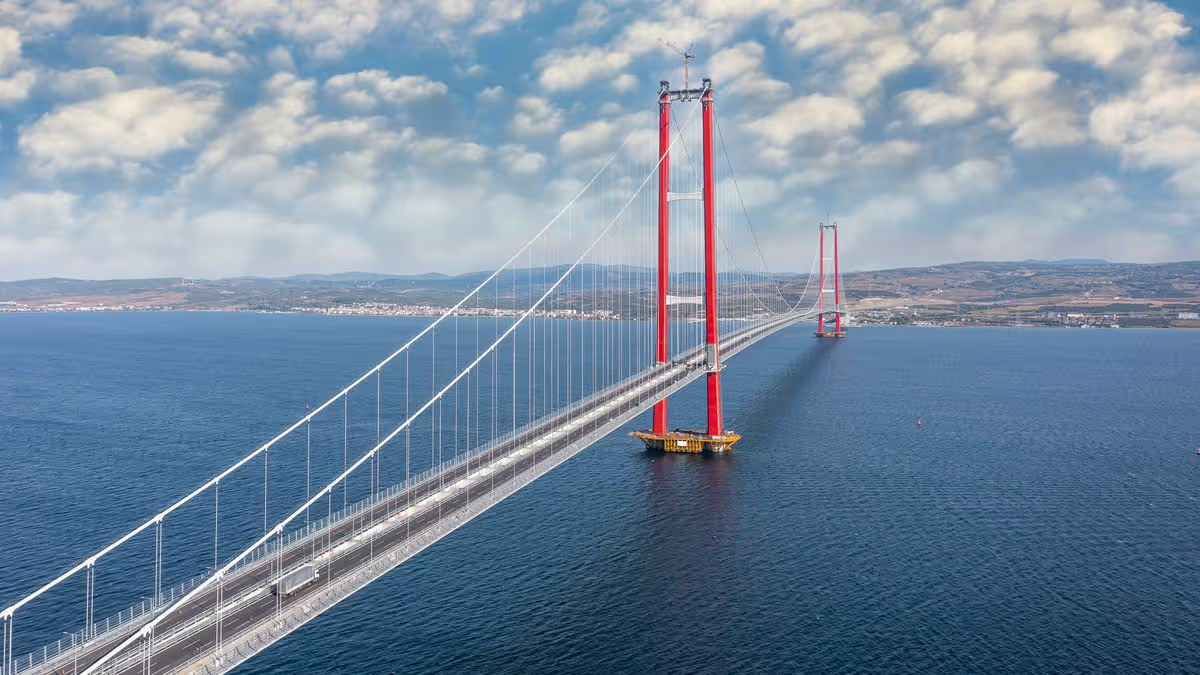
It took five years to build and was finished 18 months before the planned completion date.

It opened in 2022(Image: Kenan Talas/Getty)
The world’s longest suspension bridge spans 2,023 meters and connects Europe and Asia. The bridge has only been open for four years, and took the title from the Akashi Kaikyo Bridge in Japan.
1915 Çanakkale Bridge opened on March 18, 2022 in northwest Turkey. It starts in Gelibolu, Turkey, which is based on the European side of the country, and crosses over to the Asian town of Lapseki.
The bridge is longer than the Akashi Kaikyo Bridge, which was built in 1998, by 32 meters. Construction across the Dardanelles Strait started in 2017 and journey times have been cut by up to 93%.
Since the bridge has been opened, 90-minute ferry trips can be avoided. The bridge’s name and length pay homage to the country.
The 1915 reference is to the Ottoman victory in the First World War, a defeat for Britain which eventually led to the declaration of the Republic of Turkey in 1923.
The 2,203 metres span is a nod to the year 2023, when Turkey honoured the centenary of the founding of the republic. Turkey’s President Erdogan previously revealed the mammoth bridge cost €2.5billion (just over £2billion).
He said: “Turkey has overtaken Japan, which has the longest bridge in the world in terms of midspan, and has taken the place.”
Speaking further after the completion of the project, Erdogan added: “Canakkale, which has been the apple of the eyes of various civilizations, cultures and societies for thousands of years, embraces a brand new future today.
“We have come together to inaugurate the 1915 Çanakkale Bridge, which we see as a ruby necklace over the Canakkale Strait.”
Despite holding the title for the world’s longest suspension bridge, the 1915 Çanakkale Bridge might soon lose its crown.
Italy has proposed a new bridge to connect the mainland to Sicily, which would become the world’s longest instead. If completed it would span 3,300 meters.
It’s not the first time the bridge across the Strait of Messina has been proposed. There was a detailed plan made in the 1990s but was cancelled in 2006.
Plans were revived in 2009 but again cancelled in 2023. Last year, proposals emerged yet again.
Italian prime minister, Georgia Meloni, said: “It is not an easy task but we consider it an investment in Italy’s present and future, and we like difficult challenges when they make sense.”
Concerns have been raised around earthquakes, strong currents and disruption of bird migration routes.