The fuel crisis is beginning to threaten summer travel

(Image: Andrew Stuart)
Travel expert Simon Calder has issued a stark warning to passengers flying with British Airways, EasyJet, and Ryanair as the deepening energy crisis threatens to upend summer holiday plans.
The ongoing conflict in the Middle East and the subsequent shutdown of the Strait of Hormuz—a vital artery for 20 per cent of the world’s oil and gas—has triggered a global fuel shortage that is impacting European runways.
“Significant increases in global oil prices are now filtering through to aviation,” warns Mr Calder in his weekly column for the Independent.
Click here to get the biggest stories straight to your inbox in our Daily Newsletter
While industry leaders believe they can maintain current schedules through the end of April, the forecast for May and June is increasingly volatile.
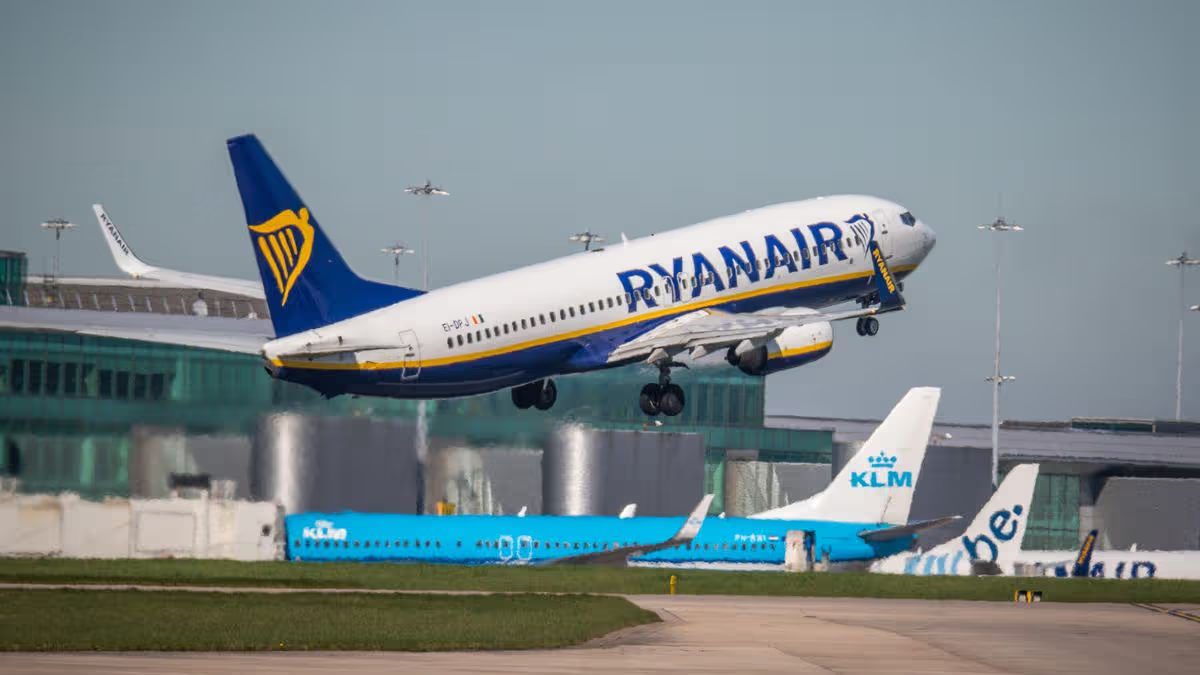
Ryanair CEO Michael O’Leary has already signalled a high risk of supply disruptions across Europe, suggesting the airline may be forced to consolidate high-frequency routes. This could mean fewer daily flights on popular paths, such as the connection between London Stansted and Barcelona.
The impact is already being felt on a smaller scale within the UK. Skybus recently ceased all operations between Cornwall and London, citing an “insurmountable barrier” created by skyrocketing fuel costs and dwindling passenger confidence.
On the continent, Italian airports including Venice, Milan Linate, and Bologna have issued notices regarding restricted refuelling services – providing a grim preview of what may face the broader market if the geopolitical situation does not stabilize.
British Airways passengers traveling to domestic hubs or European cities like Amsterdam, Geneva, and Stockholm are being told to prepare for potential cancellation announcements and rebooking requests.
Mr Calder also warns that the easyJet Manchester–Amsterdam route, which flies up to six times each way per day, is another option for possible cancellations.
As jet fuel prices continue to surge, the aviation industry remains in a precarious holding pattern.
Many airlines are left waiting to see if summer demand can be met amidst a shrinking global supply.