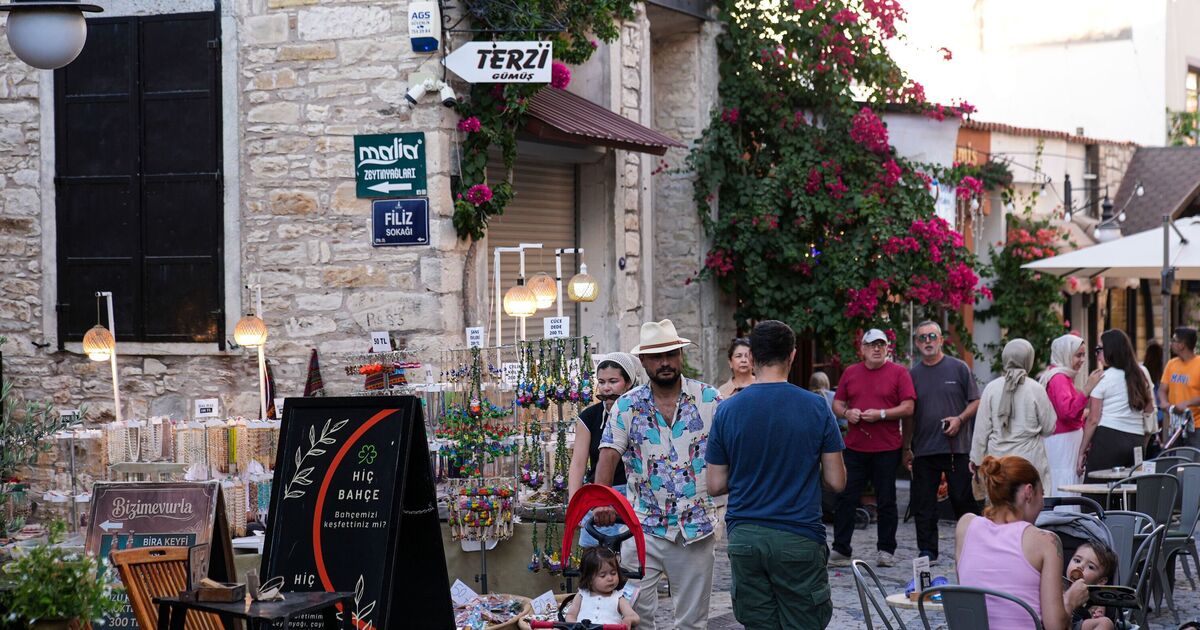
If you are planning on visiting Turkey this summer, a travel agent has issued a warning surrounding a “massive scam” prevalent in the tourism hotspot that combines Western Asia and Southeast Europe.
Jake Cullum-Hollins took to TikTok to detail the fraudulent behaviour, telling his followers that many have likely fallen for the scammers’ trick before. “When shopping in Turkey, paying in Euros or British Pounds technically means you are being scammed,” he began.
The travel agent elaborated, pointing out if you are in a shop and you see items that are priced in either of the two currencies, then the shop in question is “already doing something wrong”. Jake continued: “The Turkish government requires all shops to advertise prices in Turkish Lira.”
Failure to do so means if holidaymakers pay in Euros or Pounds, the shops are able to take the money to the banks to convert into the native currency and make more money. “The biggest scam though is when they go to give you change,” Jake went on.
“This is because nearly every single time, they will give you it in Turkish Lira. And this is where they will skim more off the top.”
Jake warned “haggling” any prices won’t help your cause. “If you go on to haggle something in British Pounds or Euros – and then you go to pay by card – this is where it gets worse,” he pointed out.
This is because on the vendors’ card machines, they can only charge in Turkish Lira. “Therefore they are going to put a different amount in Turkis Lira – because again, they are expecting you not to know the exchange rate,” he said.
Jake closed his clip with a summary. “To avoid paying more than you should unknowingly, always pay in Turkish Lira,” he concluded. “Either in cash, or agree a price in Turkish Lira to pay by card.”
Writing in response, one British traveller reported: “Currently in Turkey and paid everything in Lira. I would recommend that you don’t use pounds or Euros got a passport cash card.”
To which Jake advised: “Great advice, but those cash card rates suck. Much better off with a bank like Starling or Monzo that doesn’t charge you to buy things overseas to get a near perfect rate.”
While a second person shared: “Been to Turkey every year since 2016, always paid in Euros, its a personal preference.”
Jake hit back by reiterating: “By paying in Euros you’re playing into their hands. The more we stop it, the more it will become the norm that Turkish Lira is the standard and the Turkish government rules get adhered to.”