
How families with disabilities travel together
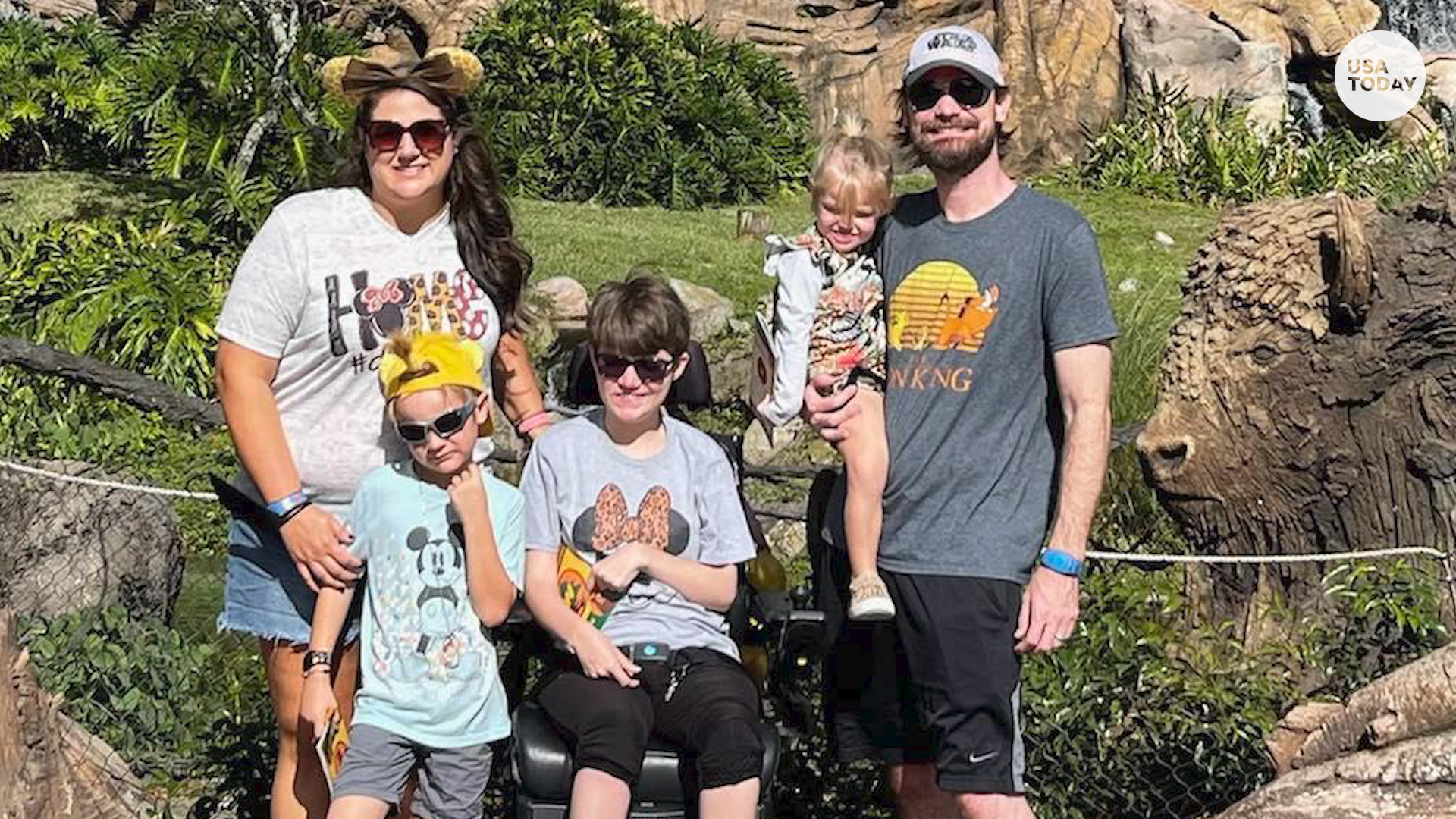
Bethany Hildebrandt is meticulous about planning trips around her family’s needs as her eldest child, Kaylee, has cerebral palsy.
Payton Kirol, USA TODAY
- Blind singer Lachi uses a stylish, bedazzled “glam cane” to navigate while traveling for her music career.
- Lachi advocates for disability culture and aims to break stigmas through her music and public speaking.
- She highlights that true travel accessibility includes dignity and autonomy, not just ADA compliance.
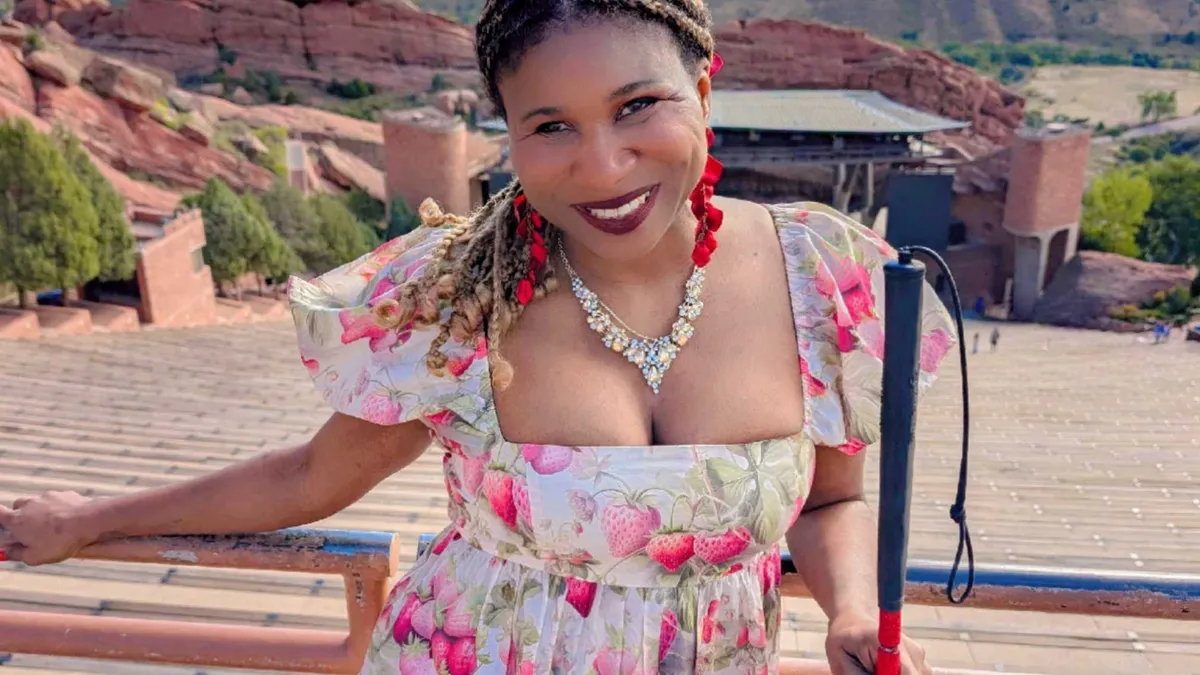
Blind singer Lachi calls it her “glam cane”: a colorful, bedazzled cane that helps her navigate her surroundings while also stylishly matching her outfits.
Also known as a white cane — although hers are far more vibrant than that — the device gives Lachi autonomy when she’s traveling, as she’s often on the road for personal trips and gigs as a touring performer and speaker. “I am a globally touring performer and speaker, so heavy travel is a part of everyday life for me,” the New York City-based singer, whose full name is Melissa Ulachi Ulanma Offoha, told USA TODAY. Her cane serves as a conversation starter, creating the chance to educate people about her disability.
Lachi – her stage name a play on her Nigerian middle name Ulachi – was born with colomba, a condition in which the fetus’ eyes fail to develop properly. As she gets older, her vision also progressively worsens, now making her fully blind in one eye and partially blind in the other.
According to the American Optometric Association, vision disability is one of the most common among both adults and children. There are around 12 million Americans over the age of 40 with vision loss, and an additional million who are considered legally blind.
As an artist, speaker and soon-to-be author of “I Identify as Blind” (Penguin Random House 2026), Lachi embraces being a Black woman with a disability. She uses her voice — literally, as a singer — to break stigmas around disabilities while inspiring younger people with vision impairment.
In her upbeat song “The Bag,” Lachi sings about success and wealth, sharing the song on Instagram with a caption that said how blind people “are often portrayed as frail, mystical, or tragic in media, but in reality, we’re lawyers, parents, athletes, CEOs, and yes — musicians out here getting that BAG.”
USA TODAY met with Lachi on a recent trip to Denver with accessible travel company Wheel the World to learn more about what it’s like to travel with vision impairment and what true accessibility actually means.
Making travel work for her
For the music artist, travel is a source of inspiration, from St. Petersburg to Honolulu. “Each new place offers different cultures, rhythms, tastes, languages, and landscapes, not as distant concepts, but as living, breathing realities, which is gold for an artist like myself,” she said. “While we are all super diverse, we are vastly interconnected, and globe-trotting has reinforced that in me.”
One trip that stands out in her memory is a visit to St. Petersburg during the holidays in 2019, a destination she felt was accessible and welcoming. From the architecture to the wintry weather, Lachi said it felt like being in a live snow globe. “People were curious, kind, and a little surprised to see a blind Black American woman rolling solo through their streets,” she said. “But that’s the beauty of it. Just my bold presence alone is enough to tilt the otherwise fixed narratives of the thousands of silent bustling people who experienced me.”
But travel also provides just as many challenges as it does creative sparks.
While the industry has made strides in accessibility offerings, with more destinations being verified as inclusive, such as Denver and Silver Springs, Georgia, there’s still progress to be made. In one country, accessibility can vary from city to city, with Lachi recalling touring Peru, where the capital of Lima was highly accessible, but other cities were more challenging.
Still, she calls herself a hustler, not letting her vision impairment hold back her career or travels. “We aren’t quite there yet for a blind girl like myself, so I do what I can to self-accommodate,” said Lachi, who is also the founder and CEO of Recording Artists and Music Professionals with Disabilities, an organization bringing disability culture to the forefront in the music industry.
In addition to her glam cane, Lachi often travels with a sighted companion. She also relies on technology, like screen reading on her phone, voice-activated apps at airports and smart glasses, to help her navigate. For every gig, she sends an Accessibility undefined that outlines her disabilities and specific needs to the client.
“While I’m still blind, these things keep me from being impaired, from slowing me down,” she said. “If society were more accessible for blind folks to navigate, I wouldn’t have to McGiver my own hodge-podge of access tools to suit my needs.”
Despite her efforts, there are still times when Lachi has to miss out due to a lack of accessibility, like going to a club, street festival or staying in a chic boutique hotel simply because they aren’t inclusive. “I’d love to encounter some accessible hotel rooms that aren’t stripped of aesthetic or luxury – because accessibility shouldn’t mean sterile or second-rate,” she said.
True accessibility goes beyond ADA-compliant
With one in four Americans reporting having a disability, making destinations more inclusive means giving travelers like Lachi the freedom to explore and make lifelong memories, with autonomy and dignity.
While this encompasses initiatives like hotels, venues, and restaurants becoming ADA-compliant and airport terminals with kiosks and apps to seamlessly guide people, full accessibility dives much deeper than these measures: it’s also how travelers with disabilities are treated.
“True travel accessibility means disabled people moving through the world with the same agency, spontaneity and style as anyone else – being able to experience the culture, histories and humanity that travel has to offer,” she said.
Lachi doesn’t support the term “differently abled” as a way to avoid having honest discussions about disabilities, or how people with disabilities can be infantilized in what she dubs “handler’s syndrome.” This is when people address a handler or companion rather than the visibly disabled person themselves.
One time at an airport, when she was waiting by her gate, an airline employee asked the man next to her if she needed help, assuming he was her guide rather than asking her directly. She chimed in that she was traveling independently, but added, in her own way: “If I needed help, I have no trouble charming you into buying me a whole drink first.”
For now, Lachi continues to drop empowering music while traveling the world with her blinged-out cane in hand – and inspiring others in her community along the way.
“I want more people to understand that travelers with disabilities just want dignity and autonomy. That’s what every traveler, non-traveler – in fact every human – wants,” she said. “To be able to get with friends, plan out a fun outing, go to that outing, and have fun with their friends, feel welcome, included, and make great memories.”
Travel tips for visually impaired travelers
By now, Lachi knows what steps to take so she feels confident and empowered on her travels. “Any difficulties traveling is not about blindness, it’s about not having or knowing about the tools one needs to travel a little differently,” said Lachi.
Here are some travel tips for blind travelers, according to Lachi.
- Give yourself extra time. To reduce any time-induced stress at airports or anywhere else on her travels, Lachi builds in extra time to navigate her surroundings.
- Plan ahead. By calling or researching ahead of time, she has a better idea of what to expect at an airport or hotel, and employees can also have an idea of how to accommodate her.
- Find your tools for independence (or interdependence). Smart glasses, GPS-integrated phone apps and of course, her glam cane are a few tangible tools that help Lachi on her solo travels. People can find what works for their needs, and to also build confidence to ask for help from others.