
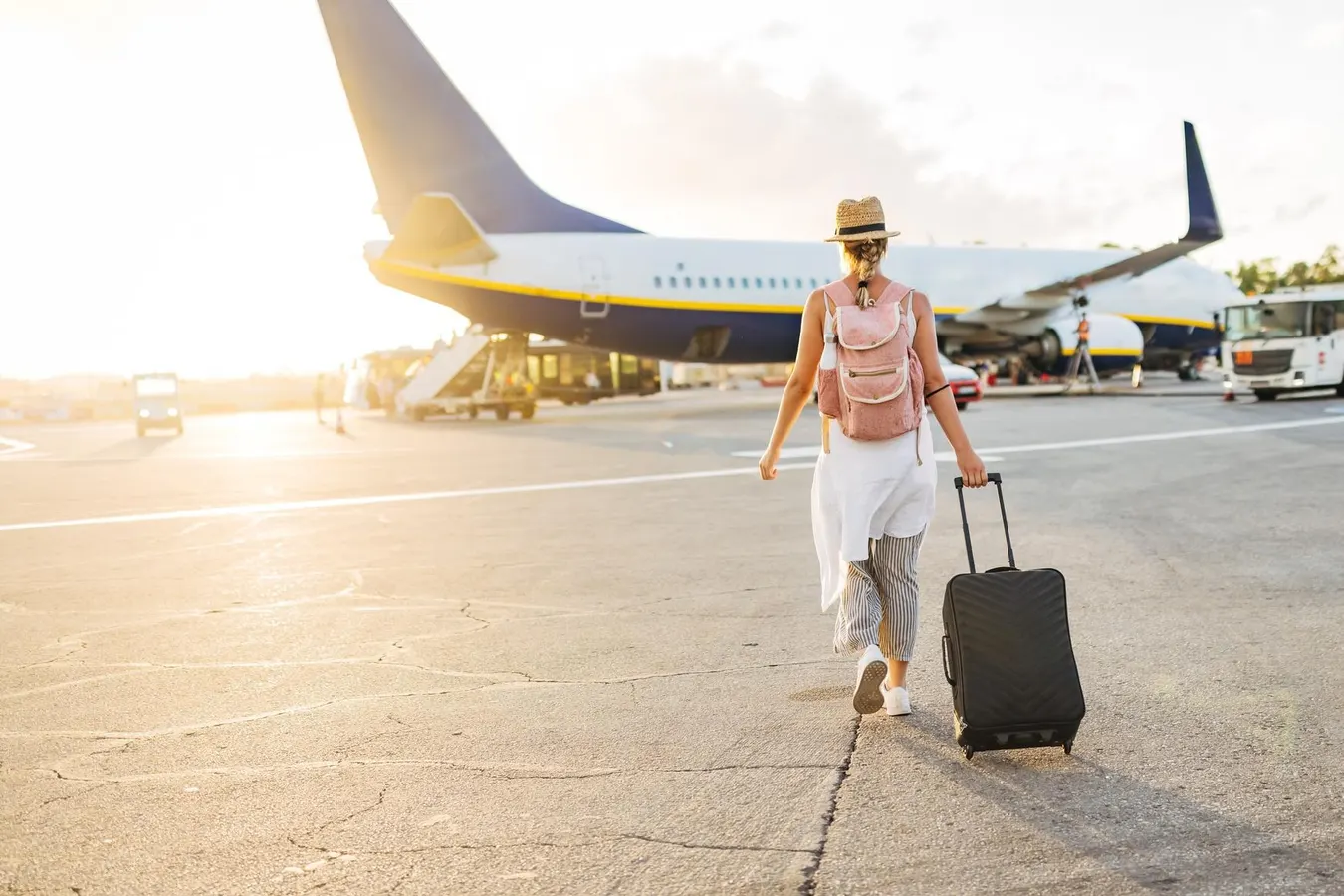
According to Glimpse/Google Trends data, this past July the search term “solo travel” had more than 60,000 U.S. searches—it’s highest level ever. The U.S. Solo Travel market was valued at $95 billion in 2024 and is expected to reach over $190 billion by 2030 according to Research and Markets. Over 75% millennial and Gen Z travelers were planning solo trips last year according to American Express. Women account for 71% of solo travelers, thanks to improved safety and connectivity according to Virtuoso.
So, it’s not surprising that a slew of tour operators decided to launch programs targeting this growing market.
“We have seen a huge rise in solo travelers, meaning single bookings on a trip,” says Alex Sanchez, consumer marketing manager in the United States for G Adventures. One theory is that Covid lit a spark under people who have always wanted to see certain destinations, but for whatever reason put it off. When travel restrictions were eased post-Covid, many people decided that it was now or never, and realized that they didn’t need to wait for a partner or friend to join them. “So our single bookings soared, and this is part of the reason we created our Solo-ish style of trips,” says Sanchez. “As a way for solo travelers to feel welcome and safe, and also offer the opportunity to meet like-minded people along the way.”
Solo travel is one of the fastest growing sectors in tourism. It’s especially popular among women.
getty
Traveling to a new country alone can be intimidated. Where should you go, which hotels are safe, what activities should you plan? Going on a solo tour allows travelers to not feel like a third wheel on trips with mainly couples, groups of friends, or families, but still allows for the safety and security of a group.
“What makes our solo trips a little bit unique from our other G Adventure trips is that we have designed these trips with different components in mind,” says Sanchez. “The first couple of days are very front-loaded with group activities so you get to know the fellow travelers in your group. Those group activities are purposefully and intentionally created so travelers can start making connections. Later in the trip there’s independent time—so you can choose if you want to spend it with your fellow new friends or explore on your own.”
Destinations Popular for Solo Travelers
Boudha Stupa in Nepal.
getty
G Adventures launched their Solo-ish tour program last year—there are over 30 different tours offered—and it’s not surprising to learn that Nepal, a small country nestled in the Himalayan Mountains between China and India, has quickly become a fan favorite.
People think of Nepal and immediately think of Mount Everest. Nepal has eight of the ten tallest mountains in the world, but there’s so much more to Nepal than trekking. “I always tell people to come to Nepal to see the culture, the history, the architecture in addition to the beautiful nature,” says Jamuna Khatri, a Nepal-based CEO (chief experience officer) at G Adventures. Yes, the trekking is amazing, but you don’t have to be a hiker to appreciate everything this unique country offers.
Bhaktapur is a UNESCO world hertage site in the Kathmandu Valley, Nepal.
getty
In Nepal, the solo-ish tour starts in Kathmandu and the first activity after meeting the group is a cooking class to make momos—a popular Nepali dish similar to a Chinese dumpling. “The group bonds while cooking together, and conversation often flows as people get to know each other,” says Khatri.
The Nepal trip starts and ends in Kathmandu, and every two nights the tour moves to a new city. That means there are plenty of places to explore, but also ample van time to get to know each other. In Bhaktapur, the group explores Durabar and Datatreya Square before taking part in a painting class—another fun group activity to get people talking. Another day, there’s a hike through the rain forest up to the top of Champa Dev. In Pharping, the group visits both Buddhist and Hindu landmarks—both religions are found in Nepal—and stops include Buddhist Asura Cave, Vajrayogini Temple and the Shesh Narayan Hindu Temple.
A rhino in Chitwan National Park, Nepal.
getty
One of the highlights of the trip is Royal Chitwan National Park, home to Nepal’s greatest safaris, where over a dozen rhinos can be seen. The last stop on the trip—before heading back to Kathmandu—is Pokhara where free time is given. People can spend the day independently exploring, but more often than not, the group is well-bonded by then and the last few days are spent exploring together.
Khatri notes that the success of solo tours, like Nepal, are in part due to the fact that it’s hard to schedule a trip with a friend, relative or partner. Schedules are complicated, so trips keep getting pushed off. “With solo tours, people don’t have to wait for anybody to travel, so they can travel any time and they can make strong connections with new friends and people all over the world,” says Khatri. That flexibility—going when you went to go, where you want to go and not having to depend on anyone else—is priceless.
Opportunities to Serve the Community
Travelers want to meet local Nepalese and really explore their community.
getty
All the CEOs (chief experience officer) on G Adventures Solo-ish tours are women and that was done intentionally. “Most solo travelers tend to skew female and we thought it was really important that women feel that they have a local professional guide that is there for them,” says Sanchez. She notes that G Adventures always use local trip guides that live in the places where they run the trip.
In some countries, it can be difficult for women to find work, especially as a tour leader for an extended trip. “Not only do the guests feel safe and comfortable with a woman leader—most of the guests are women, after all—but it gives opportunities to women to carve out their own career and have independence,” says Khatri. There’s always talk about equality between men and women in the tourism sector, but this is action to make the equality possible.
Travelers are demanding more from their trips—more authentic experiences that not only enrich their own lives, but also the lives of the communities that they are lucky enough to see and experience firsthand. “A core foundation at G Adventure is community tourism—the idea that we are changing, and our travelers are changing, lives through travel by going on our trips,” says Sanchez. “We really make sure that every component of our trip is designed with not only the traveler, but the community that they’re visiting.” G Adventures partners with Planeterra, a non-profit turning travel into impact by building a network of community tourism enterprises around the world, ensuring tourism dollars stay in the hands of local people and their families.
In Nepal, the community tourism element takes place in Pokhara. After seeing the sunrise near the top of Sarangkot, travelers head to a nearby village for breakfast with a local initiative supporting women running a rural coffee plantation enterprise.
Bucket List Destinations
Nepal is a bucket list destination for many solo travelers.
getty
“We design the tours by looking at the travel landscape,” says Sanchez. “What are our competitors doing? What’s going on in the market? Morocco, for example, is a huge destination for solo travelers, so that was an obvious one for us.” Costa Rica is another popular destination for people who are taking their first trip out of the country. Then there are places like Nepal and China—bucket list destinations that travelers want to explore, but not sure how to do it as a solo traveler.
There is a deeper desire from travelers to really understand and connect with the places that they are going. “I think people are starting to steer away from the all-inclusives and the trips where you’re not a part of the actual destination that you’re exploring,” says Sanchez. “For G Adventures, this goes directly in line with the idea of community tourism.”
Companies and travelers are also becoming increasingly conscious of over tourism. “Post covid people are ready to travel and have all these great experiences and as a tour operator we have a responsibility not to bring people to the places where there are just too many travelers,” says Sanchez. “We often look at off-the-beaten path destinations or going in the off season.”
What does the “ish” mean in G Adventures “solo-ish” tours? “It is because you’re within a small group,” says Sanchez. “We want to break the idea that solo travel means that you have to be alone on a mountain in a different country.” Instead, solo-ish tours mean traveling within a small group that gives you that flexibility to travel the world on your own, independently (you don’t need a friend, spouse or roommate), you can still explore the things you’re passionate about, but have the comfort and the safety of being in a small group. “Often the group size is eight or ten, but never more than 16,” says Sanchez. “It creates this intimate relationship between the travelers and the CEO.”