A TRAVEL app is being rolled out across Europe in a bid to prevent massive airport queues.
From April 10, the new Entry/Exit System (EES) is being fully rolled out across countries in the EU.
This will replace the current passport stamping with biometric checks instead, including photographs and fingerprints, as well as additional questions.
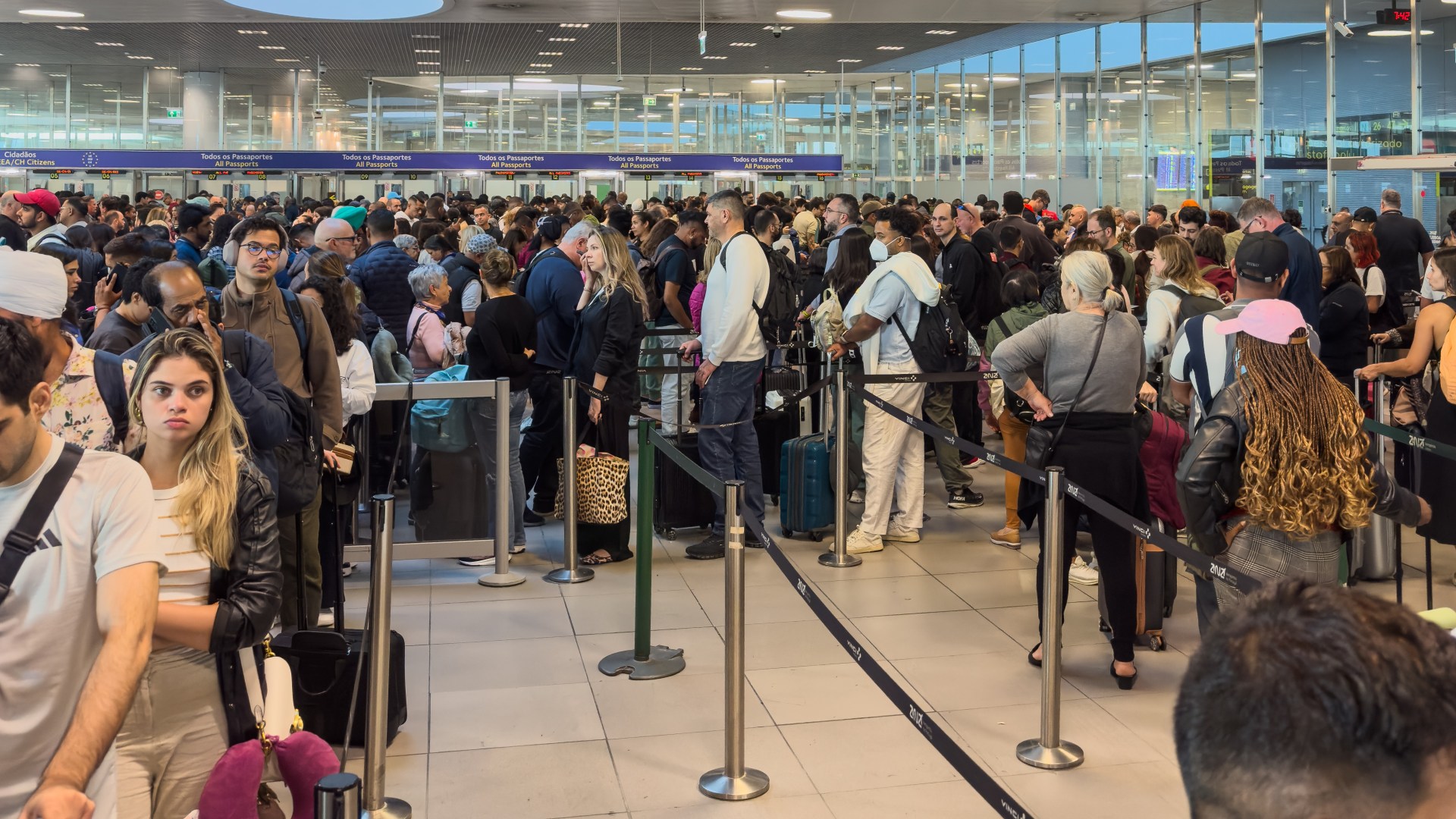
The new rules have already caused massive airport queues, with one Sun Travel Reporter waiting three hours to get through.
So the new Travel to Europe app has been launched by the EU, which will allow Brits to submit details before they travel.
This includes passports and a photograph, which will reduce the long waits at the border.


Created by EU’s border agency Frontex, travellers to Sweden will be able to fully use the app which includes passport details, facial images and entry questions.
Portugal currently only allows passengers to answer the pre-entry questions.
While only Sweden and Portugal have signed up for it, is is expected to be rolled out to the other 29 countries soon.
It comes after massive queues at Lisbon Airport over the weekend, with local media reporting passengers arriving at 6am were “still queuing at 11am”.
Others have said they waited up to four hours in the airport queues on social media.
It comes after the Portuguese airport was forced to suspend the EES system back in December due to the massive queues.
Sun Travel Reporter Alice Penwill was caught up in it at Lanzarote too.
She said: “My Jet2 flight landed at 1:30pm one on a Thursday afternoon in early March – and I didn’t get out until just after 4:30pm.
“The queues stretched along the corridor and zigzagged all the way through the arrivals hall that took passengers to EES registration.
“I’d already signed up to EES, having visited Lithuania a few months ago – but that was no use at all.
“There was no separate queue for – or any staff for that matter – advising those who have registered to head straight to the passport e-gates.”
In the UK, the new EES checks have been delayed at both Dover and Folkestone due to technical problems.
LeShuttle, the Eurotunnel connecting Folkestone to Calais, said in statement that they would be rolled out when they get the “formal go-ahead”
And a Port of Dover spokesperson, which also connects the Kent town to Calais, said they were forced to pause the rollout because of “issues with French technology“.
The UK Foreign Office has already updated the travel guidance, warning “EES checks should take only a few minutes per person, although longer waits at border control are possible, including for your journeys back to the UK”.
Here’s our top expert tips on how to avoid the EES chaos this year.