Do you travel? Will you travel sometime in the (near or far) future? Do you want to be able to charge or use electronic devices in a different country?
If so, you probably need a travel plug adapter. There’s a vast variety of outlet types, not to mention different voltages and frequencies, around the world, so you can’t expect your phone charger to just plug in and work wherever you’re headed.
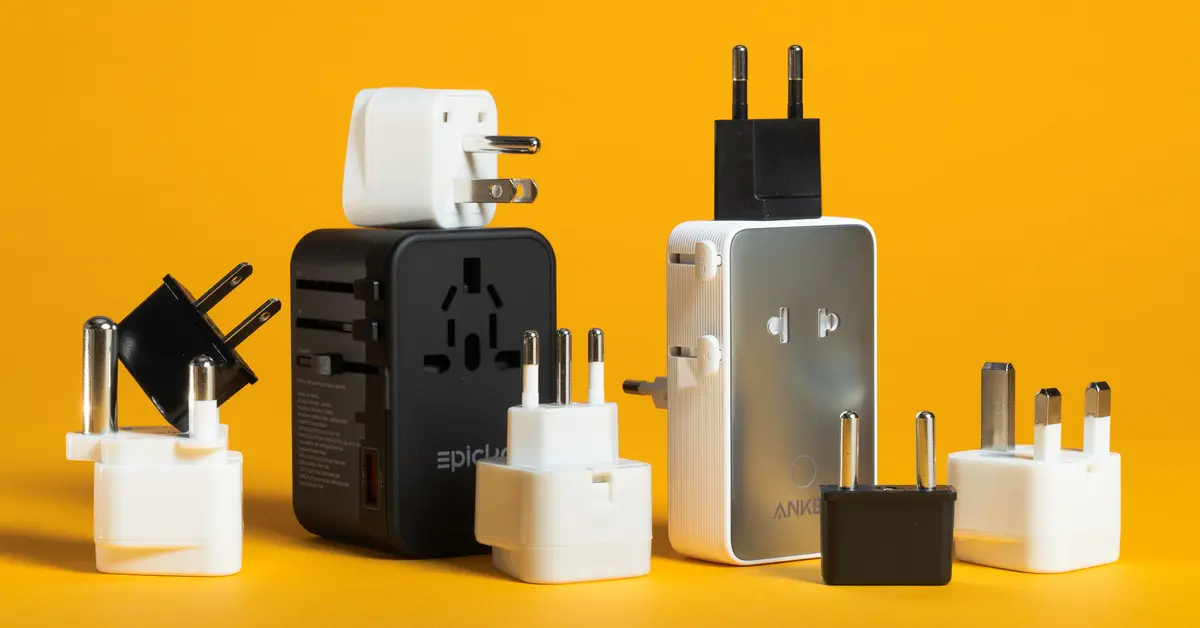
You have two main choices when it comes to travel plug adapters: universal-style travel adapters (one device with multiple sets of prongs that you extend and retract) and smaller, individual plug adapters, which usually come in sets. Both have their pros and cons.
Universal travel adapters are for the person who wants one handy adapter that will work in the majority of countries. You can keep it next to your passport and toss it in your luggage when you’re packing. The models we considered have USB ports, so you don’t need to worry about bringing a separate charger for anything that charges via USB (think phones and noise-cancelling headphones). However, universal adapters are bulky, they have parts that can break, and most take longer to charge a phone or tablet than a good USB wall charger.
The alternative is small and simple plug adapters, which attach to the prongs of your current USB charger (whether it’s a multiport model or the charger that came with your device) to allow it to fit a foreign outlet. These adapters can work because nearly every modern charger can adjust to the available voltage in pretty much every country, as long as you adapt the prongs to fit in the outlet. However, you do need to do some research before you leave to ensure that you’re bringing the right plug with you.
We found great options of both types.
Where in the world will your travel plug adapter work?
All universal travel adapters have four different sets of prongs, which cover most countries that most Americans tend to travel to. First is the big, wide-blade UK-style plug (called Type G). Next is the round Europe-style plug, aka the Europlug (Type C). Third is the angled small-blade style (Type I) found in Australia, New Zealand, Fiji, other parts of Oceania, and a few other areas. Last are the small US-style blades (Type A or B).
But many places, including some parts of Brazil, South Africa, and India, are not covered by these styles. And that brings us to perhaps the most important fact: Getting your gear to work in different countries isn’t quite as simple as it should be, and there’s no single solution that’s guaranteed to work for everyone.
Our picks should work for you, but you may have some random piece of equipment, or be traveling to some country, for which our “good for most people” picks just won’t work. We’ll try to mention such caveats when we can, but the world is a big place, and when it comes to electricity and wall outlets, there’s a lot of variation. That’s important to keep in mind.