
A ‘coast-to-coast storm’ could throw the holiday plans for millions of Americans into chaos as a record number of people travel this week for Thanksgiving.
Meteorologists said the fast-moving system will impact travelers in the Southwest on Monday, before quickly affecting millions in the Midwest and then bringing a wintry blast to the Northeast on Wednesday.
On Monday, thunderstorms had already wreaked havoc on air travel out of Texas, where a morning ground delay at Dallas-Fort Worth International Airport had canceled dozens of flights and delayed over 200 more.
Heavy rain and thunderstorms moved through the West on Sunday, with more downpours expected to snarl travel today in the Pacific Northwest and for more than a dozen states in the Plains, from Iowa to Texas.
AccuWeather’s official holiday travel forecast for Monday has declared conditions ‘poor’ in Washington, Idaho, Montana, Texas, Louisiana, Arkansas, and Oklahoma.
Cold air moving sown from Canada also threatens to bring a drop of several inches of snow throughout the northern US, including in North Dakota, Wisconsin, and Michigan, this holiday travel week.
Even more states are expected to find themselves dealing with poor travel conditions for both flyers and drivers on Tuesday and Wednesday, further east.
The American Automobile Association (AAA) has estimated that 81.8million people planned to travel more than 50 miles from their homes this week to celebrate Thanksgiving with family or friends, a new travel record.

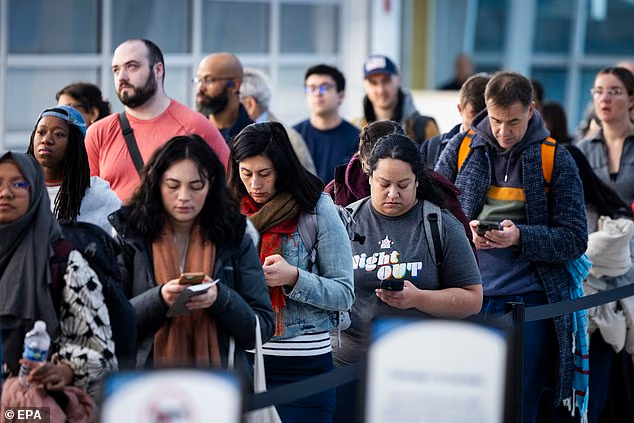
Travelers stand in line as airports expect major delays this week due to a widespread storm system (Stock Image)

A coast-to-coast storm is predicted to move from the Southwest to the Northeast during the Thanksgiving travel period, affecting both drivers and flyers
AccuWeather meteorologist Reneé Duff said: ‘The Pacific Northwest could face some of the most severe impacts from the weather in the days leading up to Thanksgiving.’
Tuesday will be the storm’s busiest day as it spreads heavy rain, gusty winds, and even some thunderstorms across a huge stretch from the Gulf Coast to the Midwest, including poor travel conditions in Mississippi, Alabama, and Tennessee.
AccuWeather added that the worst headaches on Tuesday will bring soaking rain and strong wind gusts to the Midwest, and likely cause hundreds of flight delays at major hubs like Chicago O’Hare and St Louis Lambert, and Minneapolis–Saint Paul International Airport.
Farther south, cities like Memphis, Little Rock, Tulsa, and Dallas will still be dealing with rounds of heavy showers and thunderstorms tomorrow, keeping roads slick and airports on alert for more ground delays.
In the north, a mix of rain and wet snow is expected across Minnesota, northern Wisconsin, and Michigan’s Upper Peninsula, threatening to make interstates like I-35, I-94, and I-69 treacherous for travelers who are driving.
AccuWeather lead long-range meteorologist Paul Pastelok added: ‘The best chance of severe weather will be in the South Central and Southeastern states.’
Meteorologists explained that this massive coast-to-coast storm started when a strong dip in the jet stream over the West Coast slammed into an ‘atmospheric river’ of deep moisture flowing in from the tropical Pacific Ocean.
That collision created a powerful low-pressure system in the Southwest that is now racing eastward, pulling in cold air from Canada on its north side and warm, humid air from the Gulf on its south side.

Meteorologists predict that the Southeast and northern US will experience the worst travel delays on Tuesday

More rain and cold conditions are expected on Wednesday throughout the East Coast
The huge temperature differences between the cold Canadian air and warm Gulf air have fueled the storm’s energy, producing everything from severe thunderstorms in the South to heavy snow in the North.
With the system being super-charged by moisture from both the Pacific and the Gulf, forecasters warned that this storm has enough fuel to keep causing widespread travel problems into Thanksgiving Day.
By Wednesday, the heart of the storm will shift eastward and bring a messy mix of heavy rain, strong winds, and even some snow to the Great Lakes and East Coast, potentially impacting travel from Maine to Florida.

Travelers in Dallas, Texas have already bee affected by the storm, which has canceled dozens of the flights and delayed more than 200 on Monday (Stock Image)
Meteorologists have predicted that more rain on Wednesday could upend driving conditions along the I-95 mega-corridor in Philadelphia, New York City, and Boston.
Farther west, the Midwest will still see lingering rain turning to snow across lower Michigan, northern Indiana, northern Ohio, and western Pennsylvania, creating icy conditions on key routes like the Ohio Turnpike and Pennsylvania Turnpike.
Once Thanksgiving ends, temperatures are expected to remain frigid throughout most of the US, with the National Weather Service (NWS) predicting below-average temperatures from Ohio all the way to Montana lasting through Sunday.