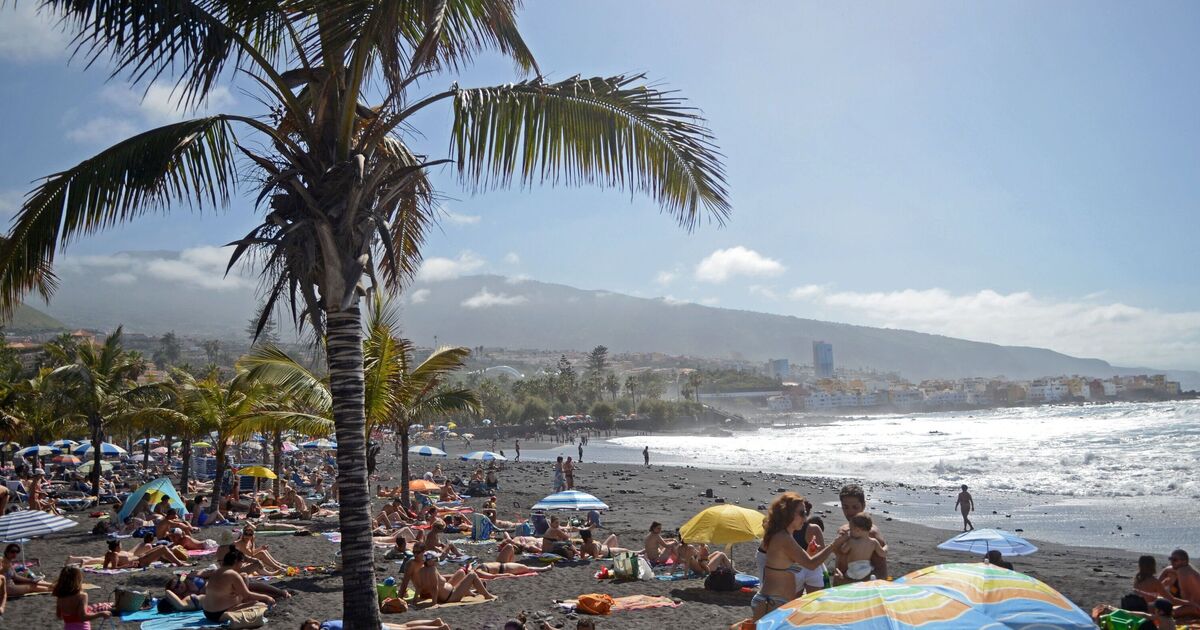

The Canary Islands have been added to the ‘No List’. (Image: Getty)
Several destinations around the world, including three European holiday hotspots, have been added to a “no travel list” for 2026. Travel publication Fodor has shared its no-travel list for 2026, highlighting places where “tourism is placing unsustainable pressures on the land and local communities.” Fodor’s annual “No List” has identified eight destinations to rethink for 2026, highlighting how problems like overcrowded tourist attractions, vulnerable ecosystems, and local communities struggling to survive are challenges faced by nearly any destination that puts “tourism above all else.”
The publication said the list is not a call for a boycott but instead encourages people to travel more responsibly and avoid contributing to unsustainable tourism pressures. In 2026, four of the eight named destinations are located in Europe.
READ MORE: Passport office issues warning to families travelling on summer holidays
READ MORE: Foreign Office issues no travel warning amid ‘risks and threats’

Thousands of people protested against mass tourism in the Canary Islands last May. (Image: Getty)
First among the European destinations on the list are the Canary Islands, home to seven main islands: Tenerife, Fuerteventura, Gran Canaria, Lanzarote, La Palma, La Gomera, and El Hierro.
Over the past two years, thousands of local residents on the islands have taken to the streets in protest, calling for a more sustainable tourism model, raising concerns about the lack of affordable housing and mounting pressure on local resources, and urging stricter limits on visitor numbers.
A spokesperson from ATAN (Asociación Tinerfeña de Amigos de la Naturaleza) told Fodor: “Access to housing has become virtually impossible due to the invasion of vacation rentals.
“Natural spaces are constantly degraded, with alarming losses in biodiversity. Overcrowding has erased peaceful places where we could once enjoy life there are no truly local spaces left.”
The spokesperson added: “We are losing our identity, culture, and, ultimately, our right to exist as a community.
“Tourism has become unlimited, mass-oriented, and largely low-cost party tourism that doesn’t come to truly discover the islands, but to consume a fake backdrop.”
The second European destination on the list is Isola Sacra in the beautiful Lazio region of Italy. Plans for a huge new cruise port have triggered backlash from campaigners and local residents who argue that this would damage fragile coastal ecosystems, increase pollution and bring unsustainable levels of cruise tourism to an already pressured area.
Paris’s famous Montmartre district was also singled out for the impact of overcrowding and rising property prices linked to tourism. About 11 million people visit Montmartre and its Sacré-Cœur each year, which is more than even the Eiffel Tower. Comparing the area to an “amusement park” Anne Renaudie, president of the Association Vivre à Montmartre told French news outlet C News that local residents are finding the influx of visitors “unbearable”.
She said: “Before, we used to say, ‘It’s a lovely neighbourhood, there’s tourism, but it’s part of everyday life’, but now we say, ‘There’s tourism, and we’re suffering because of it.”
Full list of the destinations to reconsider, according to Fodor’s No List 2026
- Antarctica
- The Canary Islands, Spain
- Glacier National Park, United States
- Isola Sacra, Italy
- The Jungfrau Region, Switzerland
- Mexico City, Mexico
- Mombasa, Kenya
- Montmartre, France