
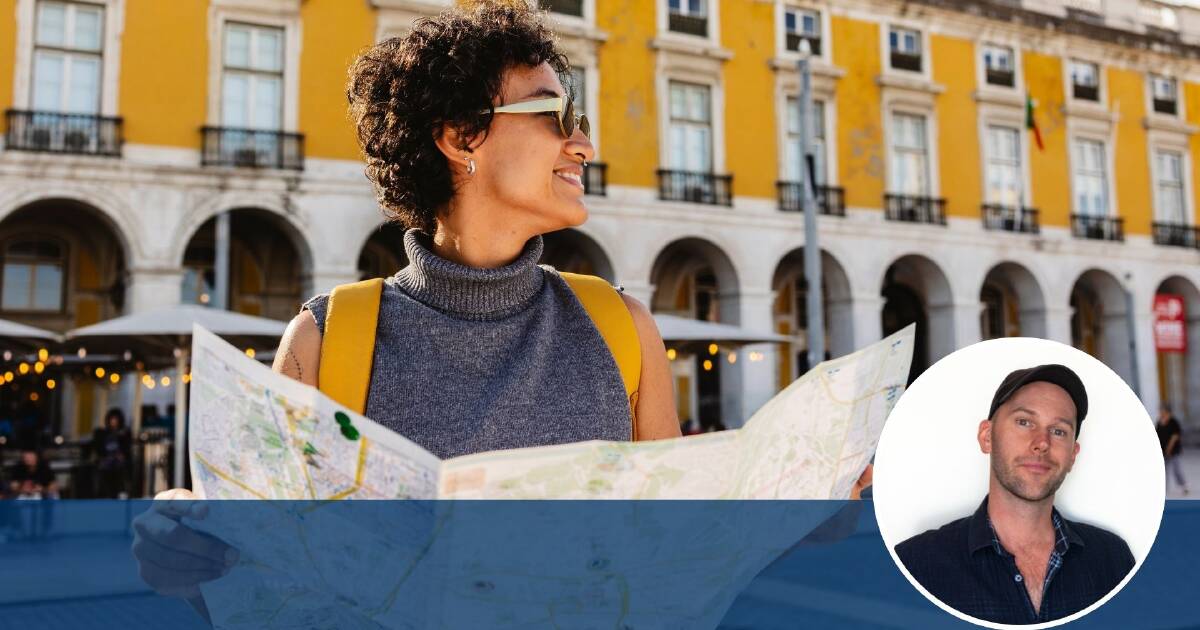
In his 20s, Steve Dillon travelled the world with his mates. Fast-forward to his 30s, and many of those friends were getting married, having kids, and focusing on careers. They just weren’t able to join the trips anymore. But Steve was still travelling, often solo, and wanted companions. So he created a tour company called Other Way Round that offered exactly that – group holidays for solo travellers in their 30s and 40s.
“I could tell it wasn’t just me in this situation, so I just needed to find people like me to go and do trips with,” he says. “Because if I’m doing a hike or a sailing trip or I’m at a restaurant having dinner, I’d much rather be with someone else.”
I met Steve when we were both hiking in Patagonian Chile last year (not on one of his tours) and I related to his story. Turns out, a lot of people do. Other Way Round has grown in the eight years since he founded it, and now has about 1000 guests a year who appreciate not having to make an effort to meet new people each day (“it just becomes like you’re travelling with a bunch of buddies,” he says) and now operates in 13 countries.
“From the outside, tours look better for countries like India or Morocco with tricky logistics, safety issues, or language barriers. But actually I think all trips are equally suitable because experiences like a safari in Tanzania or wine tasting in Croatia are just better done with other people.”
There was a time when the stereotype of solo travel was young backpackers in hostels across South East Asia and Europe, all putting the ‘party’ into ‘party of one’, but these days, it’s the Boomers leading the boom in solo travel. There are a number of reasons for this, including people generally living longer, being fitter in later years, and being more financially sound after retirement. There’s also just more drive to spend those post-career years travelling rather than playing bridge!
It all helps explain the popularity of tour companies like Just You, which only runs trips for people on their own, with a focus on the over-55 age group. Particularly since the pandemic, it’s seen huge growth in its business, increasing by about 15 per cent every year… even through global economic uncertainty.
“The mindset of the mature solo traveller is quite unique,” explains Just You’s managing director Adam Kemp. “They want total freedom to choose their destination, their own timing, and their own pace. They don’t want to compromise for a partner and wait around for friends.”
Just You is a 25-year-old British company that’s now making a concerted push into the Aussie market. Adam says it’s trying to address the barriers that mature solo travellers have – things like confidence, the anxiety of going to a restaurant alone, the stress of organising a complex itinerary, and single supplements (which Just You doesn’t charge, even though everyone gets their own room).
To help, Just You has also recently launched its own social media network called Kindred. It gives solo travellers an online space to share stories and advice. And it also allows the company’s guests to chat with their tourmates weeks before the trip. “By the time they reach the departure gate, they aren’t travelling with a group of strangers anymore, they’re meeting up with friends,” Adam says.
The hype about solo travel isn’t just a passing fad. The me-tour is not a detour. Experts predict the solo travel market will globally be worth $1.5 trillion by 2030, which is why even some of the largest companies are now jumping on board. For example, Asia-specialist Wendy Wu Tours is now dedicating some departure dates on its most popular tours as solo-only, with your own room included.
G Adventures has also recently launched a series of trips called ‘solo-ish tours’ where you need to be travelling alone to join. Although the itinerary is similar to other tours, there are additional dinners and experiences to get to know your fellow guests. You aren’t guaranteed your own room (unless you pay the single supplement) but there is a day dedicated to free time (introverts, rejoice!). Also, all tours are led by female guides, reflecting statistics showing the majority of guests are women.