

Aviel Siman-Tov is CEO, Co-founder and Board Member at Oversee.
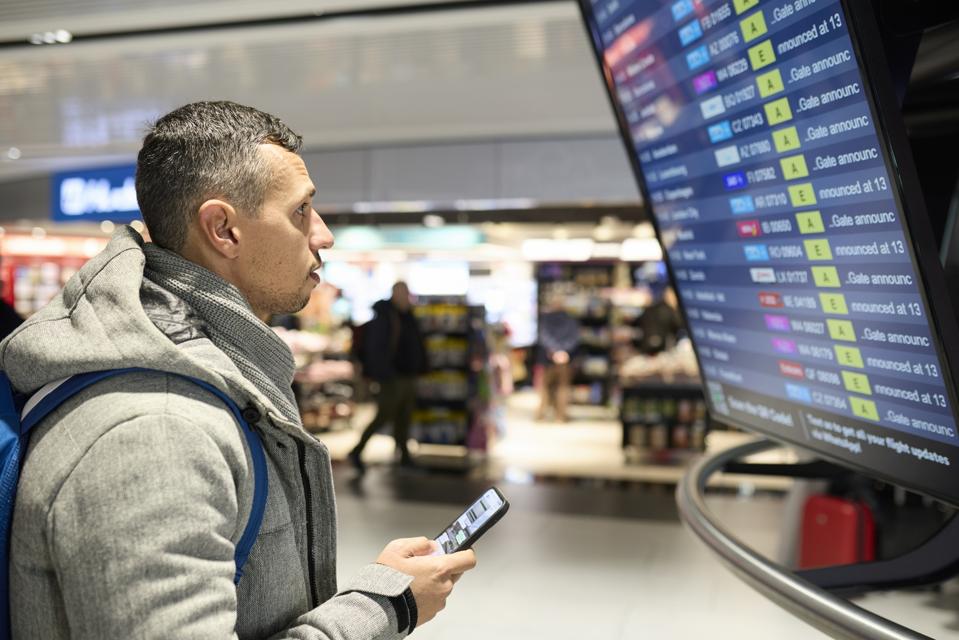
In July, I was one of thousands of travelers stuck in Paris Charles de Gaulle Airport when flights were suddenly grounded. As I looked for a comfortable place to wait it out, I couldn’t help but notice business travelers hunched over laptops. I could imagine them scrambling to salvage meetings that had been planned for months. It’s happened to all of us.
It was also a reminder that in the travel industry, smooth sailing has become the exception. From the Covid-19 pandemic to economic slowdowns, corporate travel providers have learned one thing: The ability to adapt isn’t a competitive advantage; it’s a survival skill.
That’s why operational resilience has emerged as the new cornerstone of business value in 2025. It’s no longer just about minimizing disruption. It’s about delivering better, faster service at scale, even when things go sideways. And, increasingly, it’s also where the strongest ROI is being found.
From Recovery To Resilience
According to the Global Business Travel Association, global corporate travel spend is on track to hit $1.57 trillion in 2025, approaching pre-pandemic levels. But this growth isn’t simply a return to normal; it’s a reset. Business travelers expect more: faster service, smoother experiences, 24/7 support and end-to-end personalization.
Legacy workflows and service models can’t keep up. Travel brands that will lead the next era of corporate travel must design operations that hold up under pressure, whether it’s a staffing shortfall, a tech outage or a global disruption. That’s operational resilience in action: systems, tools and cultures designed to absorb disruption and still deliver.
The consequences of failing to build resilience are clear.
During the December 2022 holiday season, Southwest Airlines experienced an operational breakdown of historic proportions. Severe winter storms were the initial trigger, but the airline’s outdated crew scheduling system was a major factor in the chaos.
Southwest’s operations collapsed, stranding more than 2 million passengers and canceling nearly 17,000 flights. In December 2023, the U.S. Department of Transportation penalized the airline $140 million—the largest consumer protection settlement in its history—which included a $35 million cash fine and $90 million in travel vouchers to affected passengers. Overall, the total financial impact of fines and reimbursements exceeded $750 million.
In response, Southwest committed $1.3 billion to improve operational resilience, including upgrades to crew scheduling software, expanded winter operations equipment and systems to automatically issue compensation when disruptions occur.
The lesson is clear: Resilience isn’t about patching holes after the fact. It’s about designing for disruption so that when the unexpected happens, service doesn’t collapse.
Why Operational Resilience Is A Strategy, Not Just A System
Many companies assume operational resilience just means upgrading their tech. That is a large part of it, but it’s also a cultural and operational shift that involves adopting intelligent tools to empower agents, automate complexity and enable fast, confident decisions in real time. It has become the backbone of trust, responsiveness and continuity in a travel landscape that’s anything but predictable.
One practice that makes a tangible difference today isn’t just training; it’s empowering frontline teams with AI-based automation. When sudden cancellations, IT outages or major weather events hit, automated rebooking tools enable agents to respond in minutes, not hours. Instead of manually scrambling, they can secure alternatives quickly, keep travelers moving and maintain composure even in high-stress situations.
The result is real resilience: enabling agents to provide faster responses, smoother service continuity and less impact on the traveler. This is a strategic approach. By shifting the heavy lifting to automation, teams are freed to focus on higher-value service and issues that require human intervention. Such an approach gives both travelers and corporations confidence that disruption will be handled efficiently. Agents using automation tools are more efficient under pressure, rerouting travelers quickly and resolving disruptions efficiently.
We saw this in action during last summer’s U.K. air traffic control outage. While travelers of other providers waited hours to rebook, a major TMC’s agents, supported by automation, secured alternative flights for their corporate customers within minutes, a sharp contrast that showcased how AI is redefining traveler care.
That’s resilience in action: not just smarter systems, but smarter, better-equipped people.
Why Resilience Pays Off
Here’s the part many miss: Operational resilience doesn’t just help during crises. It delivers measurable business impact every day. And AI does play a starring role.
In fact, a recent study on “The Economics of AI Adoption in OTAs” highlights how AI-backed systems contribute directly to operational resilience and measurable business outcomes:
• Lower operating costs by automating routine and resource-heavy workflows
• Improved forecasting and decision-making through real-time data
• Enhanced traveler satisfaction with scalable, 24/7 personalized service
• Accelerated market expansion by removing operational bottlenecks
Ultimately, the reason to invest in operational resilience is simple: It pays off. It reduces manual overhead. It minimizes service disruptions. It increases traveler satisfaction. And it gives leadership the confidence to grow, knowing their operations can scale and flex as needed.
Final Thoughts: Why The Future Belongs To The Resilient
These aren’t just efficiencies; they’re competitive advantages. I’ve seen travel management companies that invest in resilience not only to weather disruption better, but also to win long-term trust. This turns moments of crisis into proof points that keep clients coming back.
In a world where disruption is constant, operational resilience is the smartest investment a travel brand can make. It’s the differentiator, opening the door to fewer errors, faster responses, stronger SLAs and happier travelers.
If you’re wondering where to start, begin with your frontline teams. Give them the tools and training to make fast, confident decisions when things go wrong. Technology will amplify their impact, but culture and readiness make the difference.
The next disruption will come. The real question is: Will your operations be ready?
Forbes Technology Council is an invitation-only community for world-class CIOs, CTOs and technology executives. Do I qualify?