
As a result, Bhutan has historically felt like something of an elusive, exclusive destination – and reaching it has been part of its mystique.
Paro, in western Bhutan, has been Bhutan’s lone international airport, but because it’s served by just two airlines (Drukair and Bhutan Airlines) and usually welcomes about eight flights a day, travellers from North America and Europe typically spend multiple days in transit with layovers in places like Bangkok, Kathmandu and Delhi to reach it. Fares aren’t cheap – round-trip flights from connecting hubs can cost upwards of £890 ($1,200) – and arriving in Paro offers its own drama.
Located at 2,243m altitude with 5,500m mountains rippling around it, Paro is considered one of the most challenging airports in the world. Because it sits in a narrow, winding mountainous valley and landing and takeoff require multiple sharp turns, pilots must navigate its tricky approach entirely by sight with no radar or computer assistance. In fact, fewer than 50 pilots are qualified to land there, and the airport welcomed just 88,546 visitors in 2025.
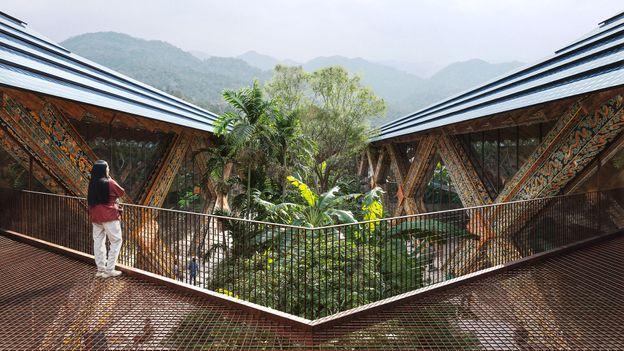
Most tourists who touch down in Paro follow a well-worn itinerary to Thimphu, Punakha Valley, Phobjikha Valley and Bumthang – each crowned with five-star luxury properties. Those flying in rarely venture to Bhutan’s biodiverse southern fringes. The new airport will open up the country’s wilder, lesser visited south to a new wave of travellers and spiritual seekers, and also serve GMC, a special administrative region that King Wangchuck hopes will eventually house 1,000,000 Bhutanese and foreign residents by 2060. Gelephu is also set to get a 69km rail connection to Assam, India that will help form the country’s first-ever railway.