
Tourism has grown rapidly over the past few decades. Today, even remote beaches, hidden mountains, and small villages attract thousands of visitors every year.
While travel has helped people discover new cultures and destinations, it has also increased concerns about
overtourism and environmental damage.
Islands are among the most popular travel destinations in the world. Their clear waters, peaceful surroundings, and natural beauty attract travellers looking to escape busy city life.
However, large tourist crowds can put pressure on local resources, damage marine ecosystems, and affect traditional communities.
While many islands are now promoting
sustainable tourism, some places still remain isolated and untouched by visitors. These islands are difficult to access, heavily protected, or completely closed to tourists. Here are some of the most remote islands in the world that continue to stay away from mass tourism.
Aldabra Island, Seychelles
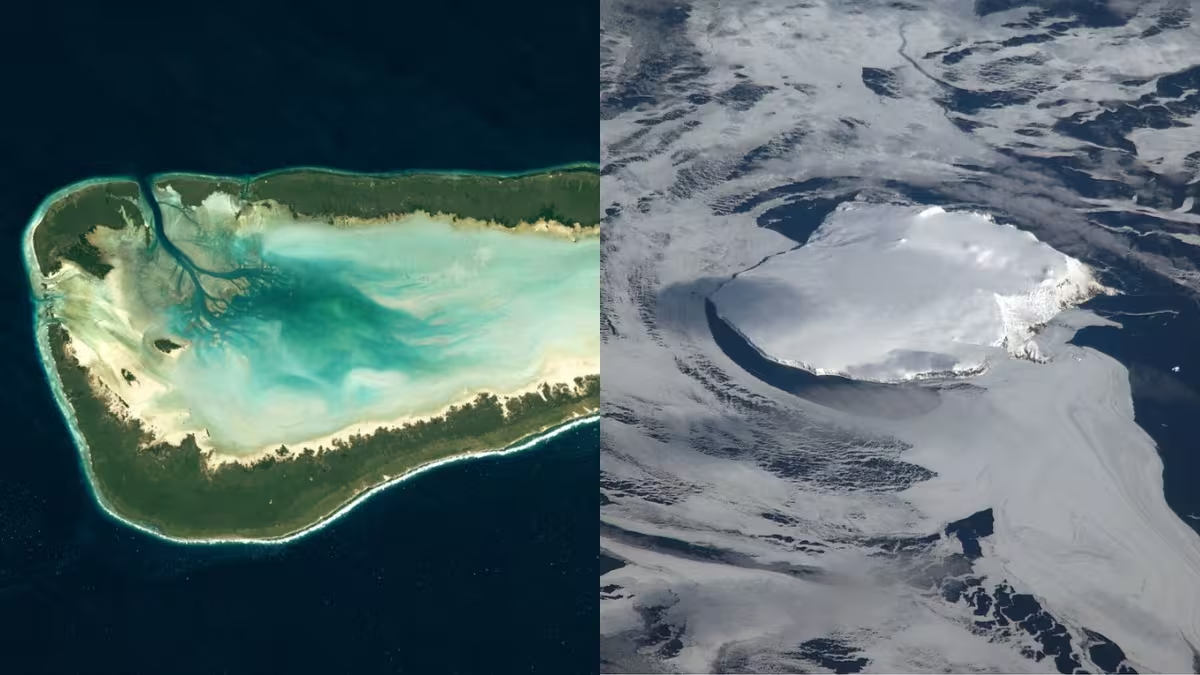
Aldabra Atoll in Seychelles is one of the most untouched island ecosystems in the world. It is also a
UNESCO World Heritage Site known for its rich biodiversity and remote location.
The atoll is made up of four large coral islands surrounding a shallow lagoon. The area is home to around 152,000 giant tortoises, making it the world’s largest population of these reptiles. Many rare species continue to survive here because of very limited human activity.
Due to its isolation, reaching Aldabra Island is extremely difficult. Visitors can only arrive by special charter boats with official permission. Tourism is highly restricted to protect the fragile ecosystem and coral reefs.
Scientists have warned that rising sea temperatures and coral bleaching remain major threats to the island’s marine life. Still, Aldabra’s coral reefs are recovering better than many other regions affected by pollution and overfishing.
Diego Garcia, Indian Ocean
Located in the middle of the Indian Ocean,
Diego Garcia is one of the most secretive islands in the world. It is part of the Chagos Archipelago and falls under the British Indian Ocean Territory.
The island is known for its beautiful white beaches and deep blue lagoon. However, ordinary tourists are not allowed to visit. Diego Garcia hosts a major military base operated by the United States and the United Kingdom.
There are no tourist visas, commercial flights, or cruise stops on the island. Only military personnel and authorised workers can enter the area. Because of these restrictions, the island remains untouched by tourism.
Diego Garcia also has a painful history. Many local residents of the Chagos Islands were displaced decades ago to make way for the military base. Today, many former islanders continue to seek the right to return to their homeland.
Bouvet Island, Norway
Bouvet Island, also called Bouvetøya, is a remote Norwegian island located in the Southern Ocean. It is considered one of the most isolated islands on Earth.
The island lies around 2,500 kilometres southwest of South Africa. Nearly 90 percent of Bouvet Island is covered in glaciers and ice. Steep cliffs make landing extremely difficult, which is one reason why tourism has never developed here.
Bouvet Island was discovered by French explorer Jean-Baptiste Lozier Bouvet in 1739. It later became a Norwegian territory and was declared a protected nature reserve in 1971.
The island has very little vegetation. Mosses, lichens, fungi, and algae survive in the cold climate. Penguins, seals, and seabirds are the most common animals found here. Due to its harsh weather and isolated location, Bouvet Island remains one of the least visited places in the world.
Ilha da Queimada Grande, Brazil
Ilha da Queimada Grande, also known as Snake Island, is located off the coast of São Paulo in Brazil. The island is considered one of the most dangerous places in the world because it is home to thousands of venomous snakes.
The most famous species found here is the golden lancehead snake, one of the deadliest snakes in the world. Scientists believe the
snakes multiplied rapidly after the island became separated from mainland Brazil thousands of years ago.
The island is uninhabited and closed to the public. Brazilian authorities strictly control access to protect both people and wildlife. Apart from snakes, the island also has steep rocky cliffs, high temperatures, and no clean drinking water.
The name “Queimada Grande” comes from attempts by early visitors to use fire to drive away snakes from the island. Today, tourism is not allowed, and only researchers receive limited access.
North Sentinel Island, India
North Sentinel Island is one of the most isolated places in India. Located in the Bay of Bengal, it is part of the
Andaman and Nicobar Islands.
The island is home to the Sentinelese tribe, one of the few indigenous communities in the world that has remained almost completely cut off from modern civilisation. The Indian government strictly bans travel near the island to protect the tribe from outside diseases and unwanted contact.
Dense forests and coral reefs surround North Sentinel Island. Very little is known about the island’s wildlife and ecosystem because researchers are not allowed to conduct detailed surveys there.
The island came into global attention in 2018 after American missionary John Allen Chau was killed while attempting to illegally contact the Sentinelese people.
Today, North Sentinel Island remains heavily protected by the Indian government and patrolled by the Indian Navy. It continues to be one of the few places in the world untouched by tourism and modern development.
First Published:
May 21, 2026, 11:44 IST
End of Article