
These are the UK’s best beaches according to travel pros

The UK is full of beautiful beaches(Image: Getty)
Staycations have surged in popularity in recent years, particularly as household budgets face mounting pressure. Yet those opting to holiday domestically needn’t feel shortchanged, given Britain’s abundance of stunning coastal destinations.
I spoke with several travel specialists about their top picks for the country’s best beaches. From iconic destinations such as Brighton Beach to hidden treasures like the Bay of Skaill on Orkney, there’s undoubtedly a coastal retreat to suit every traveller’s preferences.
Here are some of Britain’s best beaches….
Camber Sands
Mark Hutchins, travel specialist and founder of Beach Stays, has championed Camber Sands in Sussex, one of the area’s rare sandy stretches. He says: “Camber Sands is just an hour and a half from the capital on the East Sussex coast near Rye and is one of the only genuinely sandy beaches in the region, with rolling dunes that form the only sand dune system in the county.
“The beach also runs for several miles, faces south over the Channel, and is wide enough that it rarely feels busy even when it is. It is popular with kitesurfers and windsurfers, and the medieval town of Rye is ten minutes away.”
Llangrannog
Mark has also championed Llangrannog Beach in Wales. He remarked: “Llangrannog, on Wales’ Ceredigion coast, sits where the River Hawen falls as a waterfall through the centre of a small village before reaching the sea, with a distinctive wave-worn rock, Carreg Bica, rising from the shoreline, and at low tide, a second hidden cove opens up beyond it.
“The village holds a Blue Flag, sits on the Wales Coast Path, and has strong literary connections with Dylan Thomas, who drank at the Ship Inn here in 1944, and Edward Elgar once spent a holiday in the village.”
Yaverland Beach
Britain’s stunning coastline extends beyond the mainland, with the Isle of Wight’s Yaverland Beach earning a place among TripAdvisor’s 2026 ‘Best of the Best’ award recipients – and as the UK’s sunniest location, it’s ideal for those seeking refuge from our notoriously wet weather.
Lee Hudson, Commercial Director at Red Funnel and Board Director for Visit Isle of Wight, commented: “The Isle of Wight is a compelling option for a UK staycation. Thanks to its unique microclimate, it’s officially the sunniest spot in the UK and home to one of the world’s best beaches, with Yaverland ranked in Tripadvisor’s 2026 ‘Best of the Best’ awards.
“With 11 more beaches rated ‘excellent’ for water quality, it’s ideal for swimming, paddleboarding or simply unwinding by the sea, making it one of the UK’s standout coastal destinations.
“Instead of busy airports, security and baggage restrictions, travellers can take a one-hour scenic ferry journey from Southampton across the Solent, travelling over the water and avoiding the traffic to reach this island destination, before arriving somewhere known for its sunshine, standout beaches and wide range of places to stay.”
Bay of Skaill
Scotland might not immediately spring to mind when contemplating a seaside getaway, but overlooking it could mean missing out on some breathtaking coastal spots, such as the Bay of Skaill on Orkney.
Laurie Thomas from Explore Worldwide observes: “Westray is home to several beautiful beaches and is ideal for beachgoers as well as nature enthusiasts. My personal favourite is the Bay of Skaill, a white sandy beach near Westray Airport, which offers stunning views and good bird watching opportunities.
“This beautiful beach with its green/blue waters is where you’ll see Arctic Terns, Sand Martins and Eider Ducks to name but a few. When the weather is sunny, some of our visitors take off their boots and brace themselves for a cold dip!”
“The beach is also located next to Skara Brae – the site is Europe’s most complete Neolithic village – and surrounded by Primula Scotia (Scottish Primrose), Orkney’s most famous flowering plant.
“There are over 23 species of marine mammals recorded in Orkney waters, drawn by nutrient-rich currents and a constant supply of herring, sandeel and seal such as grey seals, common seals, harbour porpoises, Risso’s dolphin, minke whales, orcas and humpback whales.
“More recently, there has been an increasing number of basking shark sightings along the shoreline, an absolute highlight for the lucky few!”
Weymouth Beach
Consistently featuring amongst Britain’s finest beaches, particularly for families, Weymouth Beach offers considerably more than its spectacular sands alone.
Dawn Rondeau-Irvine, Chief Operations Officer of We Are Weymouth, explains: “What people don’t always expect is the history. Weymouth was where George III came to sea bathe in the 1780s, effectively putting the British seaside holiday on the map.
“The Georgian seafront is largely intact, so you’re sitting on one of the most historically significant stretches of beach in the country while your kids build sandcastles.”
Brighton and Shoreham-by-Sea
While undeniably popular, this destination has earned its reputation through merit. Mel Savage from Ripe Motorhome Insurance champions Brighton, noting: “Few places capture the British seaside quite like Brighton. Its iconic pier, lively promenade and endless food and drink spots make it a magnet for visitors, especially with its popularity on TikTok.”
For those seeking a more tranquil alternative nearby, Shoreham-by-Sea is well worth considering.
Recommending this spot close to Brighton, Mel says: “Just along the coast, barely seven miles away, is Shoreham-by-Sea, which offers a far more relaxed alternative.
“While it shares Brighton’s coastal charm, it swaps the crowds for a calmer, more local feel. The wide shingle beach is backed by views of the South Downs, giving it a more scenic and less built-up backdrop.
“With peaceful riverside walks along the Adur, independent cafés and waterside pubs, it’s a better choice for those wanting the same seaside escape without the intensity.”
St Ives & Gwithian Beach
No compilation of the UK’s finest beaches would be complete without a Cornish gem, and Mel puts forward both St Ives and Gwithian for consideration.
She explains: “With turquoise waters and postcard-perfect views, St Ives is often compared to Mediterranean destinations. Its beauty makes it one of the UK’s most sought-after seaside spots, but that popularity means it can feel busy and cramped during peak months, with heavy traffic, fully booked restaurants, and difficult parking, with up to 740,000 visitors each year.
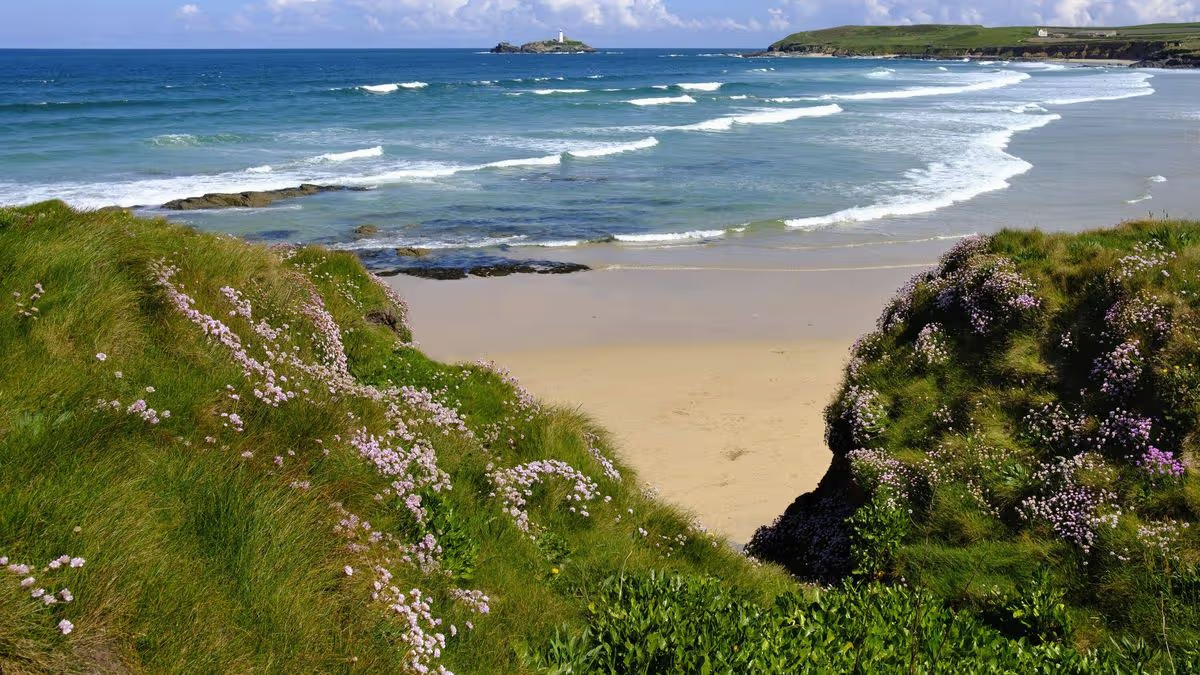
“Gwithian Beach, just around the bay, delivers the same crystal-clear waters and golden sands but on a much larger, more open scale. Backed by rolling dunes and wild grassland, it feels mbeore rugged and untouched.
“There’s more space to spread out, whether you’re surfing, walking or simply taking in the views of Godrevy Lighthouse.”