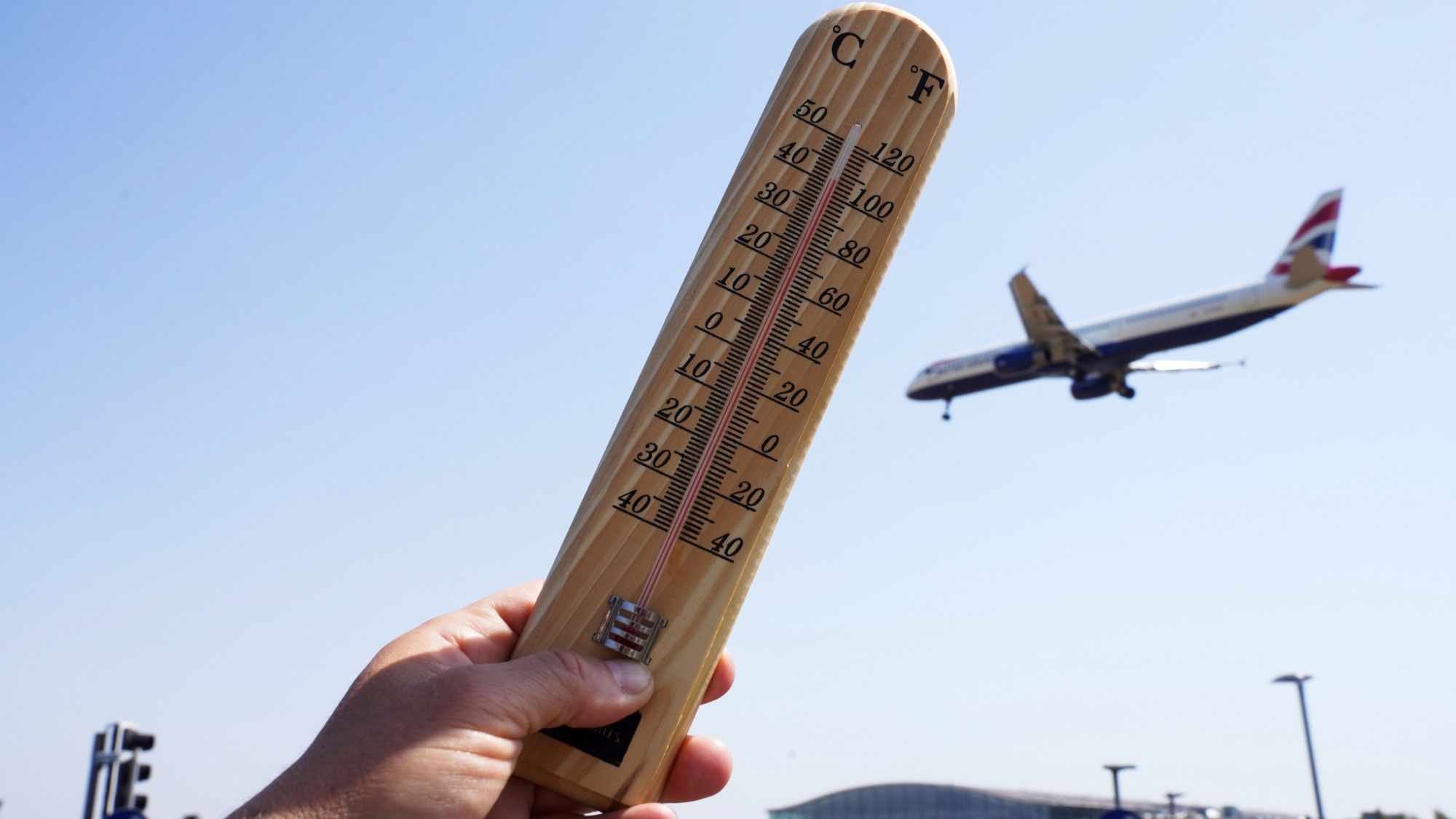
The heatwave that’s broken records across the continent could change how we travel this summer as we face a new normal of sizzling temperatures.
The impact of extreme temperatures on “tourism-reliant” countries could be “huge,” Alejandro Saez Reale, a specialist in heatwaves and their impact at the World Meteorological Organization in Geneva, told National Geographic.
The parts of the Mediterranean that have recently experienced prolonged heatwaves, with temperatures exceeding 40C, may become less attractive. Areas that are increasingly affected by wildfires, drought or water shortages could also be hit.
Savour the important news.
Get unlimited access online, in app, or in print.
Start your free trial
Sign up for The Week’s Free Newsletters
From our daily WeekDay news briefing to an award-winning Food & Drink email, get the best of The Week delivered directly to your inbox.
From our daily WeekDay news briefing to an award-winning Food & Drink email, get the best of The Week delivered directly to your inbox.
Latest Videos From
Temperate spots
Travellers might increasingly seek more comfortable temperatures rather than the hottest destinations. They might also place greater value on where weather is more steady and therefore less likely to disrupt their holiday.
This could lead to a rise in the “coolcation” – a term that “neatly summarises” the “emerging trend” for European tourists “seeking out more temperate spots”. A study by the European Travel Commission in 2025 found 81% of Europeans were adjusting their travel habits due to the changing climate, with 15% actively seeking out cooler climates and 14% avoiding destinations prone to extreme heat.
Sustainable holidays, which boast features such as eco-certified accommodation, lower-carbon transport, and activities that support conservation, are also expected to rise in popularity. Forests, lakes, and cooler mountain environments could become more sought after.
Low-lying tropical islands threatened by sea-level rise and coastal erosion, and ski resorts at lower elevations, where shorter and less reliable snow seasons reduce winter tourism, could face a decline in bookings. Resorts are investing “heavily” in artificial snowmaking but the cost is “being passed on to skiers themselves”, said The Independent.
There is also a growing interest in “last-chance tourism”, or visiting places that are changing rapidly due to climate change, such as glaciers or coral reefs, said National Geographic. Ironically, this trend can increase the pressure on the very fragile environments that visitors are so enamoured by.
Finland, Norway, Poland and Iceland are recording double-digit growth in inbound visitors but this doesn’t mean the patterns have shifted entirely: last year, France and Spain were still the most visited countries in the world, with 102 million and 96.8 million visitors respectively, according to UN Tourism. So the “growth rate may have slowed”, but the number of visitors to these warmer countries “is not dropping”.
The Association of British Travel Agents (ABTA) said feedback from its members suggests that, “on the whole, people are continuing to travel much as they always have, enjoying Mediterranean destinations during the summer months”, so the “increased interest in slightly cooler destinations remains the exception rather than the norm”.
Ballooning costs
Flying is “one of the hardest activities to clean up” because “technological solutions and efforts to keep disasters from spiralling” mean the cost of a flight is “likely to balloon” if it includes a charge for “making planes greener or sucking carbon pollution back out of the atmosphere”, said Ajit Niranjan, The Guardian’s Europe environment correspondent.
Journeys could become trickier during the hottest months because heatwaves, storms, flooding and wildfires are expected to cause more delays and cancellations for flights, trains, ferries and even road travel. This means that travellers may increasingly avoid the peak summer months in very hot regions, and choose to visit during spring or autumn instead, spreading tourism more evenly throughout the year.
However, this might not mean they escape the issue because heatwaves are “spreading across the calendar”, said National Geographic. In May 2022, Spain endured a heatwave of “extraordinary intensity”, the following year in France, “severe heat” extended into September, and this year, much of the southwestern US was “hit by a March heatwave” with temperatures as high as 43C.