
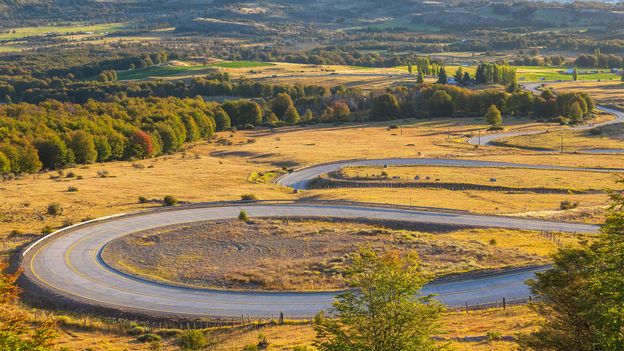
The ferry from Hornopirén lurched through dark-blue waters as I watched the Chilean mainland disappear into mist. Ahead lay the tiny settlement of Caleta Gonzalo and the true beginning of the Carretera Austral – Chile’s legendary Route 7.
Built by the Chilean Army in the 1970s, this partially paved highway stretches 1,240km (771 miles) from Puerto Montt to Villa O’Higgins, connecting once-isolated Patagonian communities through some of the most unforgiving terrain on Earth. The road is so remote and challenging that driving it feels like a journey to the edge of civilisation.
A road carved from wilderness
Building the highway required decades of blasting through solid granite, bridging raging torrents and creating a pathway where none should exist. Even today, sections remain unpaved, and my small rental SUV often felt like it was being rattled to the last nut and bolt. Yet the scenery compensated a hundredfold: ancient forests of alerce trees, dramatic Chilean fjords, the snow-capped Andes and turquoise-blue lakes fed by glaciers.
I had planned to cover the 630km (391 miles) between Chaiten and Bahia Murta, my next stop, in just one day due to time constraints. It’s a long drive by any standards, but on Patagonia’s loneliest road, it quickly became a challenge.
At a tiny roadside café, where I stopped for some beef asado, I chatted with some local truck drivers. Once they’d learned about my Bahia Murta ambitions, the drivers couldn’t hide their knowing grins. I soon understood why locals stick to sturdy, four-wheel drive pickup trucks. Climbing loose gravel switchbacks that snaked ever upward over a mountain pass required all my focus and skill. I gripped the wheel, whispering prayers to the anti-lock breaking system.