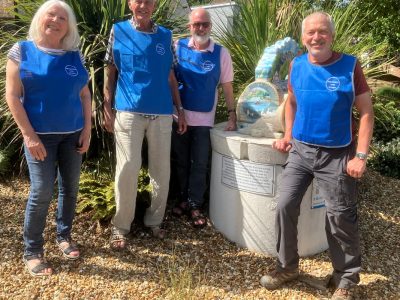
The island’s first British settlement, in 1803, Piyura Kitina became an early flash point of conflict as colonial expansion displaced Aboriginal communities across Lutruwita—the Aboriginal Tasmanian word for what’s now Tasmania—then home to nine Aboriginal nations. Today “it is a place where our community, and the wider community, can come together to learn, share stories, and experience the flavors of Country,” Mansell says.
Across the region, these food traditions are being restored. Aboriginal Tasmanians (collectively known as Palawa) are again harvesting and selling abalone, practices that were prohibited with colonization. Known locally as muttonfish, abalone is one of the most important cultural foods. Meanwhile, in the Derwent Estuary, a conservation effort is underway to return the Angasi oyster, a meaty native species whose shells have been found in ancient middens, to reefs to help rebuild marine ecosystems.
In Hobart, Tasmania’s capital, that deep relationship to terra and tide surfaces in everyday food. Each Sunday at the Farm Gate Market, growers fill Bathurst Street with native ingredients such as pepperberry (like sumac) and wattleseed flour, alongside colonial-era crops such as Sturmer Pippin apples and morello sour cherries.
On the waterfront, the floating stalls at Constitution Dock sell the day’s freshest catch: scallops, southern rock lobster, and Angasi oysters, also called Australian flat oysters. Nearby, the commercial fishermen of Tasmanian Wild Seafood Adventures launch public Deep-to-Dish cruises toward Bruny Island, where divers haul up abalone, sea urchin, and rock lobster to cook onboard for guests.
“The ingredients have always been amazing, but colonial cooking didn’t do them justice. You had incredible ingredients and people stuffed them up by overcooking them,” says chef Rodney Dunn of The Agrarian Kitchen, the New Norfolk restaurant on the grounds of a former asylum that he owns with his wife, pastry chef Séverine Demanet. One example is wallaby, traditionally smoked over rosemary-scented kunzea leaves and paired with native honey. Dunn’s approach is similarly restrained: wallaby tartare, seasoned with a house-made miso and preserved garlic, and served in the sunlit dining room overlooking a lavish kitchen garden.