THE new EES travel system came into full effect just days ago – and it is causing travel chaos at airports in Europe.
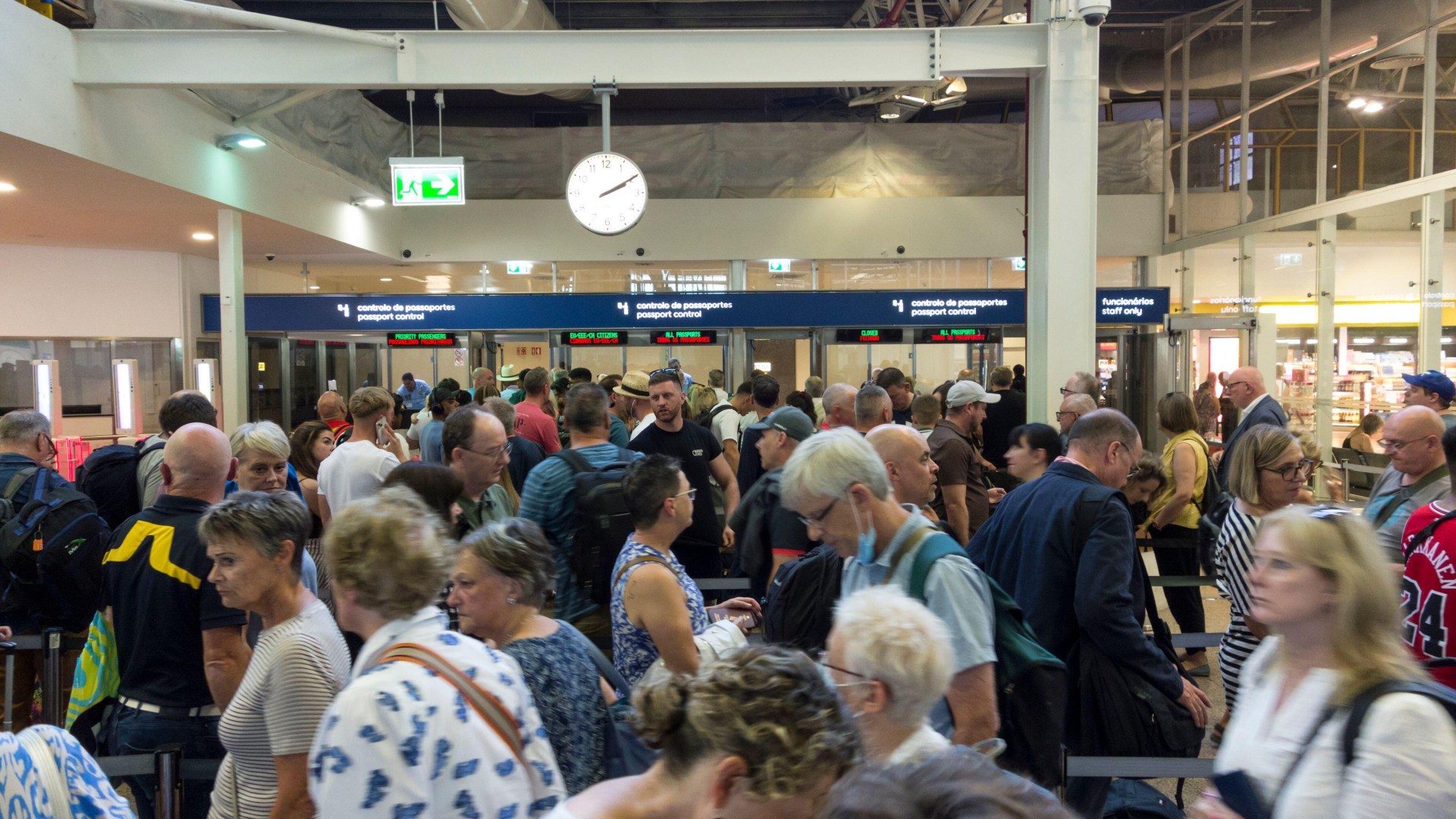
Over the weekend, huge queues at border control meant some passengers were forced to miss their flights while others waited hours to leave the airport.
EES, which is the EU’s Entry/Exit System, became fully operational on April 10, 2026.
The new rules require all non-EU nationals to register their details like fingerprints and facial images before going abroad.
It will replace the need for stamps and is designed to make border crossings quicker.
But so far, lots of passengers have faced huge queues at border controls, some more than four hours long.


This weekend, the use of EES biometrics at three Portuguese airports; Lisbon, Porto and Faro, were actually stopped because of excessive passenger wait times.
To ease the queues, EES registration was halted on the morning of April 11 – it later restarted in the afternoon.
Public Security Police spokesperson Sérgio Soares, told press “the collection of biometrics at departures from Humberto Delgado (Lisbon), Francisco Sá Carneiro (Porto) and Gago Coutinho (Faro) Airports was interrupted from the beginning of the operation this morning.
“The interruption continues and is currently being reevaluated. This is to ensure that the waiting time is not longer than what we intend, namely so that people do not miss flights.”
However this was the case at Milan Airport in Italy.
Some passengers were left behind over the weekend as a result of the huge EES registration queues.
The BBC reported that over 100 people were left stranded when an easyJet flight to Manchester left without them.
The delays due to the new EES checks mean travellers were waiting in lines over three hours long.
Some passengers left in the heat of the airport were throwing up and passing out.
One passenger told the BBC that having to rebook her flights cost her an extra £520 as a result.
Another stranded passenger who spoke to The Independent said they had booked another flight at the cost of £1,600 – and with a connection through Luxembourg.
easyJet told The Sun: “Due to delays in EES processing by border authorities, some passengers departing from Milan Linate yesterday experienced very long waiting times at passport control.
“We held flight EJU5420 from Milan to Manchester for nearly an hour to give passengers extra time but it had to then depart due to crew reaching their safety regulated operating hours. Customers who missed the flight have been offered a free flight transfer.
“We continue to urge border authorities to ensure they make full and effective use of the permitted flexibilities for as long as needed while EES is implemented, to avoid these unacceptable border delays for our customers.
“While this is outside of our control, we are sorry for any inconvenience caused.”
Meanwhile, at Brussels Airport on the very first day of the EES rollout, the Airports Council International reported that in one instance there weren’t any passengers on a plane when the gate closed.
It said one flight from Brussels to the UK was missing 51 passengers at departure.
And then, “another flight had zero passengers on board at gate closing time, and 90 minutes later, 12 passengers were yet to reach the gate”.
There were concerns raised about the new travel rules prior to the full rollout, with officials asking for EES to be delayed until later in the year.
Head of Sun Travel Lisa Minot explains what EES means for you…
THE Sun’s Head of Travel Lisa Minot has explained everything you need to know about EES…
The new system – designed to strengthen the European borders – requires every passenger to have their biometrics recorded.
Every traveller has to scan their passport and have a facial biometric before providing prints from the four fingers on their right hand.
Children under 12 have to do the biometric but do not have their fingerprints taken.
All then have to answer four questions about their reason for travel.
Both fingerprints and facial biometrics are required the first time a traveller uses the system, and then just one of the two for every subsequent trip.
Then every three years, you are expected to go through the full process again.
While airports across Europe have the space to add this additional process, it is adding a huge amount of extra time to the customs checks.
Although it removes the need to have stamps in your passport, everything still needs to be checked either by a border officer or an e-gate.
If you’re heading abroad soon, here are our seven tips for the new EES rules.
And this travel app could help you avoid massive airport queues caused by EES.