Brits heading to France, Spain, Portugal, Greece, Italy and more this summer will face a series of new travel rules and changes including new EU border requirements

Brits heading abroad this summer should take note of new rules(Image: Getty Images)
There have been some major travel changes that will impact Brits heading on holiday to Europe moving forward.
Some of the most popular destinations in Europe, including Spain, France, Italy and Croatia, have made several key changes that impact tourists visiting certain areas or attractions in their country. Strict rules have been introduced in some areas, including a cap on visitor numbers, while increases in the tourism tax and entrance fees have been implemented elsewhere.
The changes come at a prominent time for European travel, and not long after the new Entry/Exit System (EES) was launched for all Brits travelling to the Schengen area. So ahead of your next getaway, here are some of the key changes to expect when heading to some European hotspots…
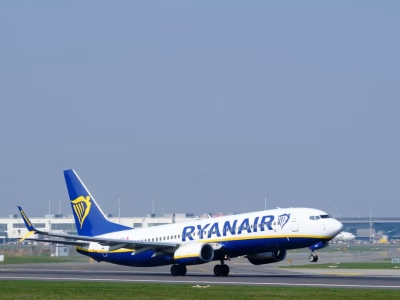
READ MORE: Ryanair check-in warning for Brits who risk paying extra £55 per person at the airportREAD MORE: Virgin Atlantic makes major change for all passengers travelling from May 2026
1. New EU border rules with the EU Entry/Exit System (EES)
On Friday, 10 April, the European Union’s (EU) new Entry/Exit System (EES) was rolled out, meaning that Brits are now required to go through the digital border system when travelling to the Schengen area. Brits are required to “create a digital record” and register their biometric details, such as fingerprints and a photograph, upon their first arrival at the airport border in the Schengen area.
The new EES registration, which replaced the former manual passport stamping system when arriving in the EU, is free, and holidaymakers do not need to do anything before arriving at the border. The government noted that the EES may take “each passenger a few extra minutes to complete”, but once done, the EES record is valid for three years.
Countries in the Schengen area include: Austria, Belgium, Bulgaria, Croatia, Czechia, Denmark, Estonia, Finland, France, Germany, Greece, Hungary, Iceland, Italy, Latvia, Liechtenstein, Lithuania, Luxembourg, Malta, Netherlands, Norway, Poland, Portugal, Romania, Slovakia, Slovenia, Spain, Sweden, and Switzerland. The EES system is not required for travel into the Republic of Ireland and Cyprus, as they are not within the Schengen area.
For more information on the new EES system, visit the government website.
2. Tourism crackdowns
While a holiday is the time to let loose, some countries have implemented strict rules in a bid to avoid careless behaviour. Earlier this year, the sun-soaked destination of Split, Croatia, a beloved holiday hotspot for Brits, announced it would ban alcohol sales at certain times.
The new rule will come into force this summer and restrict alcohol sales from 8pm to 6am in alcohol supermarkets and off-licences. While it does not apply to clubs and restaurants, the restrictions are in direct response to what the mayor characterised as “unacceptable” scenes of drunken tourists in the city’s historic heart.
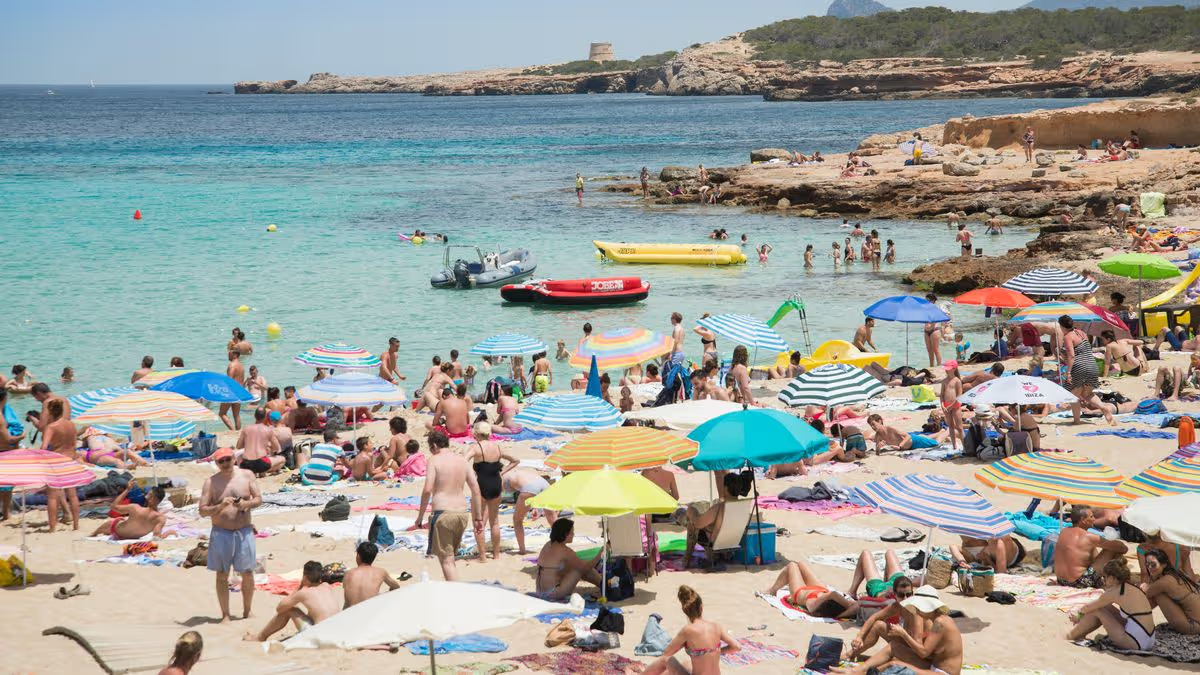
Meanwhile, a number of Spanish destinations have been introducing restrictions on alcohol and party boats in recent years in a bid to combat unruly tourist behaviour – including dress codes in some public spaces near beaches.
3. Capped visitor numbers
Palma, the stunning capital of Mallorca, is set to slash the number of daily cruise ship berths from 8,500 to 7,500 between June and September in a new arrangement. This means fewer passengers will be disembarking to discover the Spanish city when the measures take effect from 2027 to 2029.
The Italian island of Capri is also introducing new restrictions on visitor numbers, capping tour groups at 40 people. For groups of more than 20 people, it’s been reported by Time Out that only “discreet signs or regulation paddles are allowed”, ditching the usual flags or umbrellas used during a tour.
4. Tourism taxes and fees
The hugely popular city of Barcelona in northeastern Spain has increased its tourism tax, making it the highest in Europe. From this month, visitors will be hit with a fee of up to £10.91 (€12.50) per night for holiday rentals, up from £5.45 (€6.25), as it doubles, and a fee of between £8.73 (€10) and £13 (€15) per night for hotel stays.
The capital of Romania, Bucharest, which is often nicknamed ‘Little Paris’, also introduced a tourist tax of around £1.70 (10 Romanian Leu) per night for stays in 2026 and beyond. It’s said that the funds raised will be used to further promote the city as a tourist destination.
Meanwhile, Venice had reinstated its ‘day-tripper’ fee, meaning visitors will need to pay an entry fee to visit the historic city. Holidaymakers who book their entry 4 days or more in advance will pay around £4.35 (€5), while those who forget will pay around £8.69 (€10) to enter Venice.
5. New rules at major landmarks
Major landmarks and attractions in Europe have increased entrance fees or capped visitor numbers. The world-famous museum in Paris, the Louvre, has doubled its entry fee for non-EU visitors, while Spain’s largest museum, the Prado, has limited the number of visitors at one time.
Time Out also reported that non-worshippers hoping to admire Cologne Cathedral, in Germany, might have to pay an entrance fee of around £10 to £13 (€12 to €15). And for holidaymakers heading to Italy, they will now have to pay around £1.74 (€2) to visit the iconic Trevi Fountain in Rome and around £10.50 (€12) to visit Juliet’s Balcony in Verona.
Do you have a travel story to share? Email webtravel@reachplc.com