
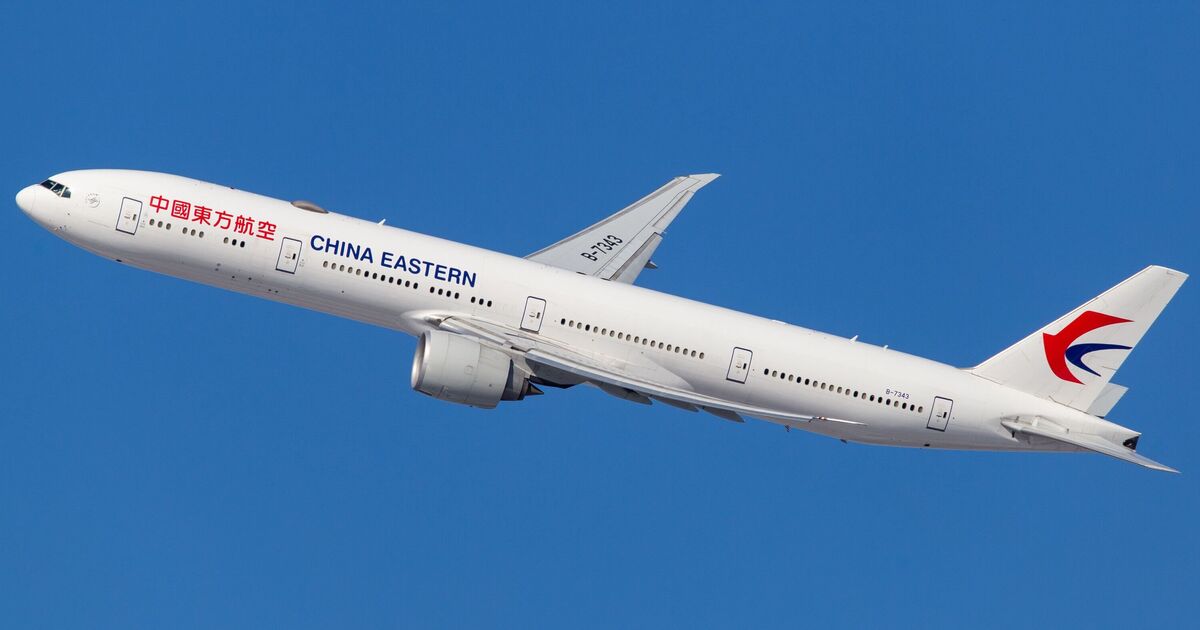
The world’s longest commercial flight has been launched, taking 29 hours and covering 12,400 miles in a new record. Spending so long on a plane might sound like torture, especially for those of us who religiously bring a pair of flight socks on board.
But to others, it’s far more convenient than a connecting flight, which can take two days. Launched on December 4, the China Eastern Airlines route sets off from Shanghai and lands in Buenos Aires. There was a two-hour stopover in Auckland, New Zealand to rotate the crew and load up on fuel. Celebrations were held in both the departure and arrival airports.
The two cities sit almost opposite each other on the globe. Outbound flights from Shanghai take approximately 25 hours and 55 minutes, and the return leg clocks in at 29 hours.
In a statement, China Eastern said: “This new route fills the gap in direct flights between Shanghai and major South American cities. It opens a ‘southbound corridor’ connecting opposite ends of the Pacific and reshapes air travel between three continents.”
Previously, the longest commercial flight was the 19-hour direct route between New York and Singapore by Singapore Airlines. The competition has been on, with Australian airline Qantas announcing plans to open a new 22-hour-long route from Sydney to London in 2027.
Argentina has a fast-growing Chinese community, with 55,000 people born in China living there. In the 12 months to September 2025, 96,000 passengers flew between China and Buenos Aires.
Since the 20th century, the Chinese in Argentina came in three waves. The first wave of immigrants came from small coastal towns between 1914 and 1949. The second wave of immigrants arrived from Taiwan in the 1980s. The third wave of Chinese migration to Argentina primarily occurred in the 1990s and 2000s, driven by economic opportunities, establishing many small Asian supermarkets and contributing significantly to the retail sector.
They are drawn to how immigration-friendly Argentina is, with a smooth path to citizenship. Many are fleeing the political situation in China, and there’s a thriving Chinatown (called “Barrio Chino”).