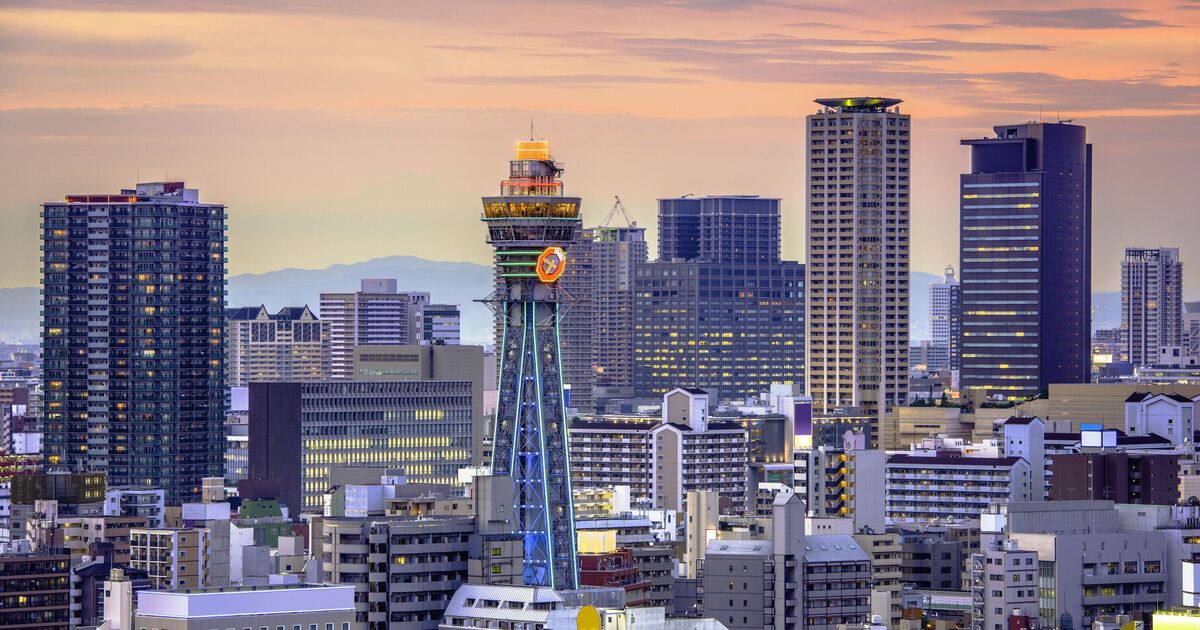

Osaka is the third biggest city in Japan. (Image: Getty)
The world’s population continues to grow, and with it, more mega-cities are appearing across every continent. For millions of travellers, city breaks have become a popular way to experience new cultures, food, and architecture, often packing in more sights in just a few days than a beach holiday ever could.
But while places like Tokyo, New York, and Paris often get overcrowded with tourists, one of the largest cities on the planet is often overlooked by those heading to Japan. Osaka is Japan’s third-largest city and home to nearly 19 million people. In 1950, it had just over seven million, but the population has more than doubled since then, according to the World Population Review.
READ MORE: We live in £400bn new mega city like a mini Britain – here’s what it’s like
READ MORE: Africa’s jaw-dropping mega-city that’s set to become the new ‘Silicon Valley’

One of the most visited spots is the Osaka Castle. (Image: Getty)

One of the best places to try the food is Dotonbori. (Image: Getty)

Shinsekai feels like ‘stepping back in time to post-war Japan’. (Image: Getty)
Despite its size and history, many people skip Osaka in favour of Kyoto or Tokyo.
But the city has one of the biggest theme parks in the world and is packed with food, culture, and unique attractions that are worth seeing.
Universal Studios Japan, which opened in 2001, is one of six Universal Studios parks worldwide and was the first built outside the United States.
It covers 130 acres and has 11 themed areas based on famous films and characters.
According to Statista, it is the third-most visited theme park on the planet, with 16 million visitors a year. Only Magic Kingdom in Florida and Disneyland in California draw more people.

Universal Studios Japan is the third-most visited theme park on the planet. (Image: Getty)

Sakuranomiya Park offers a peaceful walk along the river. (Image: Getty)

Nakazakicho is full of old wooden buildings that survived World War Two. (Image: Getty)
But there’s more to Osaka than rollercoasters. The city is full of incredible food, with some of the best street snacks in the country.
Osaka is known across Japan as “The Nation’s Kitchen” because of its food scene.
Street stalls sell takoyaki (fried balls filled with octopus), and okonomiyaki, a type of savoury pancake.
Kushikatsu, which is deep-fried meat and vegetables on sticks, is another local favourite.
One of the best places to try the food is Dotonbori, a lively area full of bright lights, busy restaurants and street vendors.
Osaka is also home to some of the country’s most interesting landmarks, with Osaka Castle being one of the city’s most famous spots.
It was built in the 16th century and played an important role in uniting Japan. Today, it’s surrounded by a public park and is popular with both locals and tourists.
Nearby, Sakuranomiya Park offers a peaceful walk along the river. It’s known for cherry blossoms in spring and is a good place for a quiet break away from the crowds.
The city also has one of the biggest aquariums in the world. The Osaka Aquarium is home to whale sharks, dolphins, sea lions, jellyfish and more. It has 15 zones focused on different parts of the Pacific.
For views across the skyline, the Umeda Sky Building has a circular observation deck.
HEP FIVE is another popular stop. It’s a shopping mall with a bright red Ferris wheel on the roof.

The Osaka Aquarium is one of the biggest in the world. (Image: Getty)

The Umeda Sky Building has a circular observation deck. (Image: Getty)

HEP FIVE is a shopping mall with a bright red Ferris wheel on the roof. (Image: Getty)
There are also quieter parts of the city that many tourists miss. Nakazakicho is full of old wooden buildings that survived World War Two. They now house cafés, art shops and traditional tea rooms.
Shinsekai is another interesting district. According to those who visited, “it feels like stepping back in time to post-war Japan”, with narrow streets, small bars and family-run shops.
As one person put it on TripAdvisor: “At night, lanterns light up the alleys and the smell of grilled food fills the air.”
Osaka may not be the first name people think of when visiting Japan, but it’s packed with reasons to go.