
Tensions in the Middle East have boiled over amid the ongoing conflict between Israel and Iran.
The UK Foreign Office has advised against all travel to Israel, leaving holidaymakers looking at the map of the Mediterranean with concern over whether it is safe to travel to Cyprus.
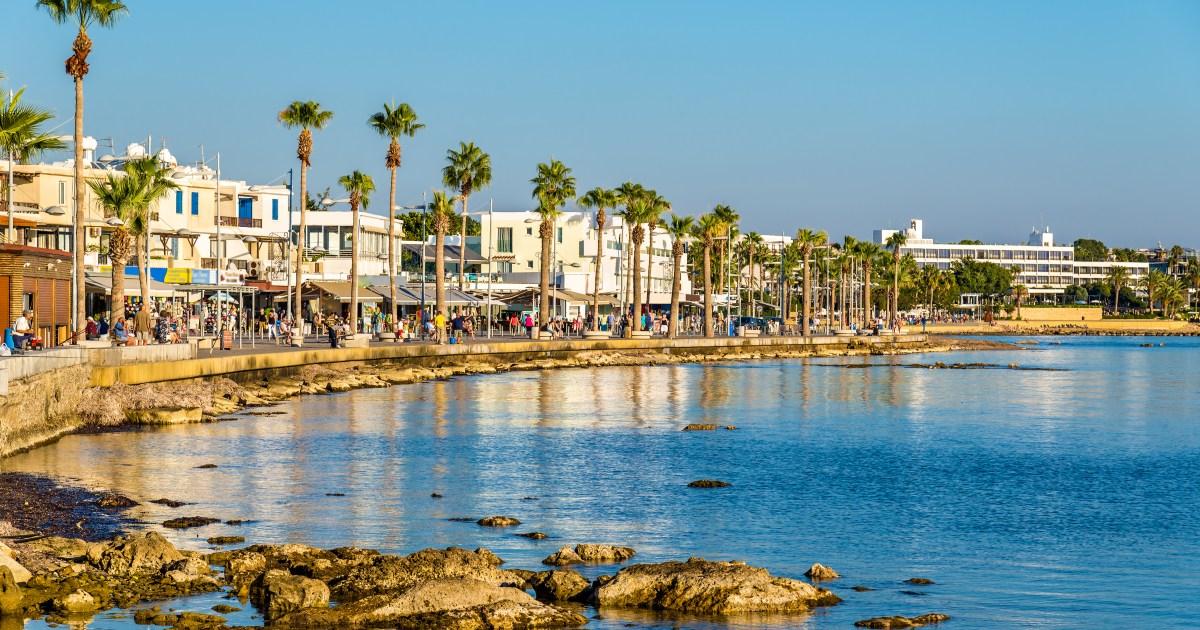
Cyprus, an island nation south of Turkey in the eastern Mediterranean, has long been a popular holiday destination for British tourists.
More than 1.3 million visit each year, according to the High Commission of Cyprus in the UK, making up almost one third of total visitors to the island.
Cyprus is also home to a sizeable British expat community. Around 30,000 British citizens live in Cyprus, according to recent estimates.
How far is Cyprus from Israel?
Sign up to The Getaway newsletter
Fuel your wanderlust with our curated newsletter of travel deals, guides and inspiration. Sign up here.
At roughly 472km (293 miles) from Israel and Palestine, Cyprus shares a regional neighbourhood with countries directly involved in current hostilities.
Flights from Cyprus’ Larnaca International Airport to Ben Gurion Airport in Israel take just 45 minutes.
Following the initial Israeli strikes on Iran on June 13, the two countries have traded volleys of attacks that have caused civilian casualties and destruction in Tel Aviv and Tehran.
Late on June 13, a post in the Facebook group Weather Enthusiasts of Cyprus saw several people describing streaks of light crossing the night sky over the island.

Some said they believed they had witnessed missile interception from Larnaca, but the blurry, low-resolution video shared in the post was impossible to verify.
That didn’t stop people from making the connection. ‘My god, what if a stray [missile] comes here?’ one person wrote.
But despite the rapidly developing situation, the UK Foreign Office has not issued an official warning suggesting that Cyprus is unsafe for visitors.
Current guidance reads: ‘Ongoing hostilities in the region and between Israel and Iran could escalate quickly and pose security risks for the wider region.’
The Foreign Office advises travellers already on the island to monitor local and international media for updates, and follow the instructions of local authorities.
Can I claim a refund for my holiday if I don’t want to go?
In terms of refund rights, it’s important to note that the Foreign Office has not advised against travel to Cyprus.
Because of this, there is no prospect of being able to cancel a trip for a full refund. Travel insurance is unlikely to help, either. Insurers will argue there is no reason not to go.
As Grant Winter, compliance officer at specialist travel insurance provider Goodtogo, tells Metro: ‘No airline is obligated to refund you for a flight you choose not to take.’
So, if you choose not to travel, you’re likely to lose some – or even all – of your money.
What is happening in Israel and Iran?
In the early hours of June 13, Israel launched an unprecedented strike that targeted Iran’s nuclear and military sites.
Prime Minister Benjamin Netanyahu claims Tehran was developing a nuclear weapon that posed an imminent threat to Israel.
Iran insists it doesn’t want nuclear weapons and was not developing them. Israel is widely acknowledged to have nuclear weapons, though it has never publicly confirmed it.
Strikes by both countries continue as the conflict rumbles on into its second week, but the situation has taken on a new shape since Donald Trump ordered an attack on three nuclear sites in the early hours of Sunday.
The President said the strikes had ‘obliterated’ their targets in Fordo, Natanz and Isfahan in an operation dubbed Operation Midnight Hammer.
Some 125 US miltary aircraft, including seven B-2 stealth bombers, were involved in the mission, US General Dan Caine said.
Tehran warned of ‘everlasting consequences’ after the US said it had ‘obliterated’ Iran’s nuclear program.
The attack drew praise and condemnation. Saudi Arabia has voiced ‘great concern’ while Oman condemned the actions outright.
The UK, France and Germany have called on Iran to avoid taking any action that could further ‘destabilise’ the region.

In a joint statement, the leaders of the three European powers said Iran can never be allowed to have a nuclear weapon — despite US national intelligence director Tulsi Gabbard’s recent assessment that Iran was not building one.
Late on Monday, June 23, Iran struck the US base at al-Udeid in Qatar, which had been evacuated hours earlier.
Donald Trump then took to Truth Social to announce a ceasefire between Israel and Iran. But the wording was unclear about when the ceasefire would take effect on either side.
Are other holiday destinations affected?
Anxious travellers are also concerned about the conflict spilling over to Turkey, Jordan, Egypt and UAE hotspots such as Dubai and Abu Dhabi.
Dozens of flights have been cancelled after Qatar shut its airspace on Monday, June 23, ahead of Iran’s strike on a US military base near Doha.
Airlines have diverted, delayed and scrapped services due to safety concerns.
British Airways, Air France, FinnAir, KLM, Singapore Airlines, American Airlines and Air Canada are among those that have announced disruption to their schedules.
As it stands, the Foreign Office guidance for Turkey – which was last updated on June 20 – advises that if you’re a British national wanting to cross the land border from Iran into Turkey, you’ll need to ‘request facilitation from the British Embassy in Ankara.’
From there, you’ll need to indicate ‘whether you are contacting from Iran or from the UK on behalf of a relative.’
The guidance adds that the usual entry requirements will apply, including that ‘British nationals can enter without a visa for up to 90 days in any 180-day period.’
‘If you intend to leave Iran overland, you do so at your own risk. In Iran, holding a British passport or having perceived connections to the UK can be reason enough for the Iranian authorities to detain you,’ it continues.
For Jordan, the Foreign Office advises against all travel within 3 kilometres (1.86 miles) of the border with Syria, reiterating the risk of ongoing hostilities in the region between Iran and Israel.
It says travellers should monitor local and international news channels and follow the instructions of local authorities. If you hear air raid sirens, the guidance says you should take shelter and stay away from windows.
As of June 22, Jordanian airspace has reopened, but airports and airspace may close at short notice.
Before you travel, the Foreign Office advises you to contact your airline and, if you have one, your travel insurer.
This article was originally published on June 19, 2025 and has been updated.
Do you have a story to share?
Get in touch by emailing MetroLifestyleTeam@Metro.co.uk.
MORE: The ‘memeification’ of World War Three reveals a troubling truth about society
MORE: Trump drops f-bomb live on TV over Israel and Iran violating ceasefire
MORE: Trump threatens to unleash ‘most lethal weapons ever built’ if Iran is supplied nukes