
Ghent for Venice. Albania for the Maldives. Lake Ohrid for Lake Como.
Destination dupes are one of the decade’s biggest travel trends, according to just about every expert in the business, with travellers eschewing popular places in favour of lesser-known, budget-friendly options that offer a similar vibe without the costs or crowds.
Also known as destination ‘twins’, these cheaper locations are everywhere on social media, luring travellers off the beaten path.
An eSim provider has even created its own ranking for the phenomenon: the ‘Travel Dupe Index’.
But behind the glitzy marketing campaigns and short-form videos, there is growing disquiet about how the trend is impacting local communities.
Ask Metro
Use AI to go deeper into the stories you care about – powered by Metro and trusted publications.
‘Selling somewhere as the budget version of somewhere famous really gets under my skin,’ Patrick Hill, head of Paramount Cruises, tells Metro.
‘It’s a bit insulting, for a start: these are real places with their own character, not knock-off handbags. And [the dupe trend] doesn’t even fix the thing it claims to. All it does is take the overtourism that’s crushing one town, and export it to another, which was doing perfectly well being itself.’

As a Travel Editor myself, I know what Patrick is talking about.
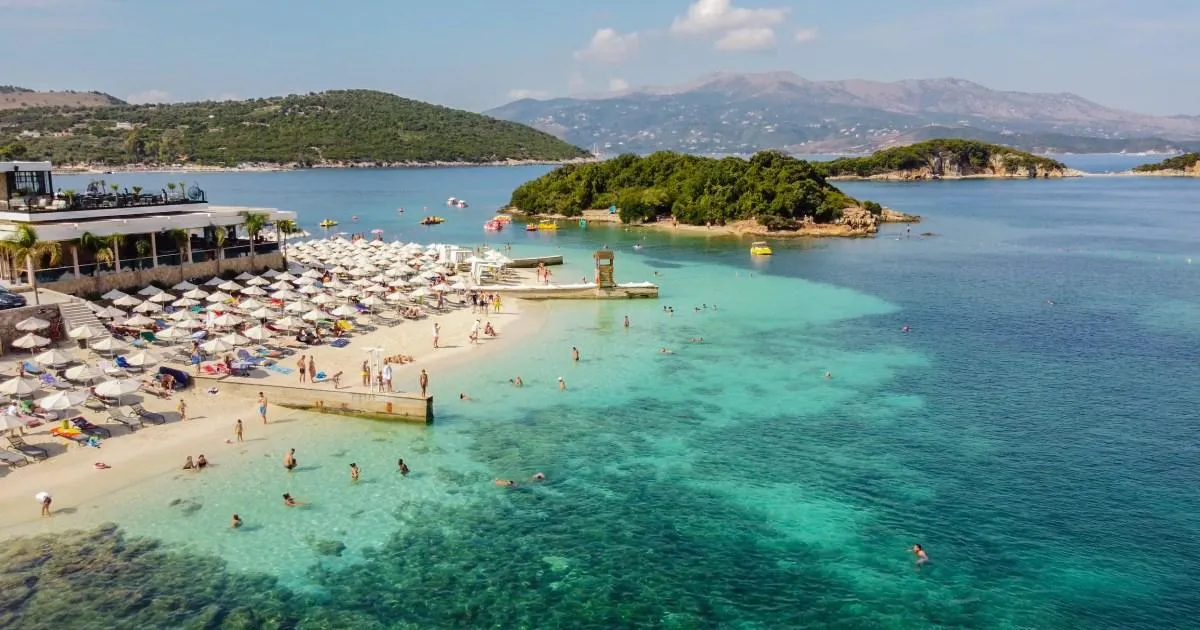
In 2024, I visited Albania’s TikTok-famous Riviera (known as the ‘Maldives of Europe’) to see how tourism was evolving there.
As we approached the Instagram-famous paradise, the buildings came thicker and faster, mushrooming into a sprawling mass of multi-storey hotels that covers the coast of Sarandë’s horseshoe-shaped bay.
Having been to the Maldives, I can confirm that Albania’s southern seaside does boast a similar vista of sparkling blue sea.
But the sudden tourism spike that has spawned a flurry of construction threatens to ruin the natural beauty that makes this country so special.
On the beaches, I saw empty beer bottles, cigarette butts in the surf and sunbeds covering every inch of sand. It was sad to see such a spectacular place in such a state. So what went wrong?
Put simply: too much tourism.
In 2015, more than three million overseas visitors touched down on Albania’s sunny shores.
By 2024, that number had skyrocketed to more than 11.7 million, making it Europe’s fastest-growing holiday destination, according to the World Tourism Forum Institute.
Albania is unprepared, and the people who live there are paying the price.
According to the Travel and Tourism Development Index, Albania lags behind the average in managing natural resources, and lacks the EU regulation on construction and infrastructure development that neighbouring Greece and Croatia must abide by.
Have your say: destination dupes?
Still, it’s not hard to see the appeal of any place that promises a high-end experience for a fraction of the price. And often, much closer to home.
As is the case for most travel sections, writers for this publication have reported extensively on Venice alternatives such as Aveiro in Portugal, and Bosham in West Sussex.
The response from our readers shows how interested people are.
And as travel costs continue to rise, dupes become even more attractive.

Among UK adults, YouGov reports that the cost of living is the most commonly cited factor shaping summer travel plans.
Around a third (32%) cite hotel or accommodation costs, while 29% mention airfares.
Once away, British families typically set aside £771 for things like meals, drinks, days out and entertainment, according to the Post Office Travel Money 2026 Family Holiday Report.
But 85% spent more than their budget. Of those who overspent, the average extra amount was £380.
A recent study by Skyscanner also revealed that a whopping 93% of travellers would consider a dupe destination, with about 64% revealing that the savings helped them decide.

Melanie Fish, chief trend tracker for Expedia, said dupes are like cheaper versions of luxury brands.
‘[They] are destinations that are a little unexpected, sometimes more affordable, but every bit as delightful as the tried-and-true places travellers love,’ she wrote in the company’s report.
But is that really how travel should be? Patrick doesn’t think so.
‘You should go somewhere because you genuinely want to be there, not because it’s been dressed up as a cheaper stand-in for somewhere else,’ he says.
Mats Ulenius, a Stockholm-based travel advisor with over 25 years of experience, agrees.
‘The term reduces real places with their own culture and history to cheap substitutes,’ he says.
‘Calling a destination a ‘dupe’ is like introducing a musician as the budget version of someone more famous. It completely overlooks what makes that destination unique.’
MORE: Mallorca braces for second anti-tourism protest after police fired rubber bullets in Palma
MORE: The Sicilian town named Italy’s first ‘art capital’ and a ‘modern Pompeii’
MORE: Why I keep going back to Europe’s most underrated city