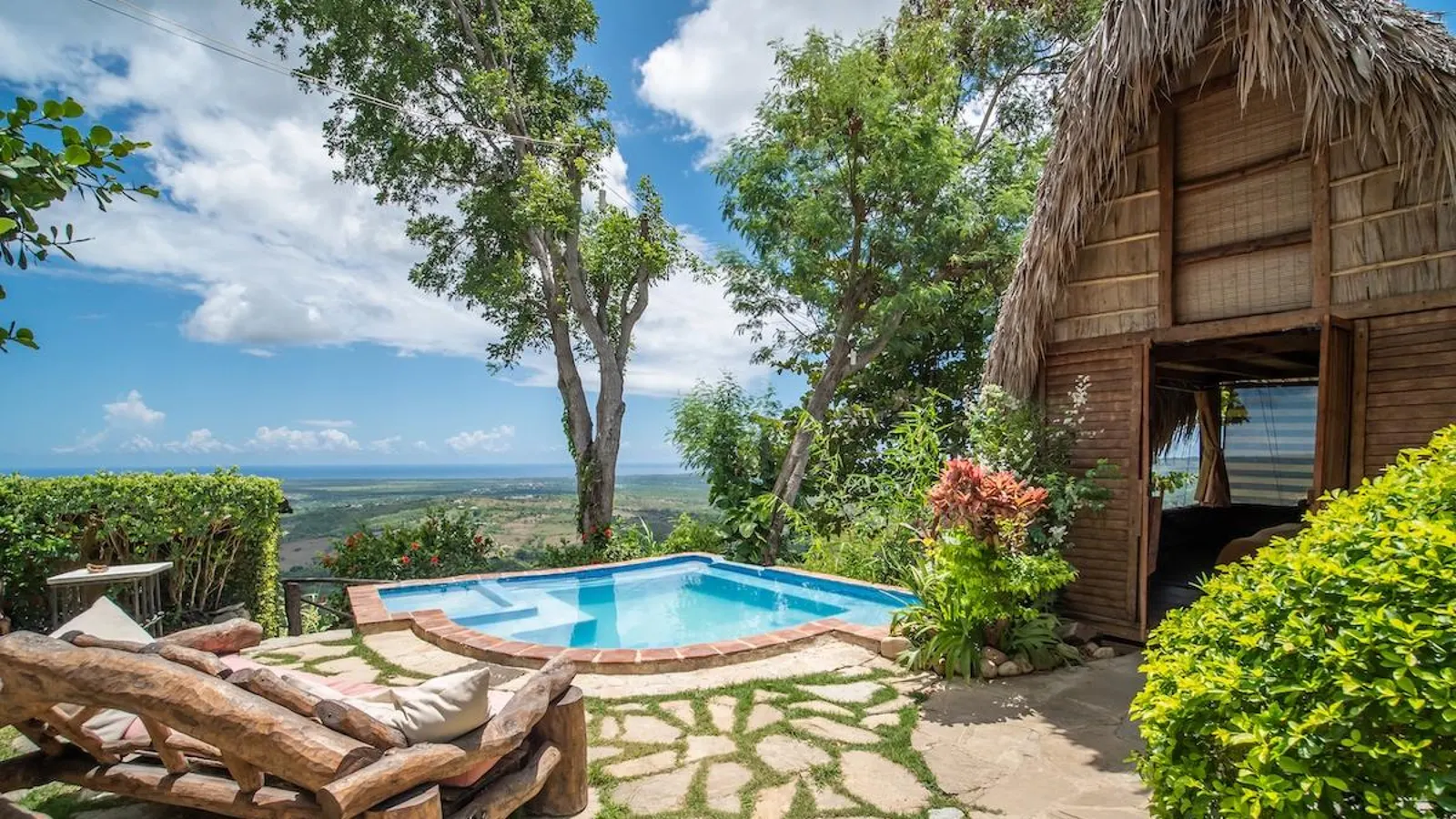
An eco-lodge cabin with a pool at Tubagua in Dominican Republic
Ecolodge Tubagua
Travelers have noticed that the world’s most famous places, like the Amalfi Coast, Machu Picchu, and Santorini, now require months in advance and waiting in long lines amid large crowds. As a result, many are searching for other destinations.
In 2026, 43% of travelers around the world say they are actively avoiding crowded tourist hotspots, which is 11% more than last year, according to Booking.com’s latest Travel & Sustainability Report. Nearly half say their reason is not just personal preference; they want to help reduce overtourism.
Travelers are now picking some truly special places. There is a mountain kingdom only accessible through South Africa, a Moroccan city that has not flooded Instagram, a former prison island off the coast of Vietnam, and a stretch of northern Iceland where you might drive an hour without seeing another car. In these places, the experience still feels personal, and private.
In response to the growing appetite for the road less traveled, travel guide Lonely Planet has announced its Top 15 Best Places to Go Off-Grid in 2026, a selection of highlighted destinations from its book “Offbeat” that asks travelers to rethink what makes a trip worth taking.
The list was not built around remoteness alone. “To create the list of destinations in Offbeat, we canvassed our pool of experts around the world,” Robin Barton, Senior Editor at Lonely Planet, tells me in an interview. They were asked to recommend cities, countries, regions, national parks and historic sites that were “overlooked or underappreciated, particularly when compared with the most-visited places nearby.”
That distinction matters because Offbeat is not only about sending travelers somewhere quieter. “An important criterion was also whether local communities and small enterprises would benefit from increased visitor numbers,” Barton says. “Spreading the income from tourism so that it is not just concentrated in a few famous and crowded destinations is a great way to support sustainable and responsible travel.”
Maletsunyane Falls in Lesotho Africa
getty
Lesotho, Africa – Cattle being herded past village huts.
getty
1. Lesotho, South Africa
Lesotho stands out in Africa, not because it is hard to spot on a map, but because it feels so different from the country around it. Surrounded by South Africa, this mountain kingdom is known for its high passes, open valleys, stone villages, and a lifestyle centered on horses, livestock, and the weather.
The lowest part of Lesotho is still over 4,500 feet above sea level, and the higher areas of the Maluti and Drakensberg mountains can seem very remote. As you drive through the country, you might see shepherds wrapped in wool blankets, women carrying goods along mountain roads, and small trading posts serving villages with round thatched homes.
Lesotho does not focus on the polished safari tourism you find in other parts of southern Africa. The most memorable experiences here are often simple, like riding a Basotho pony along mountain trails, hiking to a waterfall, having lunch in a village, or staying overnight in a lodge at the end of the road.
How to get there: Most international visitors fly into Johannesburg and then take a connecting flight to Maseru’s Moshoeshoe I International Airport. You can also drive in from South Africa, including along the scenic Sani Pass, but you will need a four-wheel-drive vehicle for this route.
What to do: You can ride or hike through the highlands, visit Maletsunyane Falls near Semonkong, explore the Sani Pass area, and spend time in rural villages around Mokhotlong and Malealea.
Where to stay: Mountain lodges and guesthouses offer the best experience. Semonkong Lodge and Malealea Lodge are great places to stay if you want to go pony trekking, hiking, or visit nearby villages.
Rif Mountain landscape of Tetouan Medina and surrounding mountain range
getty
Stairway in the blue medina of Chefchaouen, Morocco
getty
2. Tetouan, Morocco
Tetouan is in northern Morocco, just below the Rif Mountains. It’s easy to reach from Tangier or Chefchaouen, but not as crowded as those cities. The town has the classic white buildings and winding streets you’d expect, but the vibe is different. There are fewer tour groups and less of a show for visitors, so you see more of daily life than in places focused on tourism.
Tetouan’s history shapes its unique character. Over the centuries, people from many backgrounds settled here, like Muslims and Jews who left Spain, Algerians escaping French rule, and Spanish officials during the protectorate period. You can still see the Spanish influence in the city’s buildings and daily life, which gives Tetouan a Mediterranean feel that sets it apart from Morocco’s southern cities.
The medina, recognized by UNESCO, is small and easy to wander through even if you don’t have a set route. You’ll find workshops, cozy cafes, bakeries, and narrow lanes that seem to go nowhere until they open up into a square or a peaceful courtyard. Tetouan is also a great starting point for day trips into the Rif Mountains, where the roads quickly lead you into the countryside.
How to get there: Tetouan’s Sania Ramel Airport offers flights from several European cities. You can also fly into Tangier, which is about an hour’s drive from Tetouan.
What to do: Stroll through the medina, check out the Archaeological Museum and the Museum of Moroccan Arts, explore the artisan quarters, or spend a day hiking in the Rif Mountains.
Where to stay: For a true local experience, stay in a traditional riad in or near the old city. Small, family-run guesthouses often feel more welcoming than the bigger hotels on the edge of town.
Hon Cau beach, Con Dao Island
getty
Con Dao island lotus lakes
getty
3. Con Son, Vietnam
Con Son is the largest island in Vietnam’s Con Dao archipelago. It has clear water, green hills, and long beaches that are different from the typical Southeast Asian resorts. After the busy streets of Ho Chi Minh City, the island feels peaceful, though its calm is closely tied to a difficult history.
For over a hundred years, Con Son served as a prison colony. The French first brought political prisoners here, and later, South Vietnam continued the practice. Today, visitors can see the old prison buildings, cemeteries, and the well-known tiger cages, which make Con Son one of Vietnam’s most moving historical sites.
The island’s natural beauty stands out. Con Dao National Park covers much of the area, and the sea around it is home to coral reefs, tropical fish, and turtle nesting sites. The island is small enough to see in a few days, but there is plenty to keep visitors longer, especially those who enjoy diving, hiking, or staying somewhere that still feels untouched.
How to get there: You can reach Con Dao by taking a domestic flight from Ho Chi Minh City, Hanoi, or Can Tho. There are also boat services from the mainland, but flying is usually easier.
What to do: While you’re there, visit the prison complex and Hang Duong Cemetery, explore Con Dao National Park, go snorkeling or diving, and try to book a turtle-viewing trip if it’s nesting season.
Where to stay: For a luxury stay, Six Senses Con Dao is the most famous option. If you prefer something smaller, Con Son town has hotels and guesthouses close to historic sites and local restaurants.
Kapamodzü Peak is one of Nagaland’s most scenic highland destinations
getty
Tribes of Nagaland at the annual Hornbill Festival in Kohima
getty
4. Nagaland, India
Nagaland often feels like its own country. Tucked away in India’s far northeast near Myanmar, it is a land of mountains, thick forests, and many Indigenous communities. Their languages, customs, and village traditions are still unique and alive.
People often mention Nagaland’s headhunting history, but that barely scratches the surface. Today, most people here are Christian, yet older animist traditions still show up in the buildings, rituals, and daily village life. You’ll see buffalo skulls, carved gates, weaving, and gathering spots, but also modern churches, schools, and young people who move between the villages and the cities.
Travel in Nagaland moves at a slower pace than in much of India. The roads are often long and rough, and public transport is limited outside the main towns. The best experiences usually come from staying in a village instead of rushing from one place to another. For travelers who take their time, Nagaland is especially rewarding.
The Hornbill Festival, held every December near Kohima, is Nagaland’s most famous cultural event. It brings together many Naga groups with food, music, crafts, and performances. The rest of the year, the state is much quieter, and in some places, you can travel for days without seeing another foreign visitor.
How to get there: Fly into Dimapur and then take the road to Kohima and the nearby highland villages. If you are a foreign visitor, check the latest permit and registration rules with the Nagaland authorities before you make your travel plans.
What to do: Explore Kohima, try a village homestay, and visit Khonoma along with other Angami communities. You can also travel toward Mon district. If you visit in December, plan your trip around the Hornbill Festival.
Where to stay: In Kohima, you will find modest hotels and guesthouses, but staying in a village homestay gives you a richer experience. For remote areas, it is best to book through a local operator.
Iyano Valley in Shikoku, Japan at dawn.
getty
88 Sacred Temples of Shikoku pilgrimage route
getty
5. Shikoku, Japan
Shikoku offers a relaxed side of Japan. Located south of Honshu, the island is big enough for cities, temples, mountain valleys, surf beaches, and river landscapes, but it gets far less international attention than Tokyo, Kyoto, or Osaka. Barton describes Shikoku as a place that feels special without being far away. “Japan’s southern island of Shikoku draws less than 10% of the country’s visitors,” he says, “but they can try surfing along a wild coast, see art by Yayoi Kusama at nearby Naoshima Island or hike some of the 88-temple pilgrimage route.”
The most famous route here is the Shikoku Pilgrimage, connecting 88 Buddhist temples linked to Kobo Daishi. Walking the entire route takes weeks, but many people just pick a section and spend a day or two exploring wooded trails, small towns, and temple grounds. This is one of Japan’s best slow-travel experiences, perfect for those who want to enjoy rural life instead of the usual tourist spots.
Shikoku has a modern side too. Kamikatsu, a small mountain town, is famous worldwide for its bold zero-waste program. In another part of the island, the Iya Valley features steep mountains, old farmhouses, and winding roads that lead down to the Yoshino River, which is one of Japan’s top spots for whitewater rafting.
Shikoku is great for travelers who like to explore on their own. Renting a car is helpful, especially inland, since many of the best spots are far from the train routes.
How to get there: You can reach Shikoku by ferry from Kobe or Hiroshima. There are also domestic flights to airports in Matsuyama, Kochi, and Tokushima.
What to do: Try walking part of the 88 Temple Pilgrimage, visit Kamikatsu, explore the Iya Valley, go rafting on the Yoshino River, surf along the Pacific coast, or join Tokushima’s Awa Odori festival in August.
Where to stay: For a memorable stay, choose a restored farmhouse in the Iya Valley. If you prefer more options, Matsuyama and Kochi have many city hotels and ryokan.
Tamor River on route to Kanchenjunga Base Camp Trek
getty
Young girls from the Limbus village of Phurbu in the Kanchenjunga
getty
6. Kanchenjunga Region, Nepal
Everest Base Camp is now one of the world’s most famous trekking routes, and that popularity brings crowds. During peak season, the trail often feels busy as soon as trekkers arrive in Lukla.
The Kanchenjunga region in far eastern Nepal offers something different. The mountain stands at 8,586 meters, making it the world’s third-highest, but what really stands out is the feeling of remoteness. The valleys are quieter, the trails are rougher, and the villages feel far away from Nepal’s more popular trekking areas.
The journey is challenging. It takes time to reach the trailhead, you need permits, and there are fewer comforts along the way. Teahouses are usually simple, the weather can shift quickly, and trekkers should be ready for long days. This is part of what makes the region special.
The trails wind through bamboo and rhododendron forests, cross high pastures, and lead into glacial landscapes below some of the Himalaya’s most striking peaks. For experienced hikers who want Nepal’s beauty without the crowds of Everest or Annapurna, Kanchenjunga is still one of the best options.
How to get there: Fly into Chandragadhi Airport and then take a road trip to Taplejung, which is the main starting point for treks in this area. Most people handle permits and logistics with help from a local trekking company.
What to do: You can trek to Kanchenjunga North Base Camp at Pangpema or take the southern route near Ramche. Spend some time in the villages along the way and make sure to plan for extra days in case of weather changes or to adjust to the altitude.
Where to stay: Accommodation is basic, with options like teahouses, village lodges, or tents depending on your route. In Taplejung, you’ll find simple guesthouses for the start and finish of your trek.
Colorful village beside one of the rice terraces of the Philippine Cordilleras in Ifugao.
getty
Ifugao man in traditional dress
getty
7. North Luzon, Philippines
Many people think of the Philippines mainly for its famous beaches, but North Luzon offers a much wider view of the country. This region has colonial cities, surf towns, mountain villages, rice terraces, limestone caves, and remote islands. It is also much less crowded than places like Palawan or Boracay.
Vigan sits on the western coast and is one of Asia’s best-preserved Spanish colonial cities. Its old streets, merchant houses, and churches give a real sense of the Philippines’ colonial history, but the city still feels lively and lived-in, not just like a museum.
The real attraction is inland. The Cordillera Mountains have some of the country’s most stunning scenery, like the rice terraces near Banaue and Batad. These terraces are more than just beautiful sights—they are part of a living farming tradition that has shaped the area for centuries.
If you go farther north and east, you’ll find surf spots, mountain villages, and places where local traditions are still a big part of daily life. Sagada’s hanging coffins and caves are well-known, but what really stands out is the slower pace and the simple, less-developed tourism in this part of the Philippines.
How to get there: You can travel overland from Manila by car, bus, or with a private driver. Many people use Baguio as the main gateway to the mountain provinces.
What to do: You can explore Vigan, go surfing in La Union or Pagudpud, hike in Batad, visit the hanging coffins in Sagada, and enjoy the Cordillera highlands.
Where to stay: Pick a heritage hotel in Vigan, a simple lodge in Banaue or Batad, or a small guesthouse in Sagada for easy access to the mountains.
Center of Puerto Plata, Dominican Republic
getty
8. Tubagua, Dominican Republic
Tubagua is perched in the hills above Puerto Plata. It’s close enough to the coast for an easy trip, but far enough to feel like a different world. The air is cooler, the roads are peaceful, and fruit trees, small farms, and green hills fill the landscape.
If you’ve only seen the Dominican Republic through all-inclusive resorts, Tubagua is a refreshing change. You won’t find big beach hotels, entertainment crews, or endless buffets here. Instead, your days revolve around mountain views, local food, roadside stalls, and the slower pace of village life.
The village is simple, with homes spread along the road and small shops for locals. What makes Tubagua special is its setting, not its buildings. Here, you can wake up to birdsong, have breakfast on a terrace with hill views, and spend your afternoons walking, riding, or visiting nearby farms.
Tubagua isn’t meant to replace a beach holiday, but it’s a great way to add something different to your trip. Spending a few days in the hills can make your time on the coast feel much more unique.
How to get there: The closest airport is Puerto Plata, which is the most convenient way to arrive. You can also reach Tubagua by road from Santiago.
What to do: You can walk or ride through the countryside, visit farms and local markets, join community excursions, or explore the scenic roads between Puerto Plata and Santiago.
Where to stay: Tubagua Ecolodge is a great option. It has open-air rooms, beautiful mountain views, and easy access to local guides and activities.
Palm Tree Roof Top Huts Along The Saramacca River In Groningen Suriname
getty
Traditional houses in the historic center of Paramaribo, UNESCO world heritage site
getty
9. Suriname, South America
Suriname may be the smallest country in South America, but it has one of the continent’s most diverse cultures. Located between Guyana and French Guiana on the northeast coast, its population includes Indigenous peoples, Dutch settlers, descendants of enslaved Africans, Indian and Indonesian workers, Chinese immigrants, and more.
Paramaribo, the capital, is the best place to explore Suriname’s history. The city’s wooden colonial buildings and riverside location show its Dutch roots, but its food, religions, and daily life are much more diverse. Mosques, Hindu temples, churches, and synagogues are all close together, and the local food blends Creole, Indonesian, Indian, and Chinese flavors.
Outside the capital, most of Suriname is covered in rainforest. You can reach the interior by river or small plane. The most rewarding trips give you time to leave Paramaribo and visit Maroon and Indigenous villages, river communities, and forests full of wildlife.
Suriname isn’t a place to rush through. Travel distances are long and getting around can take time. But if you’ve already visited the well-known parts of South America, Suriname gives you a completely new view of the continent.
How to get there: Fly into Johan Adolf Pengel International Airport, which is close to Paramaribo. You can also travel overland from Guyana or French Guiana, but this option takes more planning.
What to do: Explore Paramaribo’s historic center, visit Fort Zeelandia, try the city’s multicultural food, and take a guided river trip into the interior.
Where to stay: Paramaribo offers boutique hotels and heritage guesthouses near the historic center. If you want to visit the interior, book with established river lodges or eco-camps that include guided excursions.
Landscape, Big Bend National park, TX.
getty
Stunning geologic rock feature in Big Bend National Park.
getty
10. Big Bend National Park, Texas
Big Bend stands out among national parks in the United States because its remote location is what makes it special. The park is in far west Texas, wrapped around a long section of the Rio Grande and surrounded by some of the country’s most striking desert and mountain scenery.
The Chisos Mountains rise sharply from the desert, often surprising people who visit for the first time. Within the park, you can quickly go from cactus-filled lowlands to river canyons, mountain trails, and natural hot springs. The weather and the vastness of the landscape can make even simple plans feel more important.
Big Bend gets far fewer visitors than Yosemite, Yellowstone, or the Grand Canyon, mainly because it is so far from big cities. This has helped keep its unique character. The roads stretch for miles, the nights are very dark, and it is often completely silent.
Visitors should plan ahead. The summer heat can be intense, cell service is spotty, and gas, food, and lodging are often far apart. Still, for those who prepare, Big Bend offers one of the best wilderness experiences in the country.
How to get there: The closest airports are in Midland and El Paso, but you’ll need to drive a long way from either one. Renting a car is a must.
What to do: Hike the Lost Mine Trail, take a drive along Ross Maxwell Scenic Drive, paddle through Santa Elena Canyon, relax in the Hot Springs, and make sure to spend at least one night stargazing.
Where to stay: Chisos Mountains Lodge is the only hotel inside the park. Outside the park, you’ll find cabins, ranch stays, and small hotels in Terlingua, Marathon, and Lajitas.
Kufstein Old Town with medieval fortress on a rock over the river
getty
Historic buildings at the old town of Kufstein
getty
11. Kufstein, Austria
Kufstein is an Alpine town that feels like a hidden gem compared to Salzburg. It offers mountains, a fortress, colorful buildings, and old taverns, but without the crowds moving from one famous spot to the next.
The town sits close to Austria’s border with Bavaria, where the Inn River flows through and the Kaisergebirge mountains rise in the background. Kufstein Fortress stands out on the skyline, adding drama to the center, but the town still feels practical and lived-in instead of just for show.
The larger Tyrol region is what makes staying here worthwhile. You’ll find hiking trails, bike paths, lakes, ski areas, and small villages all nearby. In summer, the scenery is full of meadows and mountain trails. In winter, it’s a peaceful alternative to Austria’s bigger ski resorts.
Austrian and German travelers know about Kufstein, but it’s still a hidden spot for most international visitors. It’s a great option if you want the stunning views of the Alps and the feeling of being in a real, lived-in town.
How to get there: You can easily reach Kufstein by train from Munich, Salzburg, or Innsbruck. If you are flying in, Munich Airport is usually the best international option.
What to do: Be sure to visit Kufstein Fortress, go hiking in the Kaisergebirge, cycle along the Inn River, explore the nearby lakes, and relax in the old town’s taverns and cafes.
Where to stay: If you want to be close to restaurants and the fortress, stay in the center. For a quieter experience, pick a traditional Alpine guesthouse just outside town.
Colorful facades of ancient houses in a street in the old town of Hyères, France
getty
12. Hyères, France
For years, Hyères has gone mostly unnoticed, partly because it sits in a part of southern France filled with more famous places. Cannes, Saint-Tropez, and Cap d’Antibes are known for their Riviera glamour. In contrast, Hyères has stayed relaxed, local, and, in many ways, more interesting.
The old center of town sits above the newer streets, with faded shutters, narrow lanes, quiet squares, and gardens that stretch up the hillside. Hyères has a long history as a winter getaway for artists and aristocrats, but it never became as polished as the more famous Riviera resorts.
The real draw is out at sea. The Îles d’Hyères, or Îles d’Or, are made up of Porquerolles, Port-Cros, and Île du Levant. Porquerolles is the easiest to reach, with long beaches, pine forests, and bike-friendly roads. Port-Cros is wilder and more protected, with trails and clear water near one of France’s oldest marine national parks.
Hyères is best enjoyed as a base for a few days instead of just a quick stop. The old town is worth an afternoon, but it’s the islands that really make the visit special.
How to get there: Toulon-Hyères Airport offers flights during certain seasons. You can also get to Toulon easily by train, and ferries to the islands leave from several nearby ports.
What to do: Stroll through the old town, explore the gardens, take a ferry to Porquerolles or Port-Cros, or rent a bike to spend the day swimming and hiking.
Where to stay: Small hotels in the old center of Hoffere give you easy access to the town and the ports. If you want a more immersive experience, book a guesthouse or small hotel on Porquerolles.
River Kinzig in Wolfach and waterfront houses in Kinzigtal Valley, Black Forest
getty
13. Freiburg And The Black Forest, Germany
People often think of the Black Forest in terms of clichés like cuckoo clocks and Black Forest cake, but much of the area remains peaceful and untouched. The hills, valleys, and winding roads in southwestern Germany offer much more variety than you might expect from a postcard.
Freiburg is a great place to start your visit. The city is famous for its historic center, lively university vibe, and strong commitment to the environment. It is also one of the sunniest spots in Germany, with vineyards on its outskirts and the forest beginning just beyond the city.
Travelers who go beyond the main roads in the Black Forest will find plenty to enjoy. You can hike through thick fir forests, relax by quiet lakes, and visit small spa towns and villages where family-run inns are still at the heart of the community. In winter, the area is perfect for snowshoeing and cross-country skiing. When it’s warmer, you can explore by bike, car, or on foot.
Freiburg also has a modern side worth seeing. The Vauban district is one of Europe’s top examples of sustainable city planning, with streets designed for fewer cars, lots of solar panels, and a real focus on community.
How to get there: You can take a train from Frankfurt, Basel, Zurich, or Strasbourg. If you are flying, Basel EuroAirport is a convenient international option.
What to do: Walk through the old town and browse the food market, check out the Vauban district, hike or bike in the Black Forest, drive along the Black Forest High Road, and stop by Lake Titisee.
Where to stay: Freiburg has a great selection of hotels, restaurants, and easy transportation. If you prefer somewhere quieter, you might like a traditional inn or a spa hotel further into the Black Forest.
Landscape of Hengifoss
getty
Harbor at Skjálfandi Bay, Husavik
getty
14. Northern Iceland
Iceland isn’t as remote as it once was, but most people still visit only a small part of the country. The Golden Circle, Blue Lagoon, and south coast are now well-known and can be crowded, even when it’s not peak season.
Northern Iceland is different. The roads are quieter, the towns are smaller, and the landscape feels more open. The weather can change fast, and the stops are farther apart, but these things give the north its unique character.
Akureyri is the main hub in the region, with plenty of restaurants, hotels, and a lively small-town feel that makes it a good base. From here, you can visit Lake Mývatn, Húsavík, the Diamond Circle, and the northern coast, where fishing villages sit between mountains and the sea.
The north is also where Iceland feels most unusual. Lava fields, geothermal vents, turf-roofed farms, quirky museums, and hidden hot pools are all part of the scenery. This area is best for travelers who don’t mind driving slowly, making frequent stops, and letting the weather change their plans.
How to get there: Fly into Keflavík and rent a car to drive north. You can also take a domestic flight from Reykjavik to Akureyri.
What to do: Visit Lake Mývatn, explore Dimmuborgir, relax in the Mývatn Nature Baths, go whale watching from Húsavík, and drive the Diamond Circle.
Where to stay: Akureyri offers the most hotel options. If you prefer something more remote, look for farm stays, countryside guesthouses, or small hotels near Lake Mývatn.
Saint John the Theologian Church at Kaneo on Lake Ohrid
getty
15. North Macedonia
North Macedonia is often overlooked in Europe. It does not have a coastline or a famous tourism brand, and it sits between more popular Balkan countries. Still, it has ancient towns, mountain views, lakes, vineyards, and a culture shaped by Greek, Roman, Ottoman, and Yugoslav history.
Lake Ohrid is the country’s top attraction. The lake is large and clear, and the old town of Ohrid rises above it with churches, stone houses, and terraces. In summer, it feels like a Mediterranean resort, even though there is no sea. The water is warm, life moves slowly, and the views are beautiful.
Outside Ohrid, you will find national parks, canyons, and small villages where food and wine are a big part of the experience. Skopje, the capital, is unique. It mixes Ottoman bazaars, socialist-era buildings, and new monuments, creating a city that can seem chaotic but is always interesting.
The country is still easy to travel through without planning every detail. This freedom is part of what makes it so attractive.
How to get there: Fly into Skopje. From the airport, you can rent a car or take a bus to reach Ohrid and the nearby national parks. Ohrid also has a few seasonal flights.
What to do: Explore Ohrid, visit the Monastery of Saint Naum, hike in Mavrovo National Park, check out Matka Canyon near Skopje, and wander through the Old Bazaar in the capital.
Where to stay: Ohrid has lakeside hotels, cozy guesthouses, and boutique options in the old town. Skopje has the widest selection of hotels and is a good place to start your road trip.
The places on this list are not remote or untouched. Each one is full of life, with its own traditions and a rich history. Here, you can travel in a way that feels genuine, without the sense that every experience is made for someone else.