

Hotel AWA at Chilean Patagonia, member of the Positive Impact Collection
Jacada Travel
For travelers seeking more sustainable choices, a green label or certification logo at the bottom of a hotel website is no longer enough since it does not answer the harder questions: what that eco-badge actually measures and what it misses.
I interviewed Alex Malcolm, founder of Jacada Travel, and Natalie Lyall-Grant, the company’s head of positive impact, to understand why the luxury travel company decided to look beyond certifications and establish its own rigorous audit, which resulted in its Positive Impact Collection.
I also asked three members of the Collection: Dilshan David, director of sustainability at Uga Resorts, Stephanie Bonham-Carter, co-founder of Galapagos Safari Camp and Vincent Shacks, group head of impact at Wilderness, about how Jacada’s process looks from a property perspective.
Why The Eco-Badge Is No Longer Enough
Luxury hotels have an ever-expanding vocabulary of green claims such as carbon-conscious, regenerative, community-led, nature-positive, certified, verified, low-impact. But do travelers trust the marketing message?
Mashphi Lodge in Ecuador, part of Jacada’s Positive Impact Collection
Jacada Travel
Booking.com’s Travel & Sustainability Report 2026 found that 37% of travelers do not trust that travel options labeled “more sustainable” truly are, while 36% still plan to choose accommodations with a sustainability certification.
Anyone looking beyond the vocabulary may turn to certifications. But knowing which label a hotel carries is not the same as knowing what is behind it. The issue is not that certifications have no value, but that they can be difficult to compare.
When Jacada Travel decided to survey its partners, it ran into the same problem. “There must have been over 100 different certifications that came back on the surveys,” says Lyall-Grant during a video interview.
Natalie Lyall-Grant, head of positive impact at Jacada Travel
Jacada Travel
“The problem is that transparency isn’t there. You can’t just go in and access all information. There’s no way to understand what they got their points from within certain certifications. How do you compare a B Corp against a Green Globe or against a Costa Rican government certification?” she notes. “You can’t.”
Why Jacada Built Its Own Layer Of Scrutiny
When I asked Malcolm during a video interview why he thought they needed to go beyond certifications, he explained that while travelers may not always ask directly about sustainability, they increasingly expect someone they can trust to do the screening.
For luxury travel companies such as Jacada Travel, this expectation creates both a challenge in knowing which hotels are doing meaningful work and a responsibility, as they can shape where travelers stay.
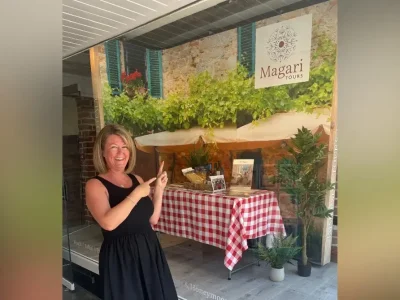
Alex Malcolm, founder of Jacada Travel in Italy.
Jacada Travel / Alicia Warner
Jacada does not own hotels or lodges, but it does influence where client spend their money. “Our biggest way of influencing where the tourism dollar goes and doing better in the tourism space is through our relationships with suppliers,” Malcolm says.
And that is why, Malcolm adds, “the Positive Impact Collection is something that I kind of always wanted to do for quite a long time.”
He always wanted Jacada Travel to curate hotels to be more than just a question of price, design, or service. Malcolm argues that if Jacada sells only on how a property looks, it misses a chance to direct travelers toward hotels and lodges that do important conservation or community work.
Basket weaving at Wilderness Hwange, member of the Positive Impact Collection.
Wilderness Hwange
From Sustainability To Positive Impact
However, turning that idea into reality proved to be complicated. “I was really happy when Natalie came in, and we were able to really get going with this,” says Malcom.
At first, Jacada created its own survey, but Lyall-Grant says the process quickly exposed another issue: hotels were already being asked to complete too many sustainability questionnaires.
So, Jacada Travel partnered with Hotel Resilient, a nonprofit platform for sustainability surveys. “We were the first tour operator to come on board and partner with them, and then we use that as a third-party platform to cover our sustainability audit then,” she adds.
Horticulture at Grootbos Private Reserve in South Africa, member of the Positive Impact Collection.
Jacada Travel
There is no certification at the end, but hotels receive a sustainability score which Lyall-Grant reviews manually. “You can’t lose points on recycling if there’s no infrastructure in the next seven countries around you to recycle,” she explains.
But both Malcolm and Lyall-Grant wanted more. “Sustainability is the baseline by which everything in our portfolio needs to be sustainable or needs to be on the pathway to sustainability,” Lyall-Grant says. “But the Positive Impact Collection is something that just a few properties would be at that level.”
The distinction matters. A hotel cannot qualify simply because it supports a charity somewhere else in the world. The impact needs to be place-based, tied to the destination where the hotel operates.
Local school supported by Wilderness Hwange, member of the Positive Impact Collection
Jacada Travel
At the time of the interview, Jacada Travel has 111 properties and 44 experiences in the Collection. But it is not about the numbers, Malcolm argues, but it is about the story behind their impact.
Each property usually has several stories to tell, from conservation and community support to female empowerment, Indigenous partnerships or local education. The task for Jacada’s travel designers is to match those stories with what motivates each traveler, so positive impact becomes part of the experience rather than just a footnote.
What Hotels Say About Jacada’s Audit Process
For properties already working with a sustainability mindset, Jacada’s Positive Impact Principles did not necessarily require a major operational reset.
A 150-year-old ancestral manor (walawwa) of Uga Ulagalla in Anuradhapura, Sri Lanka.
Uga Ulagalla
Dilshan David, director of sustainability at Uga Resorts, said in an email interview that the process largely confirmed what they have already achieved. “We found that the majority of the requirements outlined were already integrated into our existing sustainability framework. Therefore, the process of aligning with the guidelines was relatively straightforward,” he said.
Private deck of a family safari tent at Galapagos Safari Camp.
Galapagos Safari Camp
But for others, the value was in how Jacada evaluated context. Stephanie Bonham-Carter, co-founder of Galapagos Safari Camp, said in an email interview that the assessment stood out because it recognized decisions that may not fit neatly into a standard checklist. “What impressed us about Jacada was their willingness to look beyond the questionnaire and understand the reasoning behind those decisions,” she said.
The Sanctuary at Wilderness Bisate, Rwanda.
Wilderness Bisate
For Wilderness Bisate, the difference was in what the questions chose to emphasize. “What was especially refreshing for us was the questions dedicated to wildlife conservation, a theme that many other guidelines and standards often don’t give enough attention to,” says Vincent Shacks, group head of impact at Wilderness, in an email interview.
That focus comes at a time when ethical wildlife tourism faces growing scrutiny. Beyond Jacada, other travel companies such as Intrepid Travel and Go2Africa have also audited hundreds, if not thousands, of partners for ethics, safety and sustainability, showing that it is sometimes not about what they include but about what they choose to exclude.
Lion paw prints in the sand at Wilderness Linkwasha, member of the Positive Impact Collection
Jacada Travel
What Impact Does Being Part Of The Collection Have?
For properties and experiences, the value of Jacada’s Positive Impact Collection lies not only in the assessment itself, but also in the visibility to what guests may not otherwise see.
David from Uga Resorts says, “Being included in this collection has increased our visibility among sustainability-conscious travelers and provided broader market exposure.”
Cycling is one of the activities guests can do at Uga Ulagalla, Sri Lanka.
Uga Resorts ©Jaideep Oberoi
He also states that this recognition “has reinforced our commitment to responsible tourism and motivated us to continuously strengthen our sustainability initiatives. It serves as both an endorsement of our efforts and an encouragement to further enhance our positive environmental and social impact.”
Bonham-Carter from Galapagos Safari Camp agrees that visibility is especially important for smaller, independent properties. Being part of the collection, she says, “helps bring visibility to initiatives that might otherwise go unnoticed.”
Shacks from Wilderness points out that “In truth, we cannot afford to only be sustainable anymore.” In his view, operators facing habitat and biodiversity loss need to move beyond reducing harm and ask how tourism can add value where it operates.
Gorillas in Wilderness Bisate Reserve Rwanda
Wilderness Bisate
What The Future Holds For Industry Collaboration
The future of positive-impact travel may depend less on creating new labels and more on whether travel companies share knowledge and systems.
One of the problems Jacada identified early on was duplication: many tour operators sell the same hotels, yet each may ask those hotels to complete a separate sustainability questionnaire.
Malcolm sees that collaboration as key in the future. Instead of each company building its own checklist, he argues that shared platforms and sustainability scores can help hotels see where they stand, compare progress with similar properties and identify realistic next steps.
Six Senses Rome, member of the Positive Impact Collection
Jacada Travel
Lyall-Grant says Scott Dunn was the first tour operator Jacada collaborated with, followed later by Audley Travel and, recently, Steppes Travel. The point of cooperation was to decrease duplication and bring transparency.
For luxury travel, the future may not be another eco-badge but a transparent, open system that helps everyone ask better questions, so that vague green claims have no way to influence travelers.