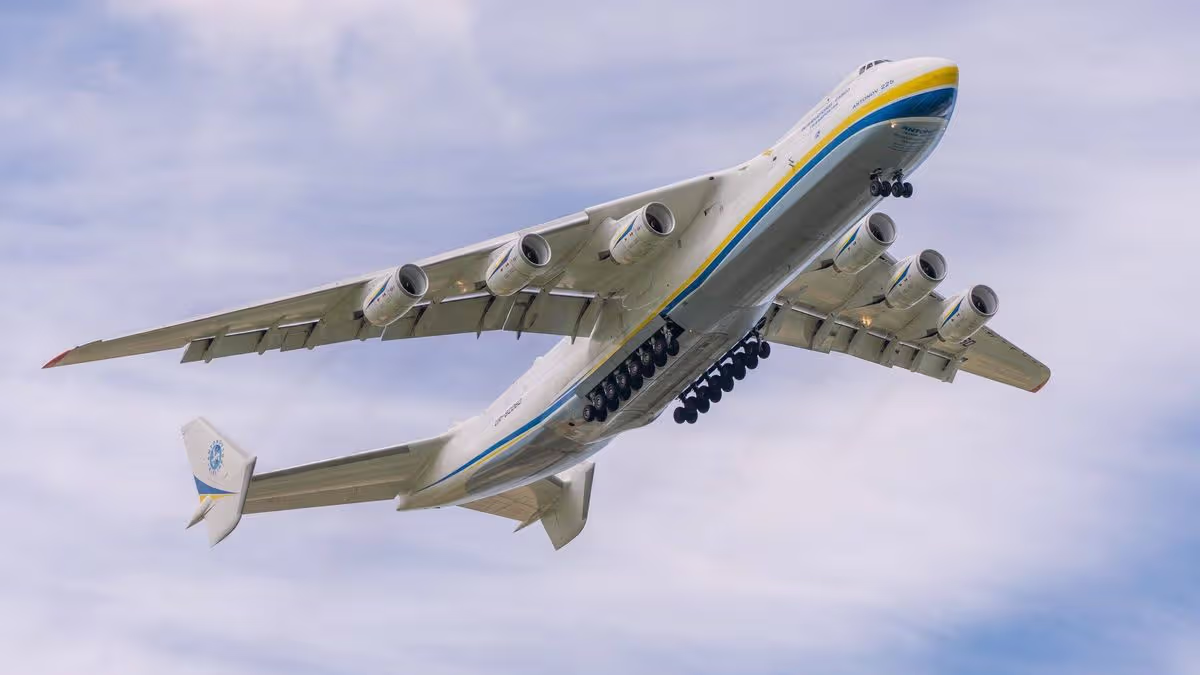
The Antonov An-225 Mriya set over 200 world records as the heaviest transport aircraft ever built, capable of carrying 250 tonnes of cargo

The Antonov Mriya is the biggest and heaviest-lift transport aircraft in the world.(Image: Getty)
Built throughout the 1980s, the Antonov An-225 took to the skies for the first time on December 21, 1988, and remains the world’s heaviest cargo aircraft. This extraordinary Soviet-era creation measures 84m from nose to tail, features six powerful engines, 32-wheel landing gear and weighs a staggering 285 tonnes when empty.
Built throughout the 1980s, the Antonov An-225 took to the skies for the first time on December 21, 1988. Initially conceived to transport the Soviet space programme’s Buran spaceplane, it captured global attention at the 1989 Paris Air Show while carrying the shuttle piggyback.
Heartbreakingly, the aircraft met its end in 2022 amid the Ukraine conflict, obliterated during fighting at the Battle of Antonov Airport, close to Kyiv. This mammoth plane was purpose-built to haul exceptionally massive loads, including single items tipping the scales at up to 200 tonnes.
Aviation charter experts at Chapman Freeborn note that the Antonov “is able to carry up to 250 tonnes of cargo, which is equivalent to the average weight of 52 mature elephants.”
“The AN-225 has set over 200 world records, including airlifting the world’s heaviest cargo and the world’s longest cargo.”, reports the Express.
AviationAtoZ commented: “Stepping inside the Mriya could feel like entering a hangar rather than an aircraft. Its cargo hold measures 43 meters long, 6.4 meters wide, and 4.4 meters tall. For perspective, a typical basketball court is 28 meters long, meaning the Mriya’s cargo space could easily accommodate one with room to spare.
“This cavernous interior enabled it to carry locomotives, entire sections of other aircraft, and even giant wind-turbine blades.
“Loading such massive objects was made possible by its distinctive nose, which tilted upward to create a cargo ramp.”
Industry experts estimate that rebuilding the Antonov AN-225 Mirya would come with a hefty price tag of around $3 billion (£2.1 billion).