
Travel toothbrush quick picks
With the best travel toothbrushes, you can get that minty, just-brushed feeling whether you’re on a red-eye to Tokyo or bivvying on El Cap. It’s a travel gear essential, not unlike the best travel toiletry bags, quality neck pillows or compact portable chargers. So, if you’re the type to toss a disposable toothbrush in a Ziploc bag, consider this a nudge to upgrade.
Ahead, you’ll find nine excellent travel toothbrushes vetted by seasoned travelers and dentists. Harnessing their expertise, I’ll also explain how to pick the perfect toothbrush and how to travel with one hygienically.
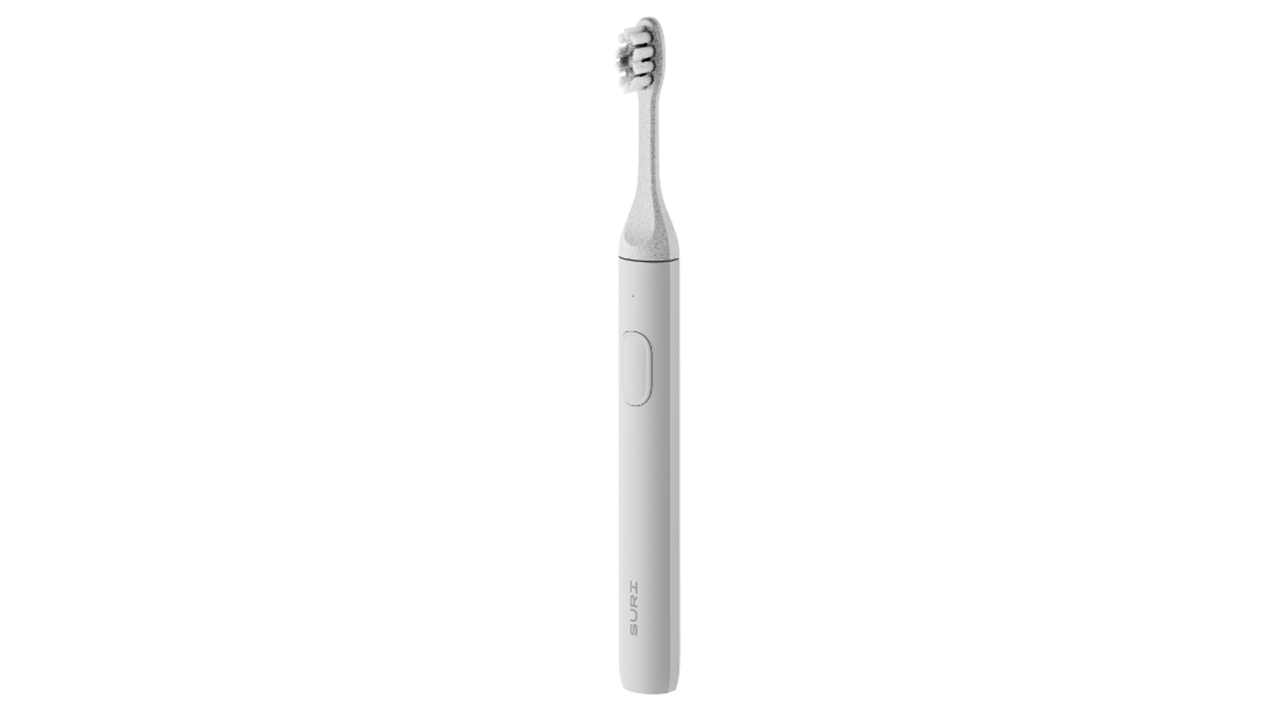
Suri’s Electric Toothbrush received so much praise that I couldn’t fit it all here. CNN Underscored managing editor Rachel Quigley and travel editor Kyle Olsen are among its most vocal fans, commending its 40-day battery life, self-cleaning travel case and powerful sonic brush head. “It’s not just a great travel toothbrush; it’s my favorite electric toothbrush, period,” Olsen wrote in his review.
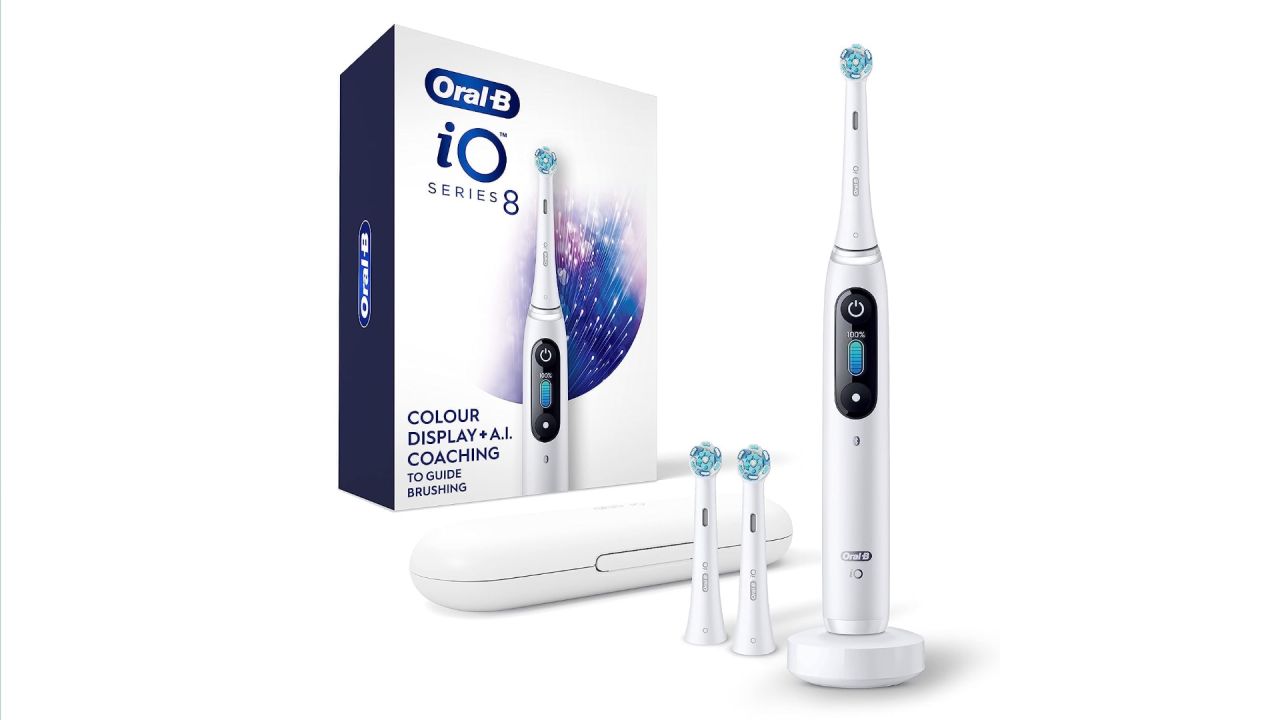
“This is my go-to electric toothbrush for travel and everyday use,” Dr. Erin Fraundorf, a board-certified orthodontist and founder of BOCA Orthodontic + Whitening Studio, said, adding that it’s great for travel thanks to its sleek design, magnetic charger and case, which can fit two brush heads.

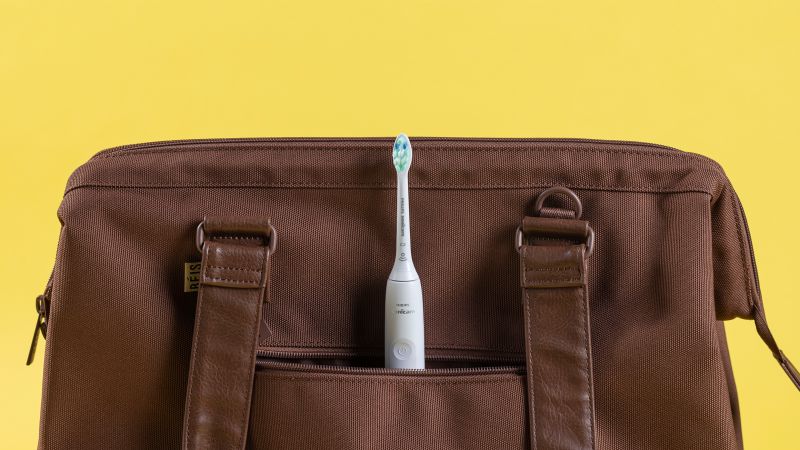
After testing 14 different models, contributing writer Jennifer Yellin crowned the Philips One the best travel toothbrush. The affordable model is built for portability, boasting a 30-day battery life and a slim, form-fitting case.

Testing and updates writer Michelle Rae Uy ditched her Oral-B for this five-mode model earlier this year. “While very effective, it doesn’t feel aggressive when cleaning, so it’s gentle on my teeth and gums,” she said. “It’s what I take with me on trips now too, since every unit comes with a nice travel case with room for two brush heads.”
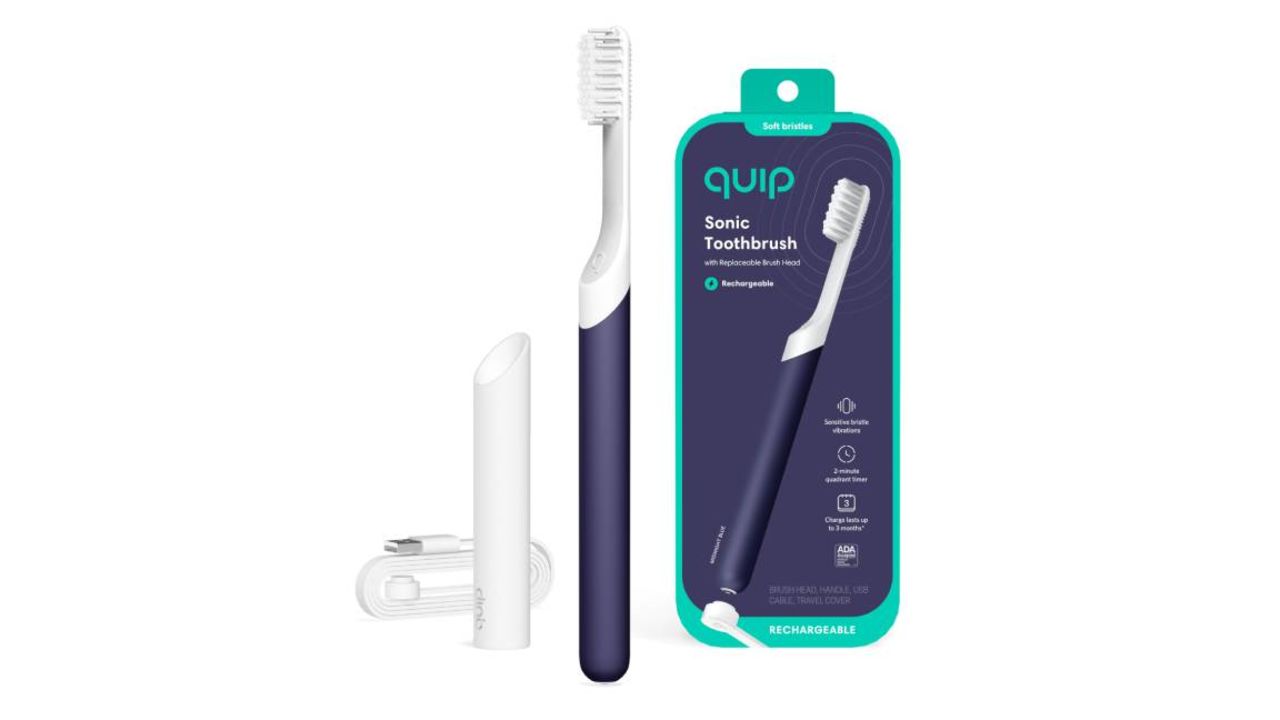
If battery life is a priority, snag the Quip Rechargeable. Lasting up to three months on a single charge, it boasts the longest-lasting battery of any toothbrush we’ve tested. Plus, it comes with a low-profile travel cover to keep your bristles clean without the need for a bulky case.

Considering performance and cost, there isn’t a better toothbrush on the market than the Sonicare 4100. Is it optimized for travel? Not really. But it’d be an oversight if we didn’t include such a full-featured, affordable toothbrush in our roundup, even if it lacks a dedicated travel case.
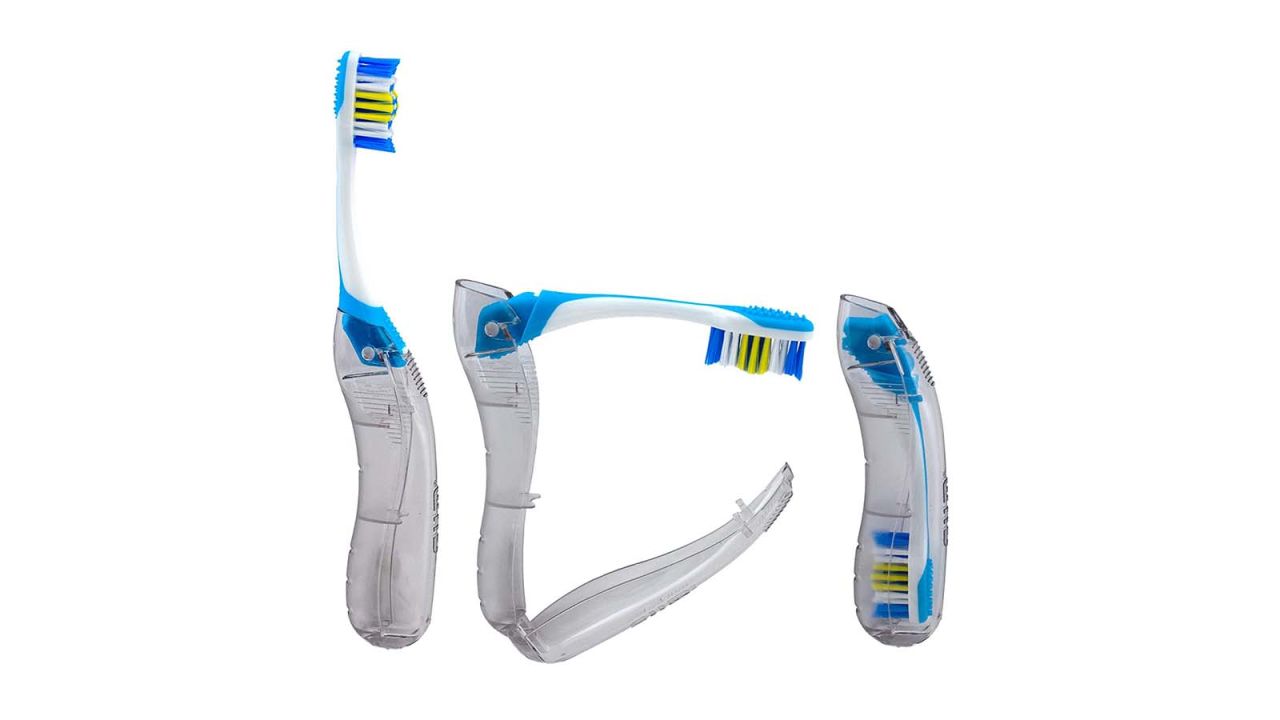
“I like these toothbrushes because they are convenient for travel, maintain oral health effectively and are easy to use while on the go,” Dr. Michael J. Wei, an award-winning cosmetic dentist and smile specialist in New York City, said. The foldable brushes come with antimicrobial and soft bristles.

“Some travel toothbrushes come with a built-in toothpaste dispenser, which can be convenient for travel, as it eliminates the need to carry a separate toothpaste tube,” Wei said. The pre-pasted Wisp is an excellent example. Clean your teeth anywhere and simply toss the brushes when finished.

When Fraundorf reaches for an analog travel toothbrush, it’s this recycled bamboo model. It comes with a ventilated travel case, and its soft bristles are both gentle and effective.

As easy as it is to stuff your everyday toothbrush into your carry-on bag, it’s not the most hygienic or efficient way to travel. That’s because the qualities that make a great at-home toothbrush don’t necessarily translate on the road.
That became clear when I interviewed travel expert Shelbi Okumura and dentists Fraundorf and Wei, who gave me the following list of criteria they look for while shopping for a great travel toothbrush.
Size and packability
It’s no surprise that a small footprint and packability were important to all three experts I spoke to. “What I love most about the Suri is it’s stored in a fully enclosed case that also serves as the toothbrush charger,” Okumura said.
If you’ve ever had a toothbrush die on you while traveling, you know the importance of battery life. Longer battery life is clearly better, but you also need to consider how easy it is to replace or recharge the battery if it dies. Sure, you might have the charger with you, but can you find the right voltage where you’re staying? Do you have the right travel adapter?
In situations where access to electricity isn’t guaranteed, you may want to consider an electric toothbrush with replaceable batteries or analog models, which Wei said are more cost-effective and widely available.
Fraundorf and Wei agree that soft bristles are the best. “They’re gentle on gums and enamel but effective when used correctly,” Fraundorf said, noting that medium and hard bristle types can wear out enamel and cause gum recession over time.
Don’t skimp on quality either. “Choose a toothbrush with high-quality bristles that are effective at removing plaque and debris from your teeth without causing damage to your gums,” Wei said.
Head size and design
“Choose a toothbrush with a head size that allows you to easily reach all areas of your mouth, including the back of your molars,” Wei said. Be sure to replace brushing heads — or the entire toothbrush, if it’s disposable — every three to four months (or sooner), as a “worn-out toothbrush is less effective at cleaning your teeth,” Wei added.
The following FAQs have been answered by dentists Dr. Erin Fraundorf and Dr. Michael J. Wei.
Regardless of your toothbrush, technique and consistency are critical to any oral hygiene routine, Fraundorf said.
“Make sure that the toothbrush has soft bristles and that you’re brushing for two minutes, twice a day, reaching all surfaces,” she said. “For electric models, using the built-in timers and pressure sensors makes a big difference to ensure you’re brushing hard enough but not too hard.”
Fraundorf said that a ventilated travel case is the most sanitary way to travel with a toothbrush. “Rinse your brush thoroughly after each use, shake off excess water and allow it to air-dry as much as possible before storing,” she added.
Yes, your toothbrush can be stored in a zip-close bag, but Wei emphasized the importance of only storing toothbrushes when completely dry in order to prevent the growth of bacteria.
You should also replace your toothbrush or brush head after traveling and clean your toothbrush holder, he added, for the same reason.
For this article, I consulted the following dental and travel experts for their professional insights.
CNN Underscored has a team of skilled writers and editors who have many years of experience testing, researching and recommending products, and they ensure each article is carefully edited and products are properly vetted. We talk to top experts when applicable to make certain we are testing each product accurately, recommending only the best products and considering the pros and cons of each item. For this guide, associate writer Maxwell Shukuya consulted dental and travel experts while also surfacing products from Underscored’s library of product reviews.