
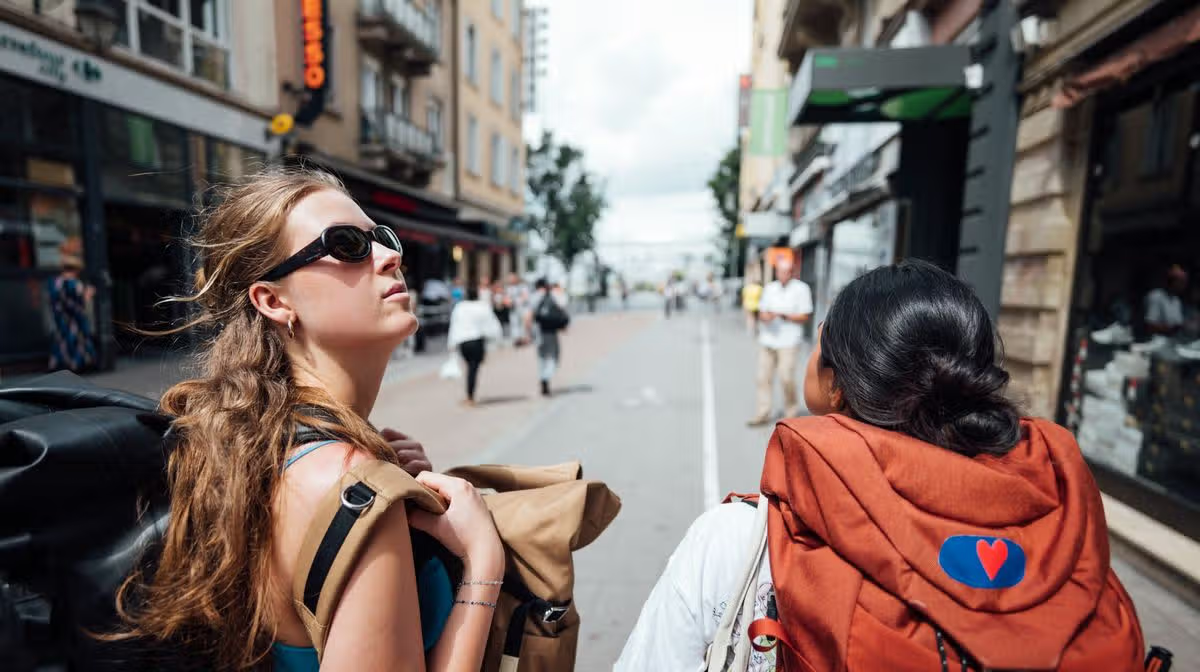
A poll of 2,000 adults who travel abroad found that one in six have committed a cultural faux pas while on holiday – and the top 10 travel mistakes tourists make have been listed

Holidaymakers could unknowingly offend locals if they’re not aware of local etiquette(Image: Getty Images)
One in six holidaymakers have committed cultural blunders while abroad – including eating with their left hand in South Asia and blowing their nose at the table in China.
A survey of 2,000 adults who travel overseas found 28% of those who have put their foot in it culturally have neglected to cover their shoulders and knees when visiting a place of worship. Meanwhile, 26% have forgotten to tip in North America and 21% have jaywalked there too.
Despite a tendency to make such mistakes, 39% of all those surveyed said experiencing different cultural etiquette is one of the main reasons they choose to travel – particularly to long-haul destinations.
A spokesperson for Riviera Travel, which commissioned the research and offers escorted tours across Europe, Asia and North America, said: “Travel is about embracing the unfamiliar. “These findings show how easily well-meaning holidaymakers can fall foul of local customs, often without realising it.
“Whether it’s understanding dining etiquette, dress codes or local laws, having expert guidance or a well-planned itinerary can give travellers the confidence to explore unfamiliar cultures without the worry of getting it wrong.”
The study revealed 62% have worried about accidentally breaking the law while travelling, while 54% feared coming across as rude without intending to.
A further 42% were concerned about taking photographs somewhere they shouldn’t, while 41% worried about getting religious customs wrong.
To get themselves prepared, 57% research destinations more thoroughly before jetting off. Upon doing so, 31% were taken aback by just how many everyday UK habits are perceived differently abroad.
In particular, 30% found that hand gestures can carry entirely different meanings depending on your location around the globe – such as using the ‘OK’ gesture in Brazil, which is often the equivalent to swearing.
Other no-gos British holidaymakers were oblivious to included the fact that bringing mineral water into Nigeria is forbidden, while commonly available nasal sprays can be restricted in Japan. Camouflage clothing is banned in Barbados and taking bubble gum into Singapore is against local rules.
Eager to avoid becoming the stereotypical “Brit abroad”, 49% modified their behaviour while travelling so they would not be perceived that way. A third had seen another holidaymaker making a cultural mistake, including being rude towards restaurant or hotel staff (52%), speaking too loudly in public (51%) and dressing inappropriately at religious or cultural sites (49%).
If they made a faux pas themselves, 56% would feel embarrassed, 51% apologetic and 30% eager to learn from the experience.
It also emerged 29% of those who worry about social faux pas preferred guided tours or expert advice to ensure they didn’t make a cultural mistake.
Whereas 24% stated being part of a guided group would give them the confidence to explore unfamiliar destinations, and 22% valued the reassurance of travelling with an experienced tour manager.
A spokesperson for Riviera Travel added: “The findings show most travellers are keen to be respectful when they visit somewhere new, even if they occasionally get things wrong. “Being open to different customs and ways of life is one of the most rewarding parts of travel.
“Having the support of local experts, an experienced tour manager, and the reassurance of a guided group provides essential peace of mind.”
TOP 10 CULTURAL BLUNDERS:
- Not covering up shoulders and knees when visiting places of worship.
- Not tipping at a restaurant in North America.
- Jaywalking in America.
- Eating with your left hand in countries where the right hand is traditionally used for eating.
- Not removing shoes when entering homes in Canada.
- Showing up late to an appointment or meeting in Germany.
- Using the “OK” hand gesture in Brazil.
- Leaving chopsticks sticking vertically out of the rice in Japan.
- Pouring your own drink before others in South Korea.
- Touching someone’s head in Thailand.